
Tendons are the fibrous, connective tissue that connect muscles to bones. Named after the tale of the famous Greek warrior Achilles, the Achilles’ tendon is the tendon which connects the lower part of the calf muscle to the heel bone. The image below shows the left hand pinching the lower part of the Achilles’ tendon.
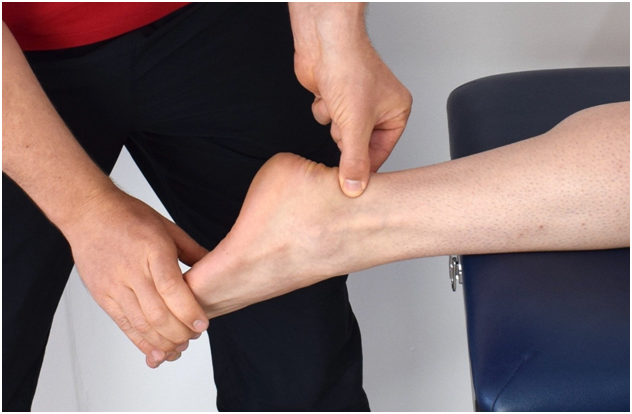
Tendinitis is the condition where a tendon in your body becomes inflamed and irritated.
Cause
In most cases, tendinitis is caused due to excessive strain on the tendon. Pushing your body to bear more than it can handle puts you at risk of developing the condition. Excessively doing physical exercises involving your feet, within a short period of time, is likely to cause Achilles’ tendinitis.
Having tight calf muscles increases the chances of Achilles’ tendinitis. The tight muscles already put stress on your Achilles’ tendon. Doing an intense exercise program without proper stretching would only add to that stress and increase your chances of developing tendinitis. A less common cause involves the extra growth of your heel bone. The extra bone rubs against the tendon causing pain and irritation.
Symptoms
Inflammation is the body’s natural response to illness or injury. This results in pain and swellingin the affected area.
Some other common symptoms of Achilles’ tendinitis are:
- Stiffness and irritation along the Achilles’ tendon
- Thickening of the tendon
- Prolonged swelling that increases with activity
- Severe pain during or after physical exercises
- Bone spur – extra bone growth which becomes visible as a bump at the back of the heel
Prevention
Identify the activities in your routine which cause heel pain. Try to limit them or carry them out with proper preparation. For example, stretching before and after any physical exercises is very helpful. Avoid doing intensive training involving your legs. Instead, cross-train and switch between cycling and swimming. Include calf-strengthening exercises in your routine. Strong calf muscles help the Achilles’ tendon handle physical stress more easily.
Avoid wearing high-heeled shoes. Nowadays, you can find shoes with heel support which help to reduce the stress on your Achilles’ tendon.
Treatment (Non-surgical)
If you notice symptoms of Achilles’ tendinitis early on, you can opt for non-surgical treatment. These provide pain relief and help your tendon to recover faster. Depending on when you start the treatment, the symptoms may take 3 or more months to completely subside.
- Rest: Stop activities that increase the pain. If you have an intense exercise routine, try switching to low-impact exercises until the pain completely subsides.
- Ice: Use an ice pack on painful areas to help numb the pain. Do this for 15 minutes, a few times every day.
- Exercise: Exercising your calf muscles keeps them healthy, and reduces the stress on your Achilles’ tendon. Physical therapy is very helpful for a speedy recovery.
- Medication: Along with changing your routine, you may take pain-relief drugs. Consult a doctor and take prescribed medication as advised.
- Elevate: When resting, make sure your foot is above the level of your heart. This helps reduce the swelling.
In severe cases, your physician is likely to advise surgical treatment.