
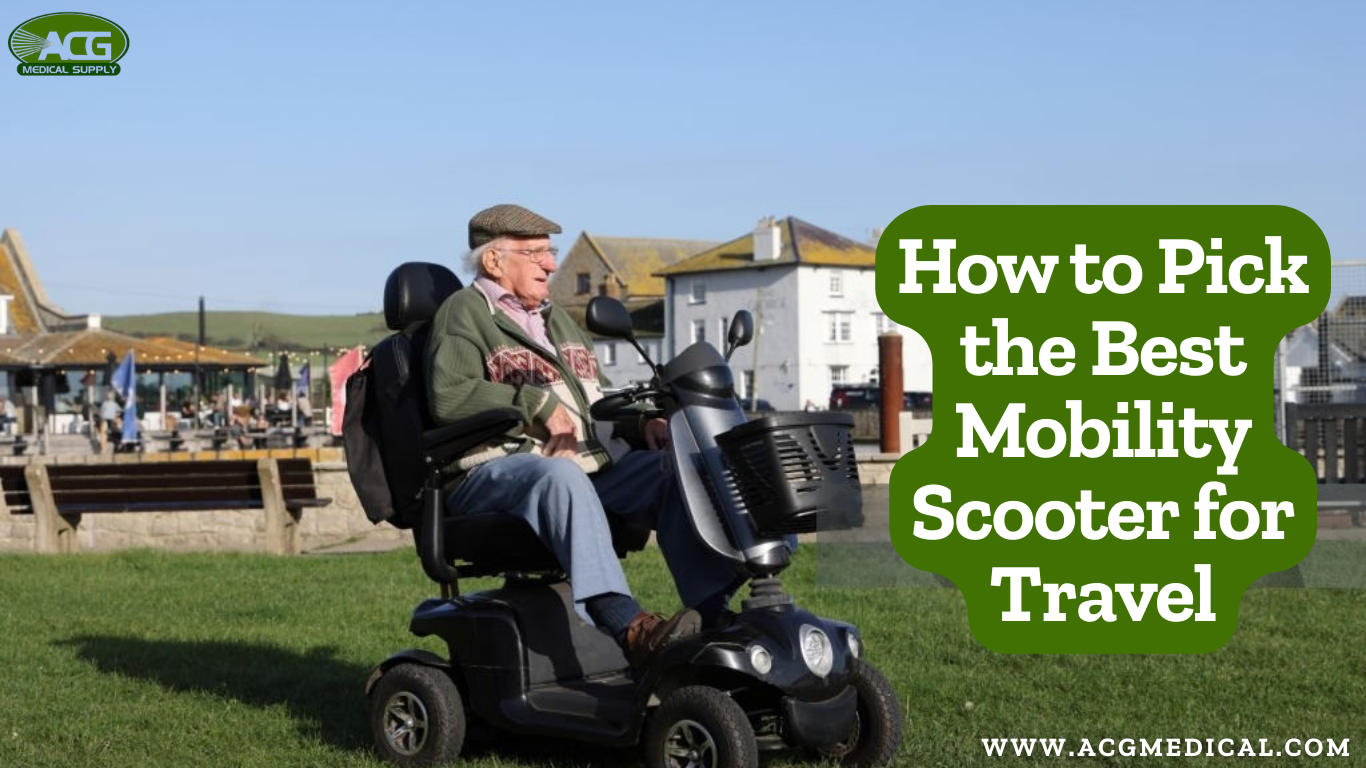
For a lot of people dealing with mobility issues, picking a travel mobility scooter happens right around the moment they realise they don’t want to keep missing out. It goes something like this: the family is planning a trip to a massive theme park, or maybe a dream cruise through the Mediterranean is finally on the books, but then that little voice in your head starts whispering: “Can I actually walk that far?”
At ACG Medical Supply, we believe that voice shouldn’t get the final say. A mobility scooter for travel is essentially a passport to those experiences you thought were slipping away. But picking the right one? Well, that requires a bit more thought than just clicking “buy” on the first shiny red model you see. It’s about matching a machine to your specific kind of wanderlust.
Why Travel Scooters Are Built Differently
You might see a heavy-duty electric mobility scooter and think, “That looks comfy, I’ll take that!” But wait. If you try to take a standard-sized power scooter on a plane, you’re going to have a very stressful afternoon at the check-in counter.
Mobility scooters designed specifically for travel are a different breed. They prioritize “portability” over raw power. While a home-based scooter might have huge, plush tires and a battery the size of a toaster, a lightweight mobility scooter focuses on slim frames and clever folding tricks. They are the difference between having a device that lives in your garage and one that lives in your car trunk.
Portability: The Great “Fold vs. Snap” Debate
When you look for the best travel scooter, you’ll run into two main philosophies: the foldable mobility scooter and the disassembly mobility scooters. Both are fantastic, but they solve different problems.
The Magic of the Foldable Mobility Scooter
A foldable mobility scooter is for the person who wants zero fuss. You pull a lever, or perhaps push a button on a remote, and the whole thing collapses like a lawn chair.
- The Pros: These are amazing for air travel. When you get to the gate, you fold it in five seconds and walk away.
- The Reality Check: Because it’s one solid piece, you have to be able to lift the entire weight (usually 45 to 60 lbs) into your trunk. If you’re traveling solo and don’t have a lot of upper-body strength, this might be a bit of a workout.
The Logic of Disassembly Mobility Scooters
Often called “boot scooters,” these models are designed to fit neatly into a car boot. The seat lifts off, the battery comes out, and the base usually splits into two sections. It’s a simple setup that makes transport manageable.
What makes them practical is the weight split. Instead of lifting one solid, awkward machine, you’re dealing with a few lighter sections. The heaviest piece often sits somewhere around 25 to 30 pounds. For many people, that feels manageable. Not effortless, but manageable.
There is a rhythm to it, though. Arrive somewhere, open the boot, put the pieces backtogether. It doesn’t take long. A minute or two once you’re used to it. Still, it’s part of the routine. Some don’t mind that at all. Others prefer something ready in seconds.
Choosing Your Base: 3 Wheels or 4?
This is where the terrain of your destination comes into play. It’s not just about aesthetics; it’s about how the scooter interacts with the ground.
A 3-wheel mobility scooter is the king of the indoors. If your travel involves cruise ship hallways (which are notoriously narrow), museum exhibits, or crowded shopping malls, three wheels are your best friend. They have a tiny turning radius; you can basically spin in a circle on a dime. Plus, they usually offer a bit more legroom for taller travelers because you can stretch your feet out past the single front wheel.
However, a 4-wheel mobility scooter is what you want if you’re heading to a park or a city with “character” (read: bumpy sidewalks). The four-point base makes it much harder to tip. If you’re navigating grass, gravel, or those slightly sloped curb cuts, the four-wheel design feels more like driving a sturdy little car. It’s all about that feeling of being “planted” in the earth.
“Whether you need the tight turn of a 3-wheel model for a cruise or the stability of a 4-wheel for a park, it helps to see a side-by-side breakdown. Check out our analysis of 3-wheel vs 4-wheel mobility scooters to finalize your decision.”
Weight, Range, and the “Battery Trap”
Weight is a tricky thing. People always want the lightest power scooters, but remember: weight usually equals stability. At ACG Medical Supply, we often tell people to look at the heaviest individual part rather than the total weight.
Battery range is where things get interesting.
A Travel Scooter claiming 20 miles per charge looks impressive on paper. Big number.Feels reassuring. But large batteries add bulk. And bulk adds weight. If the plan is to use the scooter for short daily outings, maybe five or six miles around a resort or city centre, that oversized battery becomes something you’re carrying around for no real reason.
Most best travel scooter models sit comfortably in the 8 to 12 mile range. For a typical sightseeing day, that’s usually plenty. Charge overnight. Start fresh in the morning. Simple. Bigger numbers aren’t automatically better. Sometimes they just mean heavier equipment.
Flying High: The Airline-Approved Label
Taking an electric mobility scooter on a plane feels like it should be a nightmare, but it’s actually quite standard. The secret is the airline-approved mobility scooter battery. As of 2026, most airlines are very strict about Lithium-ion batteries. Generally, a single battery needs to be under 300 Watt-hours (Wh) to be allowed on board.
- Pro Tip: Don’t just take the salesperson’s word for it. Look for the sticker on the battery itself. If it says “TSA Approved” or has the Watt-hour rating clearly printed, you’re golden.
- Another Pro Tip: When you get to the airport, tell the gate agent you have a “Personal Mobility Aid.” They are trained to handle these every day. They’ll give you a tag, and you can usually ride it right to the door of the plane.
Comfort: Because You’re Sitting There for Hours
It’s easy to get obsessed with how a scooter folds, but don’t forget you have to sit on it! Mobility scooters for seniors often have different seating options. If you’re spending all day at a zoo, you want a seat with some actual padding.
Look for “stadium-style” seats. Also, check the armrests. Can they flip up? If you want to pull up to a table at a cafe for a croissant without getting out of your scooter, flip-up armrests are non-negotiable.
A Quick Cheat Sheet for Buyers
| Feature | 3 Wheel Mobility Scooter | 4 Wheel Mobility Scooter |
| Best Terrain | Indoors, smooth floors | Grass, gravel, uneven paths |
| Turning Radius | Very tight (great for elevators) | Wider (needs more room) |
| Legroom | Excellent for tall users | Standard |
| Stability | Moderate | Superior |
| Best For | Cruises, shopping, museums | Theme parks, city tours |
Why Trust ACG Medical Supply?
We aren’t just a website with a checkout button. ACG Medical Supply is a team of people who understand that a mobility scooter for travel is a life-changing purchase. We’ve seen the joy on a customer’s face when they realize they can finally go to their granddaughter’s graduation without worrying about the walk from the parking lot.
We curate the best mobility scooters from brands that actually stand behind their warranties. Whether you need a foldable mobility scooter for your flight to London or a rugged 4-wheel mobility scooter for a road trip to the mountains, we’ve probably tested it ourselves.
Small Details That Save the Day
Some of the most important features aren’t the ones printed in bold on the spec sheet. Ground clearance, for instance. If a scooter rides too low, even those small raised bits at the end of a driveway can stop it dead. It’s not dramatic. It’s just… annoying. The kind of thing that makes an otherwise good day feel complicated.
Then there’s the freewheel lever. Most people don’t even notice it when they first get a scooter. It’s just there. But if the battery runs flat and the scooter needs to be pushed, that little lever suddenly becomes very important. Knowing where it is ahead of time saves a lot of awkward moments.
And charging. This one sounds minor, but it isn’t. Some scooters place the charging port low, near the base. That means bending down every single night to plug it in. For some users, that’s not ideal. A model with the charging port higher up on the tiller makes things easier. It’s a small convenience, but small conveniences add up.
None of these features is flashy. They don’t sell scooters. But they do make everyday use smoother.
Conclusion
The right mobility scooter for travel unlocks doors. Literally. From disassembly mobility scooters to full power scooters, options abound at spots like ACG Medical Supply. Weigh features against your trips, test a few, and hit the road happier.
FAQs
- Can I take it on an Uber?
Usually, yes. Disassembly mobility scooters are great for this. Just tell the driver you have a “portable aid” that fits in the trunk. Most are happy to help. - What about the battery on a plane?
Don’t check it! Lithium batteries usually have to come into the cabin with you. Pull it out, put it in your carry-on, and you’re good to go. - Is it hard to drive?
If you can use a TV remote, you can drive a scooter. Most have a simple lever pull to go, let go to stop, no complicated pedals or gears. - Does it work on grass?
A 4-wheel mobility scooter does okay on flat, dry grass. But stay away from mud or thick sand. These aren’t off-road jeeps! - Can I charge it in Europe?
Yes, but you’ll need a plug adapter. Check your charger; if it says “100-240V,” it will work anywhere with the right adapter.