
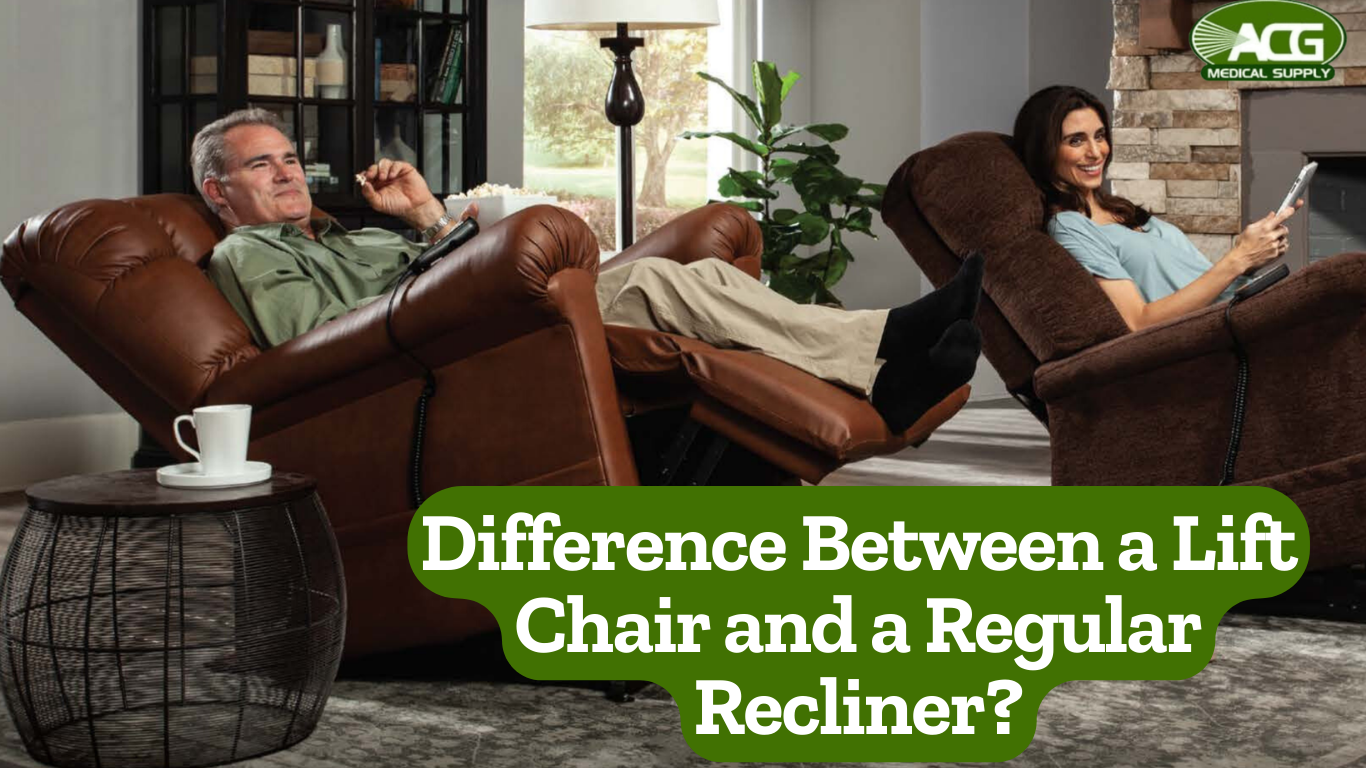
Some furniture you buy because it looks good in the room.
Some you buy because you need it.
That’s usually where this conversation starts.
A regular recliner is something most of us grew up with. It’s the chair Dad fell asleep in. The one that snapped shut too fast when you were a kid. It lives in dens, basements, and TV rooms. It leans back. You put your feet up. Done.
A medical lift chair enters the room differently. It doesn’t just lean back. It rises,helps you stand. And that changes the mood around it.
But if you’re shopping right now, you’re probably not thinking about mood. You’re thinking about daily life. Getting in and out of a chair without bracing your knees. Not asking for help every time you stand up. Keeping the house calm. That’s the real fork in the road.
The regular recliner
A regular recliner is familiar. You’ve seen it your whole life. Maybe your dad had one. Maybe you do. You sit. You pull a lever or press a button. The back tilts. The footrest pops up. That’s it. Some are manual. Some are electric recliners. and even some are big and plush. There’s even the wall hugger recliner, built for small rooms where space is tight and you don’t want furniture sticking out like a sore thumb. It’s all about relaxation. TV. Naps. Game night. That heavy sigh when you finally sit down. Just like Joey and Chandler from your favorite sitcom… Friends. You’re in control of the movement. You lean back because you want to. You come forward because you’re ready. And getting up? That’s on you. For most people, that’s fine. It’s just part of sitting.
When standing up stops being simple
Here’s where the conversation shifts.
Sometimes knees get cranky. Sometimes, hips don’t cooperate, balance isn’t what it used to be. Standing up becomes a little negotiation between you and gravity. That’s when people start looking at something different. Something built with help in mind.
The lift chair: it doesn’t just recline
A lift chair recliner looks almost like a regular recliner at first glance. But inside, it’s wired differently. Instead of only leaning back, it can tilt forward and gently raise the entire seat. Almost like the chair is helping you stand. You press a button on the remote. The chair moves. Slow. Steady. It lifts you to your feet. That’s the moment it feels different. Not fancy. Not flashy. Just supportive.
Some people call them Power Lift Chairs. Others search for Medical Lift Chairs. If you’re shopping for a parent or grandparent, you’ve probably typed in lift chair for the elderly more than once. This isn’t some indulgent upgrade. It’s just a way to get through the day without your space looking like a care facility.
What’s under the hood?
Most people think the difference is just a motor. It’s not. If you get one of those standard electric recliners, the motor is there to raise and lower the footrest. Maybe it tilts the head. It’s a luxury. But the frame? It’s usually just wood and some staples. If you tried to put a lift mechanism on a standard recliner, the whole thing would probably snap like a twig.
Power Lift Chairs are built on a steel lifting frame. They have to be. They are carrying your entire weight as they move through the air. You’re looking for safety and stability because, frankly, being suspended four inches off the ground while the chair tilts forward is a vulnerable spot to be in. You want to know that the thing isn’t going to shimmy or shake.
Then you’ve got the specific “positions.” You’ll hear people talk about a 3-position lift chair. That sounds like marketing fluff, but it’s actually about how the back and the feet move together.
- Position 1: Closed. Just a chair.
- Position 2: The “TV recline.” Feet up, back slightly tilted.
- Position 3: Full nap mode.
The real high-end stuff, like Golden Technology Lift Chairs, often goes even further. They have “Infinite Position” setups where the feet and back move totally independently. You can keep your back straight, but put your feet above your heart. Try doing that in a basement recliner, you’ll just end up with a sore neck.
Quick side-by-side view
| Feature | Regular Recliner | Lift Chair |
| Primary Purpose | Relaxation | Relaxation + Assisted Standing |
| Standing Assistance | None | Motorized lift support |
| Power Use | Optional | Required for lift function |
| Frame Strength | Standard support | Required for the lift function |
| Ideal Buyer | General household use | Limited mobility or joint strain |
| Movement Control | Manual or electric recline | Controlled lift and recline |
The safety factor
Falling is scary. It’s the thing nobody wants to talk about at Thanksgiving, but everyone is thinking about it. Safety and stability aren’t just buzzwords when you’re seventy. They’re the difference between staying at home and moving into a facility.
Regular recliners can be tippy. If you lean too far over the armrest to grab a remote, the whole thing might shift. Power Chair Recliners have a much wider, heavier footprint. They’re built to stay put. If the power goes out, most high-quality models have a battery backup. You won’t get stuck in a reclined position in the middle of a blackout. That peace of mind is worth more than any fancy fabric choice.
It’s not just for the “old”
While we often call it a medical lift chair for elderly folks, that’s a bit of a stereotype. People recovering from knee replacements or back surgery use these all the time. If you can’t use your core muscles to sit up, you need a machine to do it for you.
These chairs come with health and comfort features that go beyond just soft foam. Some have heat and massage. Others have “Zero Gravity” settings that take the pressure off your lower back. It’s about medical recognition—the idea that a chair is actually a piece of health equipment, not just a place to watch the game.
The buying mindset
When you’re looking at lift chair features, don’t get distracted by the bells and whistles. Think about the daily “sticky” moments.
- Can the person reach the remote easily?
- Is the fabric easy to clean if a coffee spills?
- Does it feel sturdy when it’s at its highest point?
Buying one of these is an investment in staying put. Staying in the home you love. It’s a bit of an ego hit at first, maybe. Nobody likes admitting they need a “medical” chair. But once you see how much easier life is when you aren’t dreading the walk to the kitchen, that ego stuff fades away pretty fast.
Conclusion
At first glance, a recliner and a lift chair may look similar. They both offer softness. They both recline. But function changes everything.
A regular recliner leans back for comfort.
A lift chair recliner leans forward to support independence.
That added movement may seem small. In real life, it isn’t.
For those navigating mobility challenges, choosing the right chair can quietly reshape daily routines. And when safety, confidence, and comfort come together in one place, it stops being just furniture. It becomes support.
ACG Medical Supply continues to provide carefully selected power lift chairs, trusted brands like Pride Lift Chairs and Golden Technology Lift Chairs, and models designed with thoughtful health and comfort features. Because comfort is good. But comfort with stability, dignity, and dependable design? That’s better.
FAQs
- Is a lift chair the same as a power recliner?
No. While both may be motorised, only a lift chair includes the forward-tilt lifting mechanism to assist with standing. - Can medical lift chairs fully recline for naps?
Yes. Many 3-position lift chair models allow comfortable reclining, suitable for resting. - Are lift chairs safe for daily use?
Yes. When properly used, Power Lift Chairs are designed for daily operation with built-in stability features. - Do lift chairs require special installation?
No. They plug into a standard electrical outlet. - Are they only for elderly users?
Not exclusively. While commonly marketed as a lift chair for the elderly, they benefit anyone with limited mobility or recovery needs.