Stair Llifts

Straight vs Curved Stairlifts

Straight vs Curved Stair Lifts: Which Is Right For You?

A house is really just a collection of spaces where life happens. The kitchen for morning coffee. The upstairs bedroom is for a quiet night’s sleep. But eventually, the wooden steps connecting those spaces can start to feel like an obstacle course. That sounds obvious. But it really isn’t until you watch someone you care about hesitate at the bottom step.
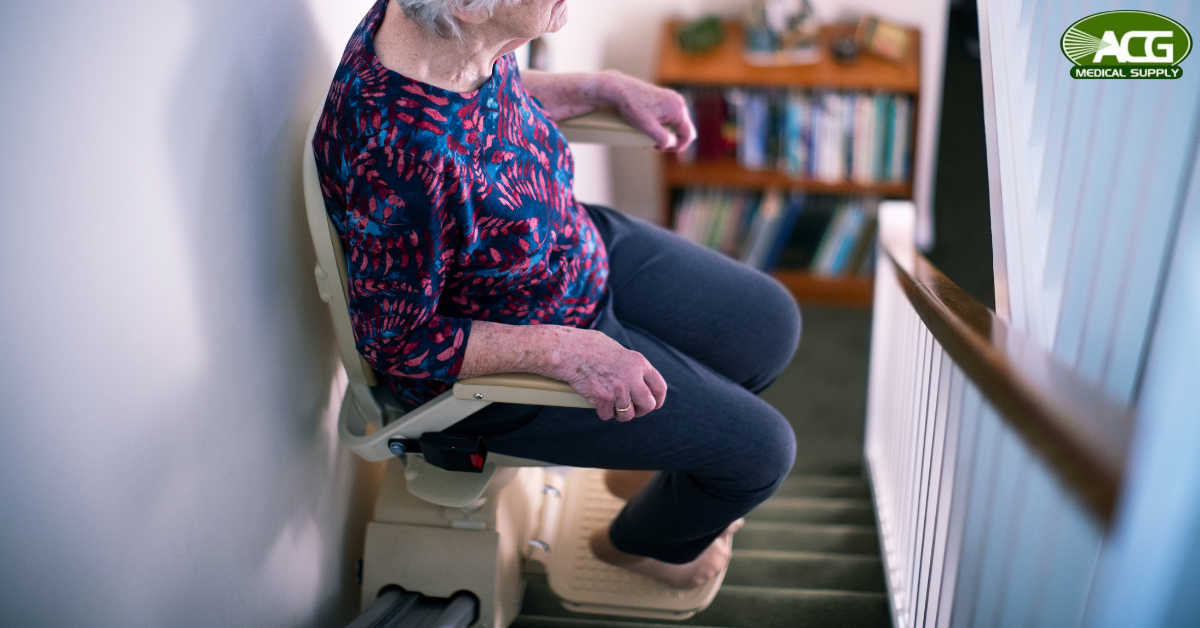
When mobility shifts, the home shouldn’t suddenly become a restricted zone. The stairs should not dictate where anyone can go in their own house. Adding a reliable stair lift for elderly family members, or anyone dealing with a physical change, completely removes that daily anxiety. They get the whole house back.
Choosing the right stair chair lift means taking a hard look at the actual layout of the home. Figuring out whether a straight track or a curved track is needed makes all the difference in comfort.

Straight stair lifts: simple, clean, and practical

If a staircase goes straight up without any turns, corners, or flat landings halfway up, a straight unit does the job beautifully. It is a very simple concept. The chair runs along a single, continuous metal track.

This option is incredibly popular simply because it works with minimal fuss. When looking at standard straight stair lifts features, expect comfortably padded seats, secure seatbelts, and simple joystick controls that require barely any hand strength to operate. Most models even fold up tight against the wall when nobody is riding them. This means family members and guests can still walk up and down the steps easily without bumping into machinery.

Then there is the financial side of things. Money matters, even more so now. The straight stair lift cost is generally much lower than other, more complex options. This happens because the track does not need to be custom-bent or welded in a factory. Manufacturers build these tracks to standard lengths. An installer simply cuts the rail down to match the exact length of the home’s staircase. At the end of the day, it is a very straightforward, budget-friendly fix.

Curved stair lifts: built for character-filled homes

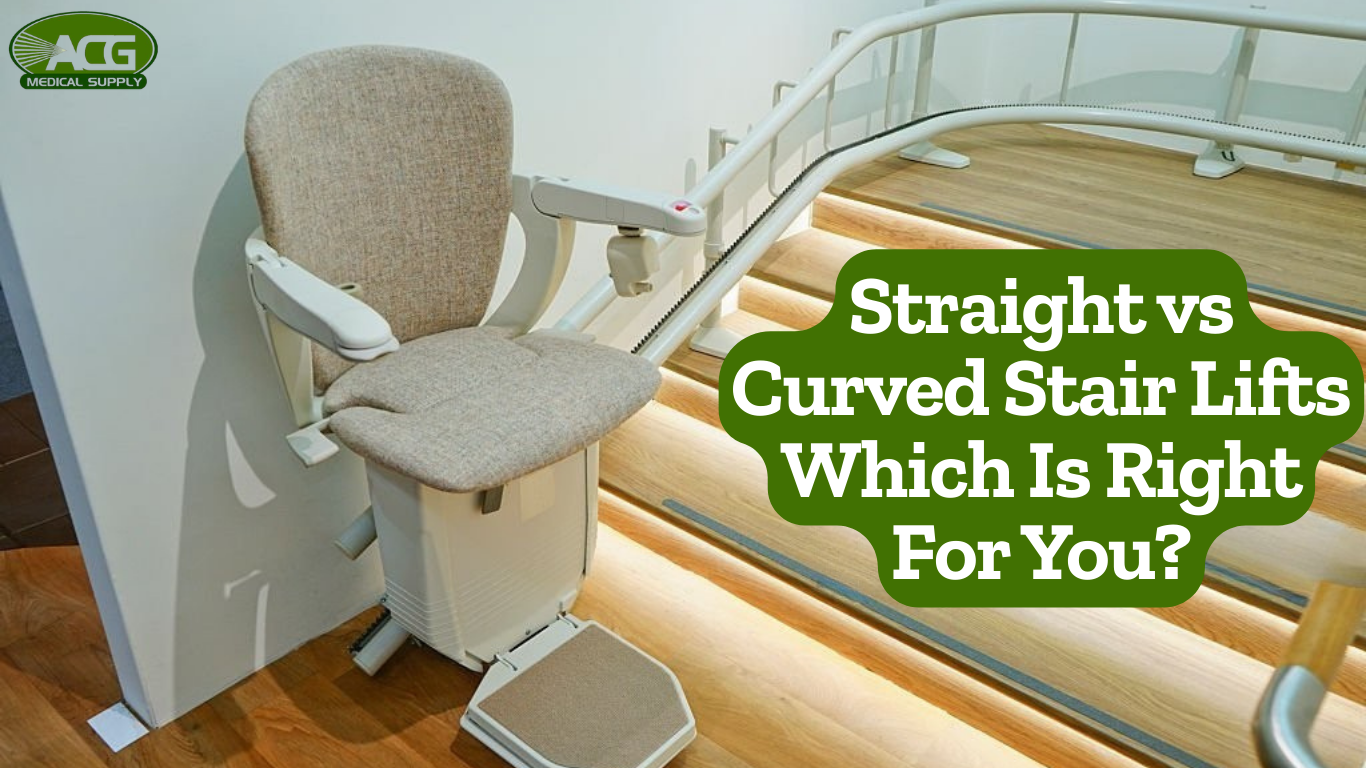
On the flip side, some homes feature staircases with tight twists, sharp corners, or flat landings in the middle. That is exactly where curved models swoop in. You cannot force a straight piece of metal around a corner.

Because every single house is built a little differently, a curved lift requires highly exact measurements. A technician has to measure the stairs down to the millimeter. The rail shape is then completely customized to match the unique angles of the specific walls and steps. This deep level of customization directly impacts the price tag. The curved stair lift’s cost is noticeably higher, simply because the track is essentially built from scratch for that one exact space. Some people might disagree with the price jump, but custom metalwork just takes time and precision.

However, the curved stair lift’s features are truly fantastic. They glide effortlessly around sharp corners without jarring the rider. Plus, they offer something really special: a custom top landing finish. This feature means the chair can travel slightly past the very top step and safely turn onto the actual floor of the hallway. The rider can get off the chair on flat, safe ground instead of hovering near the edge of the stairs. That little extra turn at the top is completely worth the investment for the added stability.

Straight vs curved stairlifts: a side-by-side view

FeatureStraight Stair LiftsCurved Stair Lifts
Staircase typeSingle straight runBends, curves, landings
Rail designStandard straight railFully custom rail shape
Installation timeShortLonger
Price rangeLowerHigher
CustomisationHigherExtensive
Best forModern or simple layoutsOlder or complex homes

Upgrading the home without changing it

People rarely think of this equipment as a normal home upgrade. But it really is a brilliant addition. It adds a thick layer of comfort to the daily routine. Modern home stair lifts are not cold, hospital-like machines. They blend nicely into the hallway.

Here is exactly why adding one changes everything:

  1. Keeps spaces livable: Nobody has to turn the downstairs dining room into a makeshift bedroom.
  2. Helps with heavy chores: Sending a heavy basket of laundry up on the seat is infinitely easier than carrying it up step by step.
  3. Restores peace of mind: Families sleep better knowing a loved one will not risk a fall in the middle of the night.

These stair chair lifts bring back that simple sense of independence. They are a ticket to everyday freedom, allowing individuals to navigate their space safely without constantly asking for a hand.

Getting the right equipment

When it is time to choose, getting the hardware from a dependable place is absolutely crucial. ACG Medical Supply offers a really solid, trustworthy lineup for anyone looking to upgrade their home mobility. We do not just sell generic boxes. We focus heavily on top- tier models like Harmar stair lifts, which are known in the industry for being tough, quiet, and reliable.

Our inventory includes the highly respected Pinnacle Stair Lifts. These models are specifically designed for maximum comfort and feature a surprisingly narrow profile, so they do not eat up all the staircase space.

Also, setting this up is not a weekend project for amateurs. Proper stair lift installation is vital. If the track is slightly off, the ride gets bumpy. ACG Medical Supply ensures people get the exact right fit, whether they need basic straight stair lifts or heavily customized mobility stair lifts designed for complex architecture.

Conclusion

A staircase shouldn’t decide how much of a home someone gets to use. It shouldn’t redraw daily boundaries or turn familiar rooms into “too much effort.” But that’s what happens, slowly, when movement becomes uncertain.

Straight and curved stair lifts solve the same problem in different ways. One works because the stairs are simple. The other works because the home isn’t. Neither is it about convenience alone. They’re about keeping habits intact. Sleeping where you always slept.

Moving when you want to move. Not planning every step. When a stair chair lift fits the house properly, it stops feeling like equipment. It becomes part of the background. And that’s usually the point.

FAQs

  1. Are stair lifts hard to use?
    No. Most stair chair lifts use very simple controls that feel natural within a day or two.
  2. Do stair lifts work during power cuts?
    Yes. Battery-powered systems continue running even when electricity is out.
  3. Are curved stair lifts slower?
    They move at a steady pace, prioritising balance and smooth turns.
  4. Will a stair lift damage the stairs?
    Most systems attach to the steps, not the wall, and can be removed later.
  5. Can stair lifts fit narrow staircases?
    Yes. Many mobility stair lifts are designed for tight spaces.
Stair Lift Installation

Step-by-Step Guide to Safe Stair Lift Installation

So, you’ve decided to get a stair lift – or you’re at least seriously thinking about it. Good call. But before installation day rolls around,  you should be aware of what actually happens when the technicians show up. 

Most people know stair lifts make life easier, but not many realise what goes into getting one set up safely and properly.

Don’t worry, it’s not as complicated as it sounds. Here’s a simple walk-through of what really happens during the stair lift installation process.

Step One: Pre-Installation Assessment

It all begins with a quick home check. A technician drops by to take a look at your staircase and see what they’re working with. They’ll measure the steps, check the angle, look for nearby power outlets, and decide whether a straight or curved stair lift fits best.

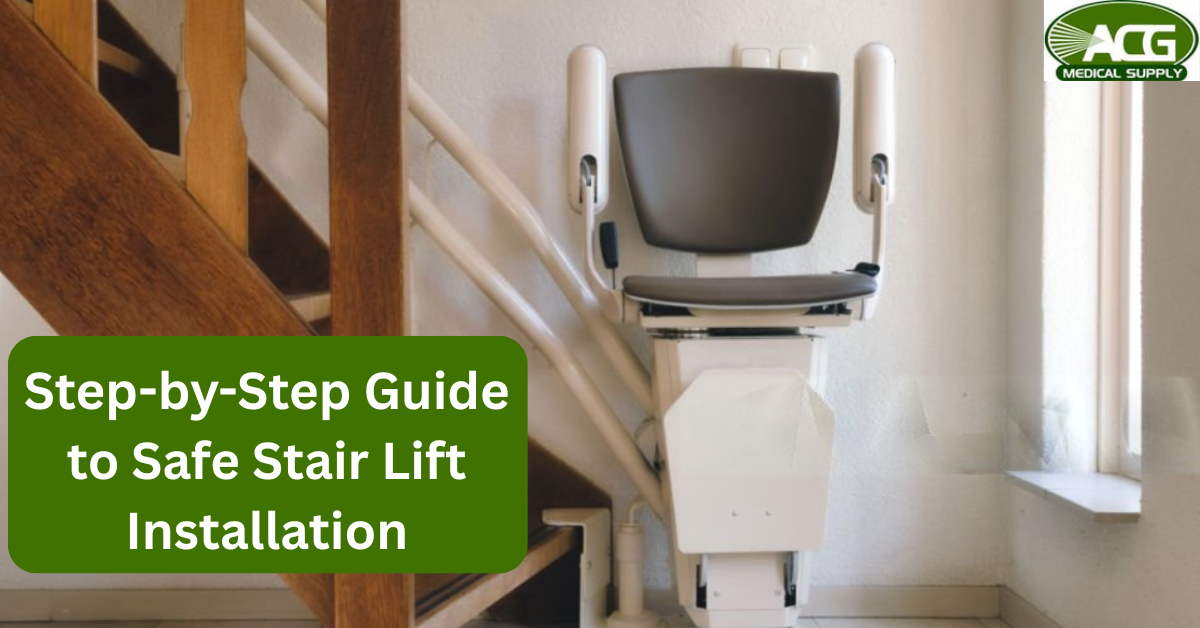
Straight ones are the easy kind – they use pre-made rails, so they’re quicker to set up and usually lighter on the wallet. Curved lifts take a bit more time since everything has to be custom-fitted to your staircase’s twists and turns.

Step Two: Discussing Budget and Options

This is the planning stage, where you go over details, pricing, and setup timelines. The stair lift installation cost usually includes more than you think – rail, seat, controls, wiring, and sometimes even future service visits.

A basic straight model, like the Harmar Pinnacle Stair Lifts, can often be installed in a few hours. A curved or heavy-duty version, as those ACG Medical offers, requires extra prep time and higher costs since they’re custom-built. Outdoor models are another category – they’re weatherproof, designed to handle sun, rain, and dust without wearing out quickly.

If your home already has nearby power outlets, great—it speeds things up. If not, your installer might coordinate with an electrician to make sure everything’s ready before the big day.

Step Three: Installation Day

When installation day arrives, expect a small crew. They’ll bring in tools, rail sections, and safety gear. You’ll want to clear the stairway area and any furniture nearby. Most installs, unless it’s a curved model, finish within the same day.

The process usually goes something like this:

  1. Rail and Mounting Setup – Technicians anchor the rail base along your steps or wall (depending on design).
  2. Chair Assembly and Wiring – The lift chair, motor, and electronics come next, ensuring smooth travel along the rail.
  3. Testing the Ride – Once power is connected, the lift goes through several full rides for calibration.
  4. Safety and User Training – You’ll get a short walkthrough on controls, folding the seat and footrest, and what to do if it stops midway.

Step Four: Safety Checks (The Stuff You Shouldn’t Skip)

Before the installer packs up, they’ll run through a few important checks to make sure everything’s solid and safe to use. Stair lift safety checks protect you long after the installation is done.

Here’s what technicians typically verify before sign-off:

  • Rail Stability: The rail should feel firm and stay put when you’re on it—no shifting or odd squeaks.
  • Battery Backup: They’ll make sure it can still go up and down once if the power ever cuts out.
  • Seat Locks and Sensors: The seat should feel secure before it moves, so you get a steady, comfortable ride every time.
  • Footrest Safety Edges: If anything blocks the path (like a pet or a dropped object), the lift should automatically stop.
  • Emergency Stop Function: Every stair lift has one – make sure you know where it is and how to reset it.

Think of this as your “final inspection.” If something feels off or louder than normal, speak up before the crew leaves.

Post-Installation Maintenance

Nobody talks about maintenance until something breaks. But stair lift safety checks are important and should be done year-round. Weekly? Just wipe down the seat and rails. Nothing complicated. But annually (or closer if you use it a lot), a professional needs to check the brakes, inspect electrical connections, lubricate moving parts, and verify that bolts haven’t loosened.

Ignoring this? Motors wear out faster. Brakes degrade. Battery backup fails when you need it most. It’s not dramatic stuff, but it’s real.

How Installation Timelines Usually Compare

Stair Lift TypeTypical Installation TimeCost Range (approx.)Notes
Straight Stair Lift2–3 hoursLower costPre-fabricated rail
Curved Stair Lift3–4 weeks (custom rail)Higher costCustom design
Heavy Duty Stair Lift3–5 hoursMid to high rangeFor higher weight capacities
Outdoor Stair Lift3–6 hoursVariableWeatherproof components

Conclusion

Installing a stair lift isn’t rocket science, but it deserves respect. Get a professional assessment. Understand what you’re choosing – straight or curved, regular or heavy-duty, indoor or outdoor stair lifts. Understand the cost upfront.

And then once it’s in? Maintain it. Seriously.

Suppliers like ACG Medical handle this stuff day in, day out. They know what works. If you’re ready to get this sorted, reach out to them. Get an evaluation. See what a Harmar Pinnacle Stair Lift or a different model looks like in your specific staircase.

Independence shouldn’t feel complicated. With the right stair lift and solid installation, it isn’t.

Frequently Asked Questions

Q: How long does installation take?

Straight lifts are often done in a few hours. Curved ones? A couple of days is normal.

Q: Can outdoor stair lifts handle weather?

Yes. Made for rain, sun, and snow with materials that won’t quit.

Q: Is DIY a good idea?

Nope. Professionals ensure it’s safe, secure, and runs right.

What about maintenance?

Clean regularly, charge batteries weekly, and get pro checkups every 6-12 months.

Stair Lifts

Home Stair Lifts Installation and Service: A Simple Guide

Stairs are just stairs, until they aren’t. For many people, stairs start to feel like something that’s more of a barrier than a way through. Suddenly, stairs stand between them and their own bedroom, or the backyard they used to love hanging out in. Every step starts to feel like a battle, which is part worry, part pride, part pure exhaustion. 

But there are simple solutions like stair lifts that can make all of that go away (without taking away your independence). A stair lift can greatly improve the quality of life. And this guide breaks it all down clearly, without fluff or false promises. Whether you’re buying for yourself, a parent, or a client, here’s what truly matters.

Stair Lifts: Why They’re More Than a Machine

It’s easy to think of stair lifts as just motorized chairs. But ask anyone who’s had one installed, and they’ll tell you it’s something else entirely: it’s relief.

A stair lift restores your control. The user doesn’t need to wait for assistance. They don’t need to cling to railings or count steps. They sit, press a button, and move safely. That’s dignity.

And what’s even better is that stair lifts today aren’t what they used to be. Take the Pinnacle Stair Lift SL300; it’s not big or bulky. It’s slim, quiet, and folds up nicely, so it stays out of the way. And because it runs on a low-maintenance drive, you don’t have to think about it much. It just works—day in, day out—giving you one less thing to worry about.

If you have steps outside, then the Harmar Outdoor Stair Lift is made for that. It can handle any weather, be it rain, heat, or wind, without slowing down, so getting to your porch or backyard isn’t a hassle anymore. And if someone needs a bit more support, the Harmar Pinnacle Heavy Duty Stair Lift is up for the job. It’s strong and steady, but still comfortable.

So yes, a stair lift is a machine, but the freedom it offers is deeply personal.

What the Installation Really Looks Like

If you’ve been picturing drills, drywall damage, and a week of noise—forget that. Installing a stair lift is surprisingly clean and fast.

Here’s how it usually works:

  1. Evaluation: A professional from ACG Medical Supply visits the home. They take measurements, look at the stair structure, and check clearances.
  2. Model Selection: Straight stairs? Curved? Outdoor? ACG helps match the right model to the user’s mobility needs and home layout.
  3. Mounting the Rail: Contrary to what most think, the rail mounts to the steps, not the wall. No hammering into plaster or tiles.
  4. Install Day: For straight lifts, the setup takes a few hours. Curved installations take longer since the rail is custom.
  5. Training: The installer shows you how to use the lift, test controls, and charge the battery. It’s all simple stuff—no manual memorization required.

And if you’re wondering whether the work that gets done is reversible, then yes, it is. If down the line you don’t need the lift anymore, it can be removed without leaving your staircase in ruins.

Stair Lift Quick Facts

WhatWhy It MattersHow It Helps
Fast InstallationNo wall drilling neededClean setup, done in a day
Compact DesignFolds away when not in useKeeps the stairs open for others
Keeps the stairs open for othersSimple buttons or a remoteNo learning curve
Weather-Ready OptionOutdoor models availableAccess the backyard or porch easily
Regular ServiceQuick checkups & tune-upsLong-lasting, worry-free use

Servicing Your Stair Lift Without Headaches

Here’s the truth—stair lifts are dependable, but they’re still machines. And like all machines, they run better with a little care.

ACG Medical Supply offers regular servicing, which keeps the system working safely and quietly. No sudden lurches. No surprises when you need it most.

A typical service appointment includes:

  • Checking and replacing the battery if it’s ruined 
  • Lubricating the rail and gears
  • Testing the motor and remote
  • Making sure all safety sensors respond properly

Why ACG Medical Supply Is the Name You Should Know

There are stair lift retailers, and then there’s ACG Medical Supply. We aren’t just another equipment vendor. We’re known for providing premium stair lifts for home use, yes, but it’s our people-first mindset that sets them apart.

We don’t push what’s expensive. We only recommend what’s appropriate, whether it’s straight or curved, compact or heavy-duty. ACG focuses on real-life use, not showrooms.

We also carry reliable brands like Harmar Stair Lifts, and we’re there for you long after the install. 

Conclusion

Stair lifts make a person’s life really easy, it’s as simple as that, they help people who have trouble walking up the stairs move freely and stay safe and feel more at home. And when you get a stair lift from ACG Medical Supply, the whole process is simple and stress-free.

FAQs

1. Can more than one person in the home use the same lift?
For sure. As long as each person can sit comfortably and safely, and the user’s weight is within the lift’s limit.

2. Will my home be too small or narrow to get a stair lift installed?
It’s highly unlikely. Many models, including the SL300, are built for narrow staircases and fold neatly when not in use.

3. How much does one usually cost?
It depends. Straight stair lifts start at lower ranges, while curved or outdoor models cost more due to customization. ACG Medical Supply provides honest quotes tailored to your setup.

4. Is the installation process of a stair lift noisy or messy?
Nope. It’s a fairly clean process, it usually gets done in one day, and there’s also no need to drill into walls or tear up floors.

5. Will it work during a power outage?
Absolutely. Most units come with backup batteries that charge automatically.

Search Articles

Medical Tips in Your Inbox

Get expert recovery advice, equipment guides, and caregiver tips — delivered weekly. No spam, unsubscribe anytime.

Need equipment today?

Same-day or next-day delivery in the DFW area. Call us now for immediate assistance.