

Deep vein thrombosis

Deep Vein Thrombosis

Deep Vein Thrombosis (DVT) Awareness Month in 2023: What You Need to Know

Deep vein thrombosis (DVT), a highly unsafe condition which develops when a blood clot forms in a deep vein of your body. Blood clots can affect anyone, regardless of age or gender. These blood clots are formed in one of the big veins, usually in the arm, pelvis, lower leg, or thigh and can completely or partially hinder blood circulation in the veins.

What Is Deep-Vein Thrombosis Awareness Month?

Blood clots are estimated to affect 900,000 Americans annually, although they are frequently underdiagnosed. Every year in March, Deep-Vein Thrombosis Awareness Month is held in the United States where the public health campaign seeks to develop a deeper understanding on blood clot awareness. If a DVT is left untreated, a piece of the clot may separate and go to the lungs, where it may restrict airflow and result in a condition known as a pulmonary embolism (PE).

According to the American Heart Association, blood clots, or DVT as it is more often known, affect up to two million Americans each month. Knowing the warning signs and symptoms of a blood clot will help you decide when to seek medical attention.

What Are the Primary DVT Symptoms?

Swelling, discoloration, pain, tenderness, skin redness, heaviness, or unusual warmth near the blood clot are few of the common signs of DVT. And several conditions, including muscle strain, skin inflection, and vein inflammation, share indications of D.V.T., making the diagnosis even more challenging.

Identifying Causes and Risk Factors
Several factors or elements may contribute to a DVT or may increase the risk of it over time. Here are few of them:

• Limited Mobility: People with restricted mobility have a higher risk of getting affected by DVT. When you sit for a long time, blood can build up in the legs at one specific area. It can halt the blood circulation and can certainly lead to the formation of a clot.

• Injury or Surgery: Previous injuries can also be one of the major DVT causes to develop the risk of venous thrombosis in a human body. The damage to the blood vessel wall can block the blood flow in the veins, resulting in a blood clot. After surgery, bed rest with minimal mobility may potentially raise your chance of developing a blood clot.

• Smoking: If you smoke regularly, put that cigarette out right away! Smoking has an impact on blood clotting and flow, which adds to the risk of DVT. According to the National Heart, Lung and Blood Institute, smoking has a substantial and detrimental effect on the heart and blood vessels. The nicotine in cigarettes makes blood platelets stickier, which can cause them to clump together.

• Obesity: Another significant risk indicator for DVT in both men and women is obesity. Being overweight can put more pressure on the legs and pelvis, which can cause stagnation of blood in the vein. Obese people in the US have a nearly twofold increased risk of DVT, according to studies.

Suggested Deep Vein Thrombosis Treatments

The DVT treatment focuses on preventing the clot from spreading throughout the body. This can reduce your chance of developing additional clots and possibly prevent a pulmonary embolism.

• Blood-Thinning Medications:
You might be given blood-thinning medicine by your doctor. This medication makes it difficult for your blood to clot and potentially keep existing clots as small as possible.

• Medical Supplies:
Using medical compression stockings can minimize swelling and may reduce your risk of getting clots if you have a high risk of DVT. Your doctor could advise you to wear these all the time. You can find comfortable and durable compression stockings at ACG Medical Supply.

• Move More Frequently:
If you sit for a long period with your feet in the same posture, blood will begin to collect in one area of the body and may lead to clogs. You can keep your legs elevated utilizing leg rest or lifter from ACG Medical Supply. Regular walks using our walkers can significantly help you to increase your blood flow.

Concluding Thoughts…
DVT is one such serious condition with a high mortality risk. DVT awareness month is all about raising awareness about the issue, causes, symptoms, and self-prevention techniques. Please call your doctor as soon as you notice any of the symptoms. Also, your doctor could advise using medical equipment that you can purchase from ACG Medical Supply to lower the risk of DVT.

Deep vein thrombosis (DVT)

What is deep vein thrombosis?

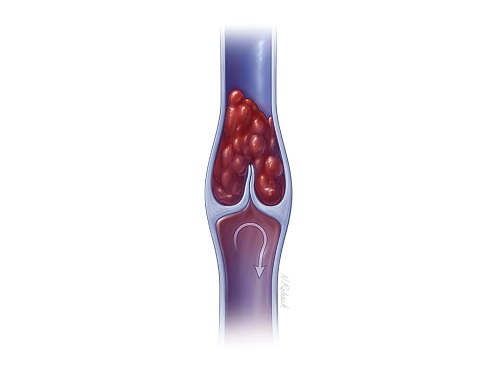
Deep vein thrombosis (DVT) is a serious condition in which a blood clot forms in one or more of the deep veins.

The symptoms of a DVT can go unrecognised.

What causes DVT?

Deep vein thrombosis is usually caused by a combination of different underlying conditions:

Restricted movement

Blood flow in the veins is slowed down because of restricted movement for a long period of time (illness, after surgery, long-distance traveling).

Blood clots form more easily than normal

The risk of getting DVT is increased with a condition that causes blood to clot (coagulate) more easily than normal. Some of these conditions include:

  • cancer and cancer treatments
  • heart disease and lung disease
  • thrombophilia, a genetic condition where the blood has an increased tendency to clot

Infections or inflammation

Infections or inflammation can promote thrombus formation by affecting the lining surface of the vein, e.g. through vessel wall damage and increased coagulability.

Damaged blood vessels

If the wall of a blood vessel is damaged, it may become narrowed or blocked, which can cause a blood clot to form. Blood vessels can be damaged by injuries such as broken bones or severe muscle damage.

Pregnancy

DVTs are rare in pregnancy, although pregnant women are 3 to 4 times more likely to develop thrombosis than non-pregnant women of the same age. A clot can form at any stage of pregnancy and up to six weeks after giving birth.

In addition, several risk factors for the development of DVT exist.

What are some potential complications of DVT?

About one of every two to three patients with previous DVT will develop a long-term complication known as post-thrombotic syndrome (PTS), despite optimal anticoagulant treatment. PTS is a progressive disease and it can show up as chronic pain, swelling, and discoloration of the leg and, in late stages, as open leg ulcers.

The likelihood of another clot forming is high once you have had aDVT event. The effects of PTS are long lasting and can lessen your quality of life substantially.

Another complication of DVT is a condition known as pulmonary embolism (PE) which occurs when a blood clot breaks loose and travels through the vessel to the lungs. A pulmonary embolism can be fatal if the blood clot significantly blocks blood flow through the lungs.

What are the symptoms of a DVT?

Nearly 50% of all DVT cases have no noticeable symptoms. If symptoms are present, they can include leg pain and tenderness, swelling in the calf muscle, ankle, foot, or thigh – usually in one leg only. At times, the skin feels warm and is reddened.

Am I at risk for developing a DVT?

Are you over 60? Are you traveling long distances, thereby sitting for prolonged time withrestricted mobility? Are you overweight and/or lead a sedentary lifestyle? If you answered yes to any of these questions, you may be at risk for developing DVT.

Other risk factors include:

  • Surgery (especially orthopedic) or major injury
  • Smoking
  • Varicose veins
  • High levels of estrogen, such as during pregnancy or when using birth control pills (hormonal contraception)
  • Cancer
  • Prolonged bed rest or immobility, e.g. during hospitalization

How is DVT diagnosed?

Diagnosis of DVT can be made quickly with a simple ultrasound scan that is painless and risk-free. A specific blood test may be performed to measure the level of “D-dimers” which is a sign of recent clotting. Early diagnosis and treatment greatly reduce your risk of serious complications.

There are other tests that your physician may recommend depending on your medical history.

“More than two million Americans are affected by blood clots every year.”

Did you know?

  • 74% of adults have little to no awareness of DVT.
  • A pregnant woman is 5 to 6 times more likely to develop a DVT than a non-pregnant woman.
  • 40% of patients with an existing DVT will experience a further DVT within 1 to 2 years.
  • Wearing compression stockings or socks reduces the risk to develop DVT and associated complications.

Summary

Deep vein thrombosis (DVT) is classified as an acute venous disorder.

Basic medical knowledge on venous disorders

  • With the term Chronic Venous Disorder (CVD) we describe a long-standing condition involving impaired venous return.
  • If vein valves don’t close properly, a reflux results: the blood leaks downwards and stagnates in the vein, thereby leading to venous hypertension. This condition is known as chronic venous insufficiency (CVI) which may cause edema, skin change, and, in some cases, ulcerations.
  • If left untreated, chronic venous insufficiency can result in the formation of serious disorders, including phlebitis and pulmonary embolism. To distinguish the different manifestations of CVD, the CEAP classification system is used.
  • Acute venous disorders usually occur without pre-existing conditions, but they can also be triggered by chronic venous disorders. In any case, medical treatment is immediately required. Acute venous disorders include superficial thrombophlebitis, deep vein thrombosis (DVT), pulmonary embolism, post-thrombotic syndrome, and variceal bleeding.

SOURCE: https://bit.ly/3tjoDKe

Search Articles

Medical Tips in Your Inbox

Get expert recovery advice, equipment guides, and caregiver tips — delivered weekly. No spam, unsubscribe anytime.

Need equipment today?

Same-day or next-day delivery in the DFW area. Call us now for immediate assistance.