
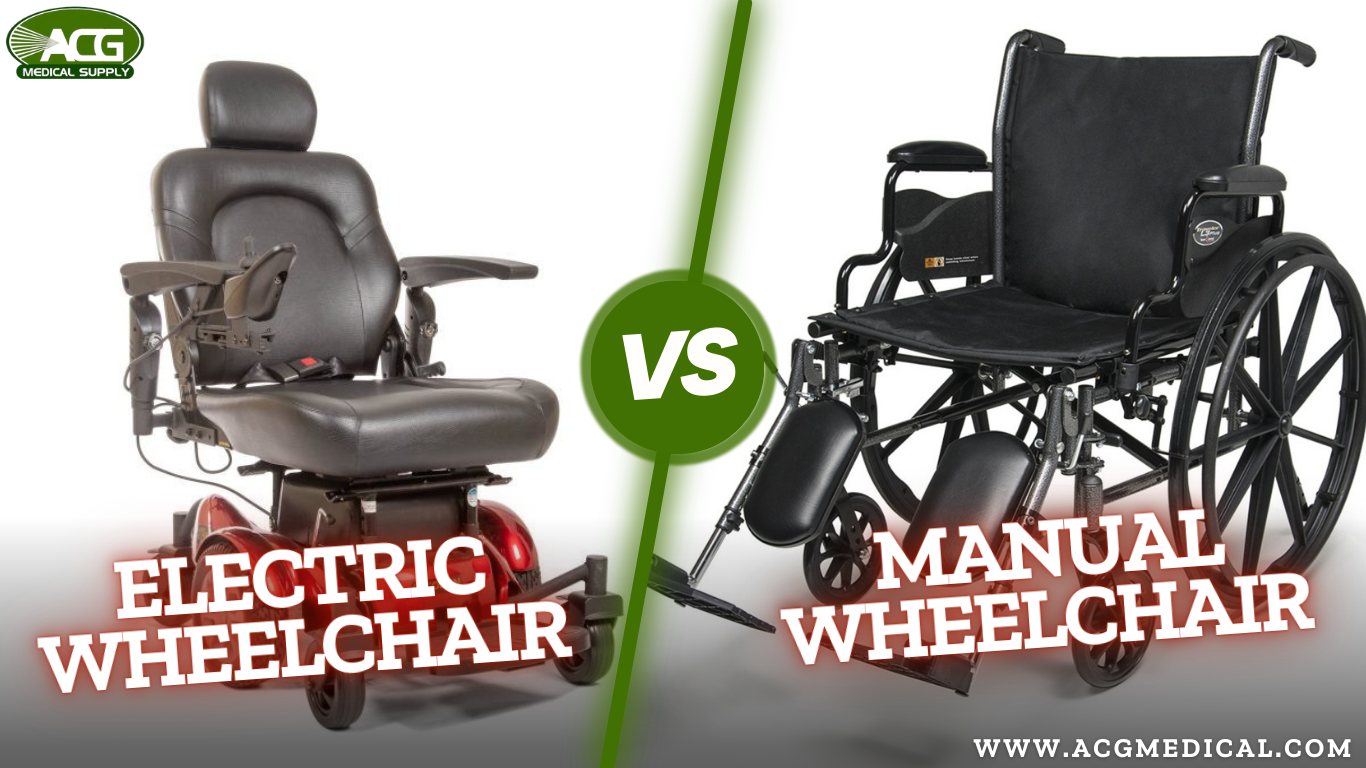
Electric Wheelchair

manual Wheelchair vs Electric Wheelchair

What Is the Difference Between a ManualWheelchair and an Electric Wheelchair?

This choice isn’t medical in the way people think it is. It’s not a box to tick. It’s more like deciding how much of your day you want to spend managing your body.

People often prefer to frame a manual wheelchair versus an electric wheelchair as an effort versus an ease. Exercise versus laziness. That framing is lazy. The real question is distance. How far do you want to go in a day, how often, and how wrecked you’re willing to feel afterwards? A manual chair limits your radius. An electric one changes it. That’s the honest difference.

At ACG Medical Supply, this shows up every week. Someone comes in frustrated because their shoulders are done by lunchtime. Someone else is nervous about trusting a battery outside the house. Both reactions make sense. Neither person is wrong. If you’re looking for the best wheelchair 2026 has lined up, forget the shiny features for a second. The real answer lives in the parts most brochures skip. Fatigue. Anxiety. Confidence. How much thinking do you want to do just to get through a normal day. That’s where the difference actually is.

The Manual Wheelchair: The Minimalist’s Best Friend

A manual wheelchair is basically the “acoustic guitar” of the mobility world. It’s light, it’s responsive, and it doesn’t need a power outlet to sing/move.

Manual Wheelchair Benefits

  • Zero Battery Anxiety: You never have to worry about being “stuck.” If you’ve got arms (or a helpful friend), you’ve got power.
  • The Workout Factor: For many, the manual wheelchair benefits include keeping the upper body toned. It’s a constant, low-impact gym session for your shoulders and core.
  • The “Trunk” Test: Most high-end ACG Wheelchairs in the manual category are incredibly easy to fold. You can usually pop them into a sedan’s trunk in under 30 seconds.

The Reality of the “Daily Grind”

On the flip side, manual wheelchair consequences are real work. Repetitive strain injury (RSI) in the shoulders is the most common complaint for long-term users. And let’s be honest—carpets, grass, and steep ramps feel like climbing Mount Everest after a few hours.

A Quick Note on Capacity: People often worry about durability. Today, manual wheelchair weight capacity has surged. While a standard lightweight frame supports around 250 lbs, heavy-duty bariatric models can now safely handle 450 to 700 lbs without feeling like a tank.

The Electric Wheelchair: The “All-Terrain” Independent

An electric wheelchair isn’t really a chair. It’s closer to a personal vehicle. You don’t choose it because you want an easier ride. You choose it because you want to arrive somewhere with enough energy left to be present in the moment.

Electric Wheelchair Benefits

  • Total Autonomy: This is the big one. If you have limited hand or arm strength, the joystick control is a game-changer.
  • Distance is No Object: You can travel miles on a single charge. Whether it’s a boardwalk or a large museum, your “range” expands significantly.
  • Advanced Ergonomics: Power chairs often feature “tilt-in-space” or “recline” functions. This isn’t just for luxury; it helps prevent pressure sores and improves circulation.

The “Consequences” of Going Electric

The most obvious electric wheelchair consequences are weight and logistics. You aren’t lifting a 200-lb power chair into a Honda Civic. You’ll likely need a van with a ramp or a specialised hitch lift. Then there’s the electric wheelchair battery life. You have to be diligent. If you forget to plug it in, your day is effectively cancelled.

Comparison Chart: Manual vs. Electric

FeatureManual WheelchairElectric Wheelchair
Drive SystemSelf-propelled or Attendant-
pushed
Motorized (Battery powered)
Average Weight15 – 45 lbs150 – 300+ lbs
Typical Range Limited by user stamina10 – 20 miles per charge
TransportabilityFits in most car trunksRequires van/lift/ramp
MaintenanceLow (Tires, brakes, bearings)High (Batteries, motors, wiring)
Best ForShort trips, indoor use, active
users
All-day use, outdoor travel, low
strength

Maintenance 101: Keeping the Wheels Turning

Maintenance isn’t optional. Not because something dramatic will happen right away, but because the chair slowly starts resisting you. And you don’t always realise why.

Manual Wheelchair Maintenance Tips

Quick-release axles clog up. Hair, lint, dust. The wheels still turn, just not well. So you work harder and blame your arms.
Tyres lose air. Slowly. You don’t notice until everything feels heavier than it used to. Check them once a month. That’s enough.

Power Wheelchair Maintenance Tips

For power chairs, the electric wheelchair battery life is your biggest priority.

Don’t “Deep Cycle”: Try to keep it above 20 per cent. Letting it drain completely, again and again, shortens its life faster than most people realise.

Charge Nightly: Even if you barely used it. Ten minutes still counts. Think of charging as routine, not a reaction to a low-battery warning.

Clean the Joystick: That little control is basically the brain of the chair. Dust, moisture, sticky fingers. None of that helps. A quick clean goes a long way.

So, Should I Get a Manual or an Electric Wheelchair?

The “right” answer usually reveals itself when you ask: What is my biggest obstacle?

  • If your obstacle is transportation (you travel a lot by car and have someone to help), a manual chair is a win.
  • If your obstacle is fatigue (you stay home because you’re too tired to move), you definitely need to look at an electric model.

Manual vs electric wheelchair prices are a factor, too. Manual chairs are cheaper. Most land is in the $300–$900 range. Electric wheelchairs cost more, sometimes a lot more. Entry- level models often start around $1,800 and don’t stop there. Cheap deals look good on a screen. Living with them is another thing.

Conclusion

Choosing a wheelchair is a very personal thing. It’s about more than just wheels; it’s about how you interact with your family, your job, and your community.
If you’re still on the fence, come chat with us at ACG Medical Supply. We can help you “test drive” a few options to see which one feels like a natural extension of your body. You can Browse our current selection at ACG Medical Supply Wheelchairs.

FAQs

  • Is a manual wheelchair better for long-term use?
    Only if strength and endurance stay consistent. Many users transition later.
  • How often do electric wheelchair batteries need replacement?
    Typically, every 1.5 to 3 years, depending on usage and care.
  • Are electric wheelchairs difficult indoors?
    Most modern models handle tight spaces well once adjusted.
  • Can I switch from manual to electric later?
    Yes, and many people do. The earlier you notice fatigue, the easier the transition.
  • Which wheelchair offers more independence?
    Independence depends on effort. Electric chairs reduce physical dependency.
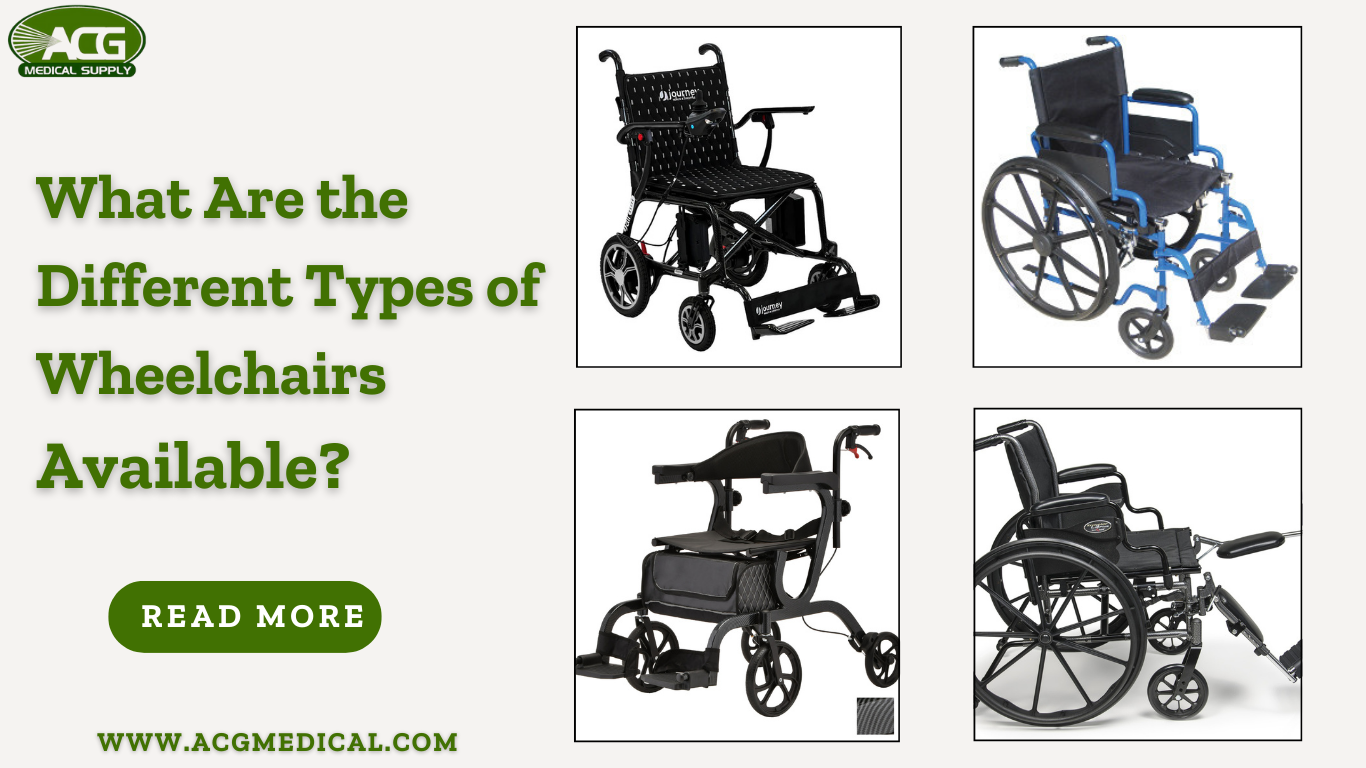
Types of wheelchairs available

What Are the Different Types of Wheelchairs Available?

Most people don’t set out to “learn about wheelchairs.” They end up here because something changed. Maybe walking got unpredictable for them. Balance feels off. Maybe their energy runs out faster than it used to. For a while, you work around it. Then one day, you realize you need answers, and the search goes from “just looking” to very specific, very fast.

And that’s where frustration kicks in. Everything online sounds the same. Clean lists. Neat categories. Words that feel copied and pasted. Real life is messier than that, so let’s talk about wheelchairs the way people actually encounter them, in small real moments, not brochures.

Manual Wheelchairs

Manual wheelchairs are familiar because they’ve been around forever. Two large rear wheels, push rims, brakes you learn to trust, and a frame that does exactly what you ask of it. Nothing more. They work well in controlled spaces. Homes. Clinics. Smooth floors. Short outdoor stretches. For users with upper-body strength, they offer a sense of control that powered chairs can’t quite replicate. You feel the movement. You decide the pace. But manual chairs demand energy. Over time, that effort adds up. Slopes feel longer. Rough ground feels unforgiving. For some people, that’s manageable. For others, it becomes the reason the chair stays unused more often than planned. As a medical wheelchair, it sits somewhere in the middle. Dependable and simple, but not the right fit for everyone, every day.

Electric and Power Wheelchairs

An electric wheelchair, also known as a power wheelchair, offers a distinctly different experience. Instead of pushing, you steer using a joystick or control panel. These chairs are built for people who need mobility support throughout the day and want to move independently without physical strain. They’re great indoors, but many models handle outdoor terrain surprisingly well, too. They’re heavier. They cost more. And yes, you need to remember to charge them. But for many users, the freedom is worth it. If you’re considering long daily use, have limited strength, or simply want smoother Movement, this type of mobility chair can be a game-changer.

Lightweight Wheelchairs

A lightweight wheelchair is exactly what it sounds like. Less bulk. Easier lifting. Less effort. These are often made with aluminum or similar materials and are popular with people who travel, drive frequently, or need something that folds without a wrestling match. They’re also easier for caregivers to handle. There is a downside. Lighter frames aren’t built for heavy use or higher weight limits. But for short-term needs or part-time use, they’re often a really practical middle option.

Transport Wheelchairs

A transport wheelchair resembles a standard manual chair, but with one significant difference. Smaller wheels in the back.
This type isn’t designed for self-propelling. It’s meant to be pushed by someone else. Think airport terminals, hospitals, shopping trips, or quick outings.
They’re compact, easy to fold, and fit nicely into car trunks. If the user won’t be moving Transport chairs, independently, make a lot of sense. But how do you choose the best one? Let’s dive into Essential Tips for Selecting the Right Transport Wheelchair.

Heavy-Duty Wheelchairs

A heavy-duty wheelchair is built for strength and stability. Wider seats. Reinforced frames. Higher weight capacity. These chairs are designed for users who need extra support without sacrificing safety. They’re commonly used as long-term medical wheelchair solutions and are built to last. They are heavier, yes. But they’re also more durable. And honestly, comfort and safety are usually more important than shaving off a few pounds.

Folding Wheelchairs

A folding wheelchair is all about flexibility. Fold it. Store it. Load it into a car. Open it again in seconds.
Most manual and lightweight chairs fold in some way, but some are designed specifically for frequent transport. If storage space or travel is a concern, this feature matters more than people expect.

Wheelchair Accessories

A chair rarely stays “just a chair.” Over time, people add wheelchair accessories to make daily life easier.

Some common ones include:

  • Cushions for pressure relief
  • Storage pouches and trays
  • Anti-tip bars
  • Weather covers

    These small add-ons can change comfort levels dramatically, especially for long-term users.

Quick Comparison Table

TypeBest ForKey BenefitThings to
Consider
Manual WheelchairShort to moderate daily
use
Simple, affordableRequires strength
Electric WheelchairFull-day independenceMinimal physical
effort
Needs charging
Lightweight
Wheelchair
Travel and transportEasy to liftLower weight
limits
Transport
Wheelchair
Assisted mobilityCompact and
portable
portable
Not self-powered
Heavy Duty
Wheelchair
Higher weight supportStability and
durability
Heavier frame
Folding WheelchairStorage and travelSpace-savingFewer custom
features

Choosing What Actually Works

Here’s where people get stuck. They focus on labels instead of daily habits.
Ask yourself:

  • How many hours a day will it be used?
  • Indoors, outdoors, or both?
  • Self-powered or assisted?
  • Will it be transported often?
    That sounds obvious. But it’s not. Many people buy the wrong chair simply because it “looked right.” At ACG Medical Supply, this is why selection matters. A well-matched ACG Wheelchair isn’t about features on paper. It’s about how it fits into real life, day after day.

Conclusion

There isn’t one perfect wheelchair. There’s only the right one for how someone actually lives.
Some people need independence. Some need support. Some need something that folds, fits, and disappears into the trunk without fuss. Understanding the different types makes that decision easier. And honestly, less stressful. Which matters more than people admit. Because mobility isn’t just about moving. It’s about feeling comfortable doing it.

FAQs

  • Which wheelchair is used most often?

Manual wheelchairs remain the most widely used due to their simplicity and accessibility.

  • Is an electric wheelchair suitable for indoor use?

Yes. Many electric wheelchairs are designed for tight indoor spaces and smooth navigation.

  • Are lightweight wheelchairs durable?

They are durable within their intended use. A lightweight wheelchair is best for moderate daily use and frequent transport.

  • What situations call for a transport wheelchair?

A transport wheelchair works well for appointments, travel, and any situation where Assistance is always available.

  • Can accessories be added later?

Yes. Most wheelchair accessories can be added over time as needs change.

Wheelchairs

Wheelchair Buying Guide for First-Time Users

Shopping for your first wheelchair can seem easy at first, but it gets overwhelming pretty fast. One moment you’re just looking, and the next you’re buried in different models, features, and prices. It’s enough to make anyone’s head spin. And then there’s the other part (the emotional bit) of coming to terms with the fact that you or someone close to you will be using a wheelchair. That’s no small thing. Feeling a little lost at the start? Yeah… most people do.

That’s why we put this guide together with no tech talk overload, no walls of confusing terms, just the key stuff you need to know so you can pick a wheelchair that’s comfortable, practical, and actually works for your life.

Understanding the different types of wheelchairs

There are hundreds of wheelchair models available in the market. All of them are built in different ways and for different needs: staying active, traveling light, getting more support, you name it. Knowing the differences now will make it much easier to choose one you’ll actually enjoy using. Let’s go through the main options.

Manual Wheelchairs

These are the chairs you’re probably the most familiar with. They are moved by pushing the rims yourself or with help from someone who can push the chair from behind. They’re lightweight wheelchairs, easy to fold, and pretty budget-friendly. Manual Wheelchairs are perfect if you’ve got some upper-body strength and like the idea of staying active. 

Bonus: they slide into most car trunks without a wrestling match.

Transport Wheelchairs

Think of Transport Wheelchairs (sometimes called companion wheelchairs) as the “ride-along” option. The smaller wheels aren’t just a design choice; they mean you won’t be propelling yourself. Instead, a friend, family member, or caregiver gets to do the pushing.

They fold up quickly. You can slide one into a car trunk, carry it up a step or two, or put it in a closet without much effort. Which ultimately makes them great for short trips, like a quick doctor’s visit, a stroll through the mall, or getting through the airport without having to carry the bulk of a heavier chair.

Electric and Power Wheelchairs

An Electric or Power Wheelchair is a great option if you can’t push a wheelchair on your own, or just want an easier way to get around. Power and Electric Wheelchairs are controlled with a joystick and work well in small spaces with tight turns or over longer distances. Yes, they’re heavier and need regular charging, but the trade-off is complete independence.

Finding your fit: a quick comparison

Wheelchair TypeWhat’s Great About ItWhat to Watch ForWho It’s Best For
Manual WheelchairsLight, affordable, low maintenanceNeeds physical effort to moveActive users, those with some strength
Electric WheelchairsEasy to use, great for longer distancesHeavier, requires chargingUsers with limited upper-body strength
Transport WheelchairsCompact and portableRequires someone to pushShort trips, travel
Companion WheelchairsComfortable for the user and the caregiverNot self-propelledThose needing assistance
Lightweight WheelchairsEasy to carry and transportMight be less ruggedTravelers and active users

Key factors to think about before purchasing your first wheelchair

Before falling for the first wheelchair you see, think about:

  • Your physical ability – Do you have the arm strength for manual? Or would a motorized option be a better long-term fit?
  • Where you’ll use it – Indoors only? Outdoors on uneven ground? Both? The terrain really matters.
  • How often you’ll transport it – If your chair is going in and out of a car several times a week, you’ll thank yourself for choosing something light and easy to fold.
  • Comfort – If you’ll be in the chair for long stretches, think beyond the basics. Cushions, lumbar support, and adjustable seating can make all the difference between “bearable” and “actually enjoyable.”
  • Budget – Prices range widely, but remember: this is something you’ll rely on daily. Quality and durability will pay for themselves over time.

Additional tips for buying your first wheelchair

  • Test drive it – Comfort and maneuverability aren’t obvious from a picture.
  • Measure twice – Seat width, depth, and height should fit you like your favorite pair of jeans—snug, but not restrictive.
  • Check your space – Will it glide through your doorways? Fold into your trunk without a wrestling match?
  • Always ask about aftercare – This includes information about repairs, warranties, and servicing. This information is worth knowing before something in your wheelchair breaks.

Conclusion

The right wheelchair should make your days easier. It should feel good to sit in, fit your routine, and go where you go, without making you think twice about it. Take your time. Try a few. Notice what feels right, and what doesn’t.

At ACG Medical Supply, we’ll help you land on a chair that works for you from the very beginning, so you can get on with living your life instead of fussing over your wheels.

FAQs

 Q1: Can I use a manual wheelchair if I don’t have much upper-body strength?
If pushing is hard, an electric or companion wheelchair will likely be more comfortable.

Q2: How long does a wheelchair usually last?
Most quality wheelchairs last 3–5 years.

Q3: Are power wheelchairs tricky to use?
Not really, most are intuitive and easy to control.

Q4: What if I have low upper-body strength?
An electric or companion wheelchair will probably suit you better than a manual

Role of a Wheelchair

What Is The Role of a Wheelchair? Which Ones Are The Best?

The primary purpose of a wheelchair is to allow a user with limited mobility to move both indoors and outdoors. If you are new to the world of wheelchairs or unsure where to begin when buying one do not look any further, ACG Medical Supply got you covered. Although wheelchairs are necessary for various reasons (sickness, accident, or disability), they do not have to be uncomfortable or unsightly. Today’s market is flooded with options for wheelchair users who wish to live their lives to the fullest, ranging from collapsible to ergonomic chairs and everything in between.

Comfort is the Key

It is critical to understand that purchasing a wheelchair is more complicated than simply “purchasing a wheelchair.” Because wheelchairs come in various shapes and sizes and can accommodate almost any body type, finding one that completely meets your needs is the most important thing to do. Comfortable wheelchairs are crucial for your physical health, but they are also important for your emotional health. More comfortable wheelchair users can participate in more activities, than who sit in uncomfortable chairs may tire quickly and lose interest in their events. However, if you can go out without feeling difficulty or discomfort, you are more likely to enjoy what you do. Being able to go out and do things might also assist your mental health. Comfortable wheelchairs might also provide opportunities for exercising.

Aspects to Consider for New Wheelchair Users

There are various types of wheelchairs that are suitable for use in this circumstance of discomfort. Manual Wheelchairs are designed for the person in the chair to navigate independently, these chairs usually feature larger back wheels to help you control and move the chair forward, which could also make the chair big and difficult to transport. Many manual chairs now have quick-release wheels that make them easier to store. Wheelchairs that are light and ultra-light feature stiff frames, which allows for more forward force. Because the chair does not fold and fast-release wheels are more helpful.

Transport Wheelchairs are intended to be pushed by caregivers or companions. Wheelchairs built for transport, on the other hand, often have four small wheels. However, wheelchairs made for manual use typically have two smaller wheels in front and two larger wheels in the back.

A power wheelchair, also known as a powerchair, electric wheelchair, motorized wheelchair, or electric-powered wheelchair (EPW), has a battery-powered motor and is controlled via a joystick. This wheelchair that drives forward with the assistance of an electric motor rather than the user’s muscular power and helps individuals unable to walk short distances or have weaker upper extremities may benefit from them.

The Pride Jazzy Wheelchair provides a variety of real-world mobility solutions. There is a Jazzy Chair to fit everyone’s needs, from conveniently portable power wheelchairs to durable models with ATX Suspension for increased performance across uneven terrain including its structure, unrivaled mobility, and ease of operation, which can be used comfortably.

Promote Mobility and Enhance Quality of Life

There are many options ranging from portable indoor wheelchairs that are good on smooth floors to outdoor chairs with specialized tracks or wheels for uneven terrain.
Wheelchairs have advanced significantly over the years, yet it may still be difficult to locate the ideal wheelchair that meets all your needs. An occupational therapist can assist you in sorting through all your alternatives and can help you in customizing your chair to match your needs.

Other types of equipment you may require include saddlebags for keeping your things, Foam, gel, or air-filled seat Wheelchair Cushions, Headrest, a Power pack for your manual chair, Powerchair battery backup, and Suspension frog legs.

Finding the correct wheelchair can make all the difference, but it takes time, but working with a therapist can assist to reduce the stress associated with wheelchair purchasing.

Best Electric Wheelchair

Find Top-Rated Power Electric Wheelchairs at ACG Medical

Power electric wheelchairs, or electric wheelchairs, are a boon to those who might otherwise be housebound due to disease or accident. These mobility devices have four to six wheels, increasing stability, and rechargeable batteries to offer convenience and travel support. Because of the difficulty of manually propelling a wheelchair, many people find that powered wheelchairs are either a necessity or a welcome aid. The best electric wheelchair models offer performance, are easy to use, and feature lightweight and long-lasting rechargeable batteries. Those considering investing in new motorized wheelchairs can find various options in different price ranges at ACG Medical Supply, a prominent mobility solution provider. With options from numerous top-tier manufacturers, you’re bound to find a product that matches your budget and requirements.

How to choose an electric power wheelchair?

Those purchasing online can find numerous options, but knowing about the types of wheelchairs and features can help make an informed decision. For instance, power wheelchairs come in three variations: rear-wheel, front-wheel, and mid-wheel drive. The main difference among them is the position and size of the drive wheel.

  • Rear-Wheel: Smaller than the front wheels, the rear ones of a power wheelchair are propelled by an electric motor, providing the chair a forward momentum. If you need to drive over a curb or some challenging terrain, this push will come in handy. Many people prefer rear-wheel drive vehicles because of their convenience. They are great at dampening the effects of bumps in the road and coping with incremental changes in elevation, making for a more comfortable ride overall.
  • Front-Wheel: Large front wheels propel front-wheel motorized chairs, offering riders more space to move their feet. The riding quality of front-wheel drive power chairs is comparable to that of their rear-wheel driven counterparts. It usually features four wheels, and users can experience better control and shock absorption when treading a bumpy path.
  • Central or Mid-Wheel: Three pairs of wheels are standard with mid-wheel powered chairs, with the smallest at the front and the largest at the back. These wheelchairs are known to be simple to steer, even in tight quarters.

Understanding the space, travel requirements, weight, and other features can help users find a suitable motorized wheelchair. Explore ACG Medical Supply for top power wheelchair models that offer convenience, accessible transportation, and usage.

1. Golden Compass Sport Power Chair:

Golden Compass Sport Power models feature an advanced Dynamic Load Compensation enabling users to have perfect control over the mobility device. By continuously adjusting for factors like gradients, pace, and rider weight, this cutting-edge system ensures a smooth and comfortable journey regardless of where you are. It is an all-terrain, heavy-duty power chair with a 300lb weight capacity and an improved battery range of 19.5 miles.

2. Pride Jazzy Wheelchair:

This sporty wheelchair is the ultimate in performance and style. With six wheels on the ground, Active-Trac Suspension, and an innovative articulating beam, Pride Jazzy Wheelchair is perfect for those looking for a little more freedom. In addition, the Pride Jazzy series is available in various heavy-duty and lightweight designs. For instance, People with limited mobility may now get around quickly thanks to the Jazzy® Elite HD’s two-motor, front-wheel drive technology and sturdy build.

3. Pride Go Wheelchair:

The Pride Go Wheelchair is a perfect travel companion for someone who needs a lightweight and compact wheelchair. This power wheelchair is easy to fold into five pieces that are lightweight and easy to carry. In addition, it has a small turning circle, so it’s easier to get around in tight spaces. The new Go-Chair is lightweight and portable, yet it can support up to 300 pounds.

4. Merits Regal EZ Go Portable Power Wheelchairs:

The Merits EZ power chairs are lightweight yet durable wheelchairs that are easy to transport. Its effortless disassembly makes it an excellent choice for those who travel a lot. In addition, this lightweight and compact wheelchair are perfect for people who need a secondary wheelchair for travel or for those who need a portable power wheelchair that fits in the trunk of their car.

Summing Up:

Mobility-challenged individuals and the elderly who need to go around town quickly can benefit significantly from using a lightweight electric transport wheelchair. You should use quality, performance, functionality, load capacities, and customer reviews as a baseline when shopping for a power wheelchair. The products we’ve highlighted above appear on the best power wheelchair lists.

ACG Medical Supply specializes in helping people find the perfect motorized wheelchair and other mobility aids for their needs. The online shop provides a wide selection of wheelchair models, detailed descriptions of their construction, intended use, maximum weight, and more.

Search Articles

Medical Tips in Your Inbox

Get expert recovery advice, equipment guides, and caregiver tips — delivered weekly. No spam, unsubscribe anytime.

Need equipment today?

Same-day or next-day delivery in the DFW area. Call us now for immediate assistance.