
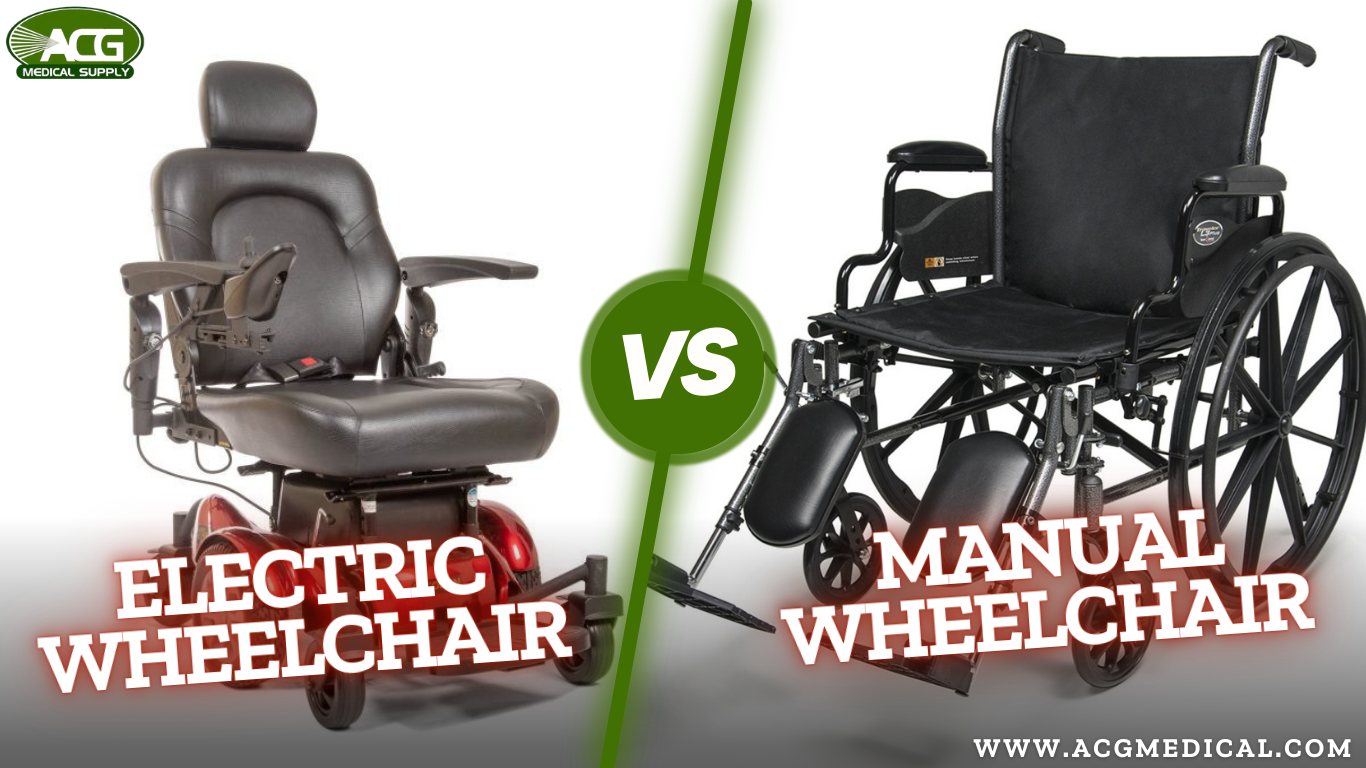
This choice isn’t medical in the way people think it is. It’s not a box to tick. It’s more like deciding how much of your day you want to spend managing your body.
People often prefer to frame a manual wheelchair versus an electric wheelchair as an effort versus an ease. Exercise versus laziness. That framing is lazy. The real question is distance. How far do you want to go in a day, how often, and how wrecked you’re willing to feel afterwards? A manual chair limits your radius. An electric one changes it. That’s the honest difference.
At ACG Medical Supply, this shows up every week. Someone comes in frustrated because their shoulders are done by lunchtime. Someone else is nervous about trusting a battery outside the house. Both reactions make sense. Neither person is wrong. If you’re looking for the best wheelchair 2026 has lined up, forget the shiny features for a second. The real answer lives in the parts most brochures skip. Fatigue. Anxiety. Confidence. How much thinking do you want to do just to get through a normal day. That’s where the difference actually is.
The Manual Wheelchair: The Minimalist’s Best Friend
A manual wheelchair is basically the “acoustic guitar” of the mobility world. It’s light, it’s responsive, and it doesn’t need a power outlet to sing/move.
Manual Wheelchair Benefits
- Zero Battery Anxiety: You never have to worry about being “stuck.” If you’ve got arms (or a helpful friend), you’ve got power.
- The Workout Factor: For many, the manual wheelchair benefits include keeping the upper body toned. It’s a constant, low-impact gym session for your shoulders and core.
- The “Trunk” Test: Most high-end ACG Wheelchairs in the manual category are incredibly easy to fold. You can usually pop them into a sedan’s trunk in under 30 seconds.
The Reality of the “Daily Grind”
On the flip side, manual wheelchair consequences are real work. Repetitive strain injury (RSI) in the shoulders is the most common complaint for long-term users. And let’s be honest—carpets, grass, and steep ramps feel like climbing Mount Everest after a few hours.
A Quick Note on Capacity: People often worry about durability. Today, manual wheelchair weight capacity has surged. While a standard lightweight frame supports around 250 lbs, heavy-duty bariatric models can now safely handle 450 to 700 lbs without feeling like a tank.
The Electric Wheelchair: The “All-Terrain” Independent
An electric wheelchair isn’t really a chair. It’s closer to a personal vehicle. You don’t choose it because you want an easier ride. You choose it because you want to arrive somewhere with enough energy left to be present in the moment.
Electric Wheelchair Benefits
- Total Autonomy: This is the big one. If you have limited hand or arm strength, the joystick control is a game-changer.
- Distance is No Object: You can travel miles on a single charge. Whether it’s a boardwalk or a large museum, your “range” expands significantly.
- Advanced Ergonomics: Power chairs often feature “tilt-in-space” or “recline” functions. This isn’t just for luxury; it helps prevent pressure sores and improves circulation.
The “Consequences” of Going Electric
The most obvious electric wheelchair consequences are weight and logistics. You aren’t lifting a 200-lb power chair into a Honda Civic. You’ll likely need a van with a ramp or a specialised hitch lift. Then there’s the electric wheelchair battery life. You have to be diligent. If you forget to plug it in, your day is effectively cancelled.
Comparison Chart: Manual vs. Electric
| Feature | Manual Wheelchair | Electric Wheelchair |
| Drive System | Self-propelled or Attendant- pushed | Motorized (Battery powered) |
| Average Weight | 15 – 45 lbs | 150 – 300+ lbs |
| Typical Range | Limited by user stamina | 10 – 20 miles per charge |
| Transportability | Fits in most car trunks | Requires van/lift/ramp |
| Maintenance | Low (Tires, brakes, bearings) | High (Batteries, motors, wiring) |
| Best For | Short trips, indoor use, active users | All-day use, outdoor travel, low strength |
Maintenance 101: Keeping the Wheels Turning
Maintenance isn’t optional. Not because something dramatic will happen right away, but because the chair slowly starts resisting you. And you don’t always realise why.
Manual Wheelchair Maintenance Tips
Quick-release axles clog up. Hair, lint, dust. The wheels still turn, just not well. So you work harder and blame your arms.
Tyres lose air. Slowly. You don’t notice until everything feels heavier than it used to. Check them once a month. That’s enough.
Power Wheelchair Maintenance Tips
For power chairs, the electric wheelchair battery life is your biggest priority.
Don’t “Deep Cycle”: Try to keep it above 20 per cent. Letting it drain completely, again and again, shortens its life faster than most people realise.
Charge Nightly: Even if you barely used it. Ten minutes still counts. Think of charging as routine, not a reaction to a low-battery warning.
Clean the Joystick: That little control is basically the brain of the chair. Dust, moisture, sticky fingers. None of that helps. A quick clean goes a long way.
So, Should I Get a Manual or an Electric Wheelchair?
The “right” answer usually reveals itself when you ask: What is my biggest obstacle?
- If your obstacle is transportation (you travel a lot by car and have someone to help), a manual chair is a win.
- If your obstacle is fatigue (you stay home because you’re too tired to move), you definitely need to look at an electric model.
Manual vs electric wheelchair prices are a factor, too. Manual chairs are cheaper. Most land is in the $300–$900 range. Electric wheelchairs cost more, sometimes a lot more. Entry- level models often start around $1,800 and don’t stop there. Cheap deals look good on a screen. Living with them is another thing.
Conclusion
Choosing a wheelchair is a very personal thing. It’s about more than just wheels; it’s about how you interact with your family, your job, and your community.
If you’re still on the fence, come chat with us at ACG Medical Supply. We can help you “test drive” a few options to see which one feels like a natural extension of your body. You can Browse our current selection at ACG Medical Supply Wheelchairs.
FAQs
- Is a manual wheelchair better for long-term use?
Only if strength and endurance stay consistent. Many users transition later.
- How often do electric wheelchair batteries need replacement?
Typically, every 1.5 to 3 years, depending on usage and care.
- Are electric wheelchairs difficult indoors?
Most modern models handle tight spaces well once adjusted.
- Can I switch from manual to electric later?
Yes, and many people do. The earlier you notice fatigue, the easier the transition.
- Which wheelchair offers more independence?
Independence depends on effort. Electric chairs reduce physical dependency.