
It usually starts pretty quietly. Someone slips. Or almost slips. Or they start taking shorter showers because standing the whole time wears them out. Maybe it’s a parent. Maybe it’s you. Either way, now you’re Googling things you never thought you’d Google, and stumbling across a whole world of products you didn’t know existed.
That’s how most people end up looking at shower chairs. Not because they were planning for it. Because something happened, or almost happened, and now you’re trying to make the bathroom a little safer before things get worse.
Fair enough. Let’s walk through what’s actually important.
Start Here: What’s Actually Going On?
Not to get too deep about it, but you need to be honest about the reason before you start shopping. Because “I need a shower chair” covers a pretty huge range of situations, and the right chair for one person is completely wrong for another.
Are we talking about post-surgery recovery, where standing for five minutes feels like running a mile? Balance issues where a wet floor is genuinely scary? Pure exhaustion, maybe from an illness, chronic fatigue, or just being in your seventies and not bouncing back the way you used to? Or is it caregiver-related, with someone else helping with bathing and equipment to make that easier?
Different answers. Different chairs. Worth figuring out before spending money.
Okay — So What Are All the Different Types?
There are more types of shower chairs than most people realize. Here’s the honest version of each one:
The Shower Bench
A shower bench is wider than a regular chair; sometimes it spans a corner, sometimes it’s a simple, long seat that sits flat in the shower. No frills. Really good for people who want a place to sit without feeling like they’re in a medical facility. A lot of people recovering from hip or knee surgery go straight for this one. Some benches have backs; a lot don’t. That distinction is more important than people think. Let’s look at that in a second.
Shower Chair With Back vs. Without
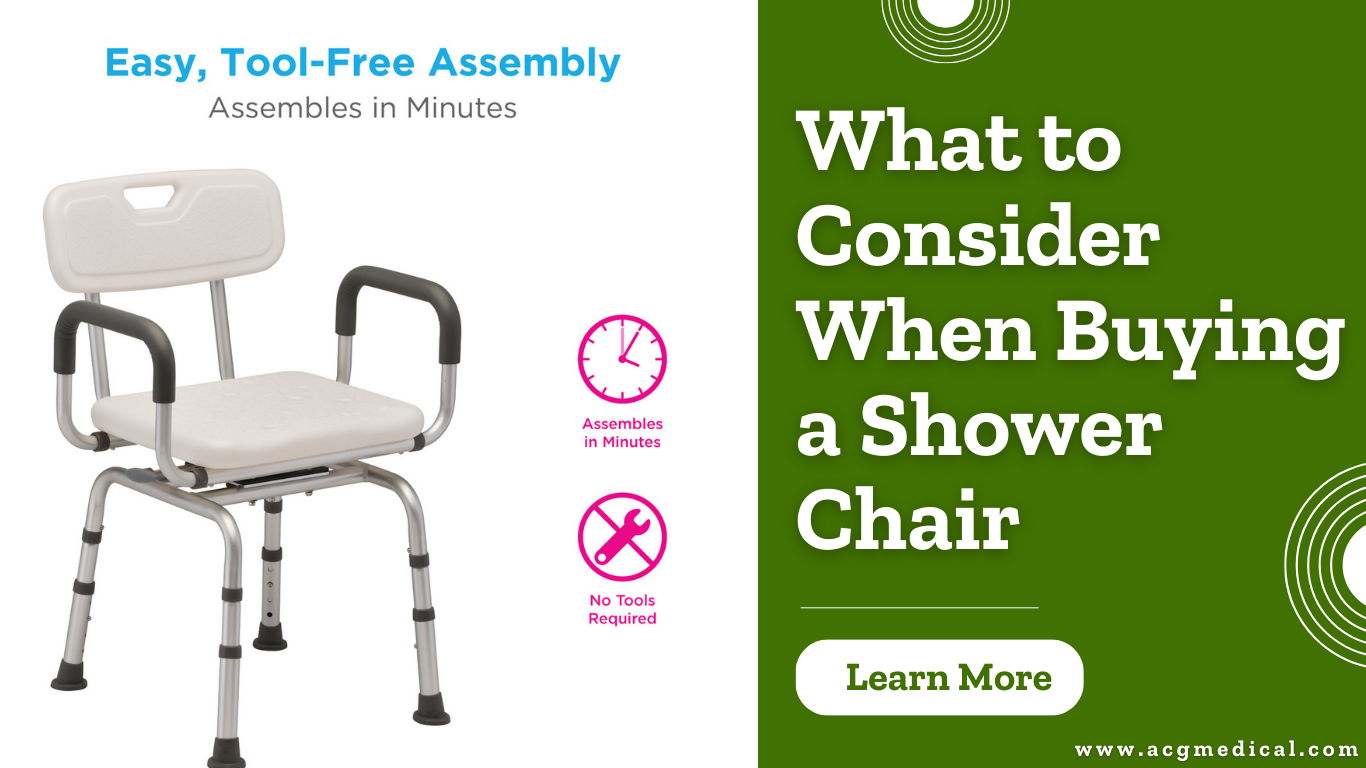
A shower chair with a back sounds like a small upgrade, but if you’re dealing with any real fatigue or balance wobble, that backrest changes everything. Washing your hair when you’re exhausted and dizzy is harder than it sounds. Having something to lean against is not a luxury. It’s practical.
Meanwhile, a shower chair without a back works perfectly well for someone who mainly wants to sit down and doesn’t need that extra support. Lighter. Easier to store. Fine for what it is.
The Folding Shower Chair
A folding shower chair folds up flat so you can tuck it away when other people use the shower. That’s basically the whole value proposition. If you share a bathroom, or the person who needs it uses it only sometimes, it’s worth a shot. The one trade-off is that folding designs are a little less rigid than fixed ones. Totally fine for most situations, just worth knowing if stability is a top concern.
Shower Stool
Honestly, a shower stool is kind of the stripped-down version of all of this. No back. No arms. Just a seat on four legs. Usually cheap, sometimes under twenty bucks. It’s fine for someone who wants a perch for a few minutes but doesn’t have major mobility concerns. If any real shakiness or weakness is happening, a stool is probably not the right answer.
Rolling Shower Chair / Shower Chair with Wheels
This is where it gets more serious. A rolling shower chair, also called a shower chair with wheels, is less of a chair and more of equipment. You roll it into the shower. Some models roll over the toilet too. They’re designed for people who have significant mobility limitations and often need a caregiver’s help transferring in and out. Big, heavier, more involved. But if that’s what the situation calls for, nothing else really works as well.
Commode Chair
A commode chair is dual-purpose; it works in the shower and over the toilet. Has an opening in the seat. Not exactly a conversation piece, but genuinely useful when getting on and off the toilet is its own challenge. Home health aides and nurses often recommend them in post-hospital situations. Not glamorous. But extremely practical.
Specialty Shower Chairs
Then there’s everything else. Specialty shower chairs are a catch-all category for larger body frames, pediatric versions for kids with disabilities, reclining shower chairs, and full shower gurneys for people who can’t sit upright. If none of the standard options seem to fit, this is the category to dig into. They cost more. They’re also built for things regular chairs can’t handle.
A Quick Look at Common Shower Chair Styles
| Type of Chair | What It’s Usually Best For | Things Buyers Notice |
| Shower Stool | Small showers or tight spaces | Compact and easy to move |
| Shower Bench | Larger showers need a side support | More sitting space |
| Shower Chair With Back | Larger showers needing a side support | Feels stable and secure |
| Shower Chair Without Back | Users needing freedom of movement | Easier turning and reaching |
| Folding Shower Chair | Shared bathrooms | Saves space |
| Rolling Shower Chair | Limited mobility transfers | Reduces standing movement |
| Commode Chair | Multi-use bathroom support | Works beyond the shower |
Weight Capacity — Seriously, Don’t Ignore This
Every chair has a weight capacity stamped somewhere on it. Usually, somewhere between 250 and 500 pounds for standard models. You need to buy one that’s rated for more than the person actually weighs, not just barely enough. Ten percent over the limit isn’t a safety margin. It’s a liability.
Bariatric chairs go higher, up to 600 or 700 pounds. They also tend to have wider seats, which matters for comfort even before weight becomes a factor. If this is relevant to your situation, skip the standard section entirely and start in the bariatric aisle. There’s no reason to try to make a regular chair work when the right option exists.
The Features That Are Actually Important
“Shower chair features” sounds like marketing talk. But a few things actually make a difference in daily use:
- Non-slip feet. This shouldn’t even need to be said, but yes, check for rubber tips on the legs. Wet tile is unforgiving. Some cheap chairs skip proper rubber grips. Don’t buy one that does.
- Height adjustability. Most chairs have it, but verify. Too low and it’s hard to stand back up. Too high and your feet dangle awkwardly. You want the person’s feet flat on the floor with knees at a comfortable angle.
- Armrests. Optional for some people. Non-negotiable for others. If standing up from a seated position is already a challenge, armrests make it possible without help.
- Drainage holes. A solid-bottom seat traps water and becomes a breeding ground for mildew. Look for a seat with cutouts or holes so water runs through.
- Frame material. Aluminum outlasts steel in a wet environment. Cheap steel rusts. If you’re planning to use this for more than six months, you must pay attention to this as well.
Beyond that, think about your specific bathroom. Walk-in shower or tub? How wide is the floor space? Is there a lip to step over? These details trip people up after purchase. Better to measure before buying than to return it after.
The Part of This That Nobody Brings Up
Here’s the thing. Buying a shower chair (especially for yourself) can feel like more than just a purchase. It can feel like giving something up. Like admitting that the bathroom used to be simple and now it isn’t. That’s a weird grief, and it’s real.
And if you’re buying it for a parent? That hits different, too. There’s something about seeing your mom or dad needing a seat in the shower that isn’t in a place regular shopping doesn’t.
But here’s what’s also true: bathroom falls are one of the most common causes of serious injury in older adults. Broken hips. Head injuries. Long recoveries. And the thing that could have prevented much of it was a $40 piece of equipment. Learn more about the growing importance of shower chairs for senior care and bathroom safety.
Before You Buy — Run Through This
- Who is using it, and what’s the main issue? Fatigue, balance, and transfer help it change what type makes sense.
- What’s their actual weight, and does the chair’s capacity clear it comfortably? Not just barely.
- What kind of shower? Walk-in, tub, tub-shower combo, they all have differentspace constraints.
- Do other people share the bathroom? A folding shower chair might be worth it just for the storage.
- Is a caregiver involved? Rolling models and commode chairs are designed for assisted bathing in ways regular chairs aren’t.
- What’s the budget, and have you checked insurance? Don’t leave money on the table.
Answer those honestly, and you’ll have a pretty short list left.
Conclusion
Don’t let the number of options freeze you. It happens. People spend two weeks comparing chairs and end up buying nothing because they’re afraid of making the wrong choice. But there’s no perfect chair. There’s just the one that fits the situation.
Read the weight rating. Check the return policy. Look at the floor space in your bathroom one more time. Then buy the thing. If it wobbles or feels wrong when it arrives, send it back. That’s what return windows are for. You’ve got this.
FAQs
- How do I choose the right weight capacity?
Pick a chair rated above the user’s body weight so it stays stable and durable. - Are commode chairs safe for showers?
Yes. Many commode chairs are made with water-resistant materials and drainage seats. - What are Specialty Shower Chairs?
They are chairs designed for specific needs, such as extra support, reclining seats, or caregiver assistance. - What affects Shower Chair Cost and types?
Price usually depends on materials, strength, adjustability, and mobility features. - Will Medicare pay for a shower chair?
Usually not. Standard shower chairs are rarely fully covered, though some plans may offer partial help.