Bathroom Care

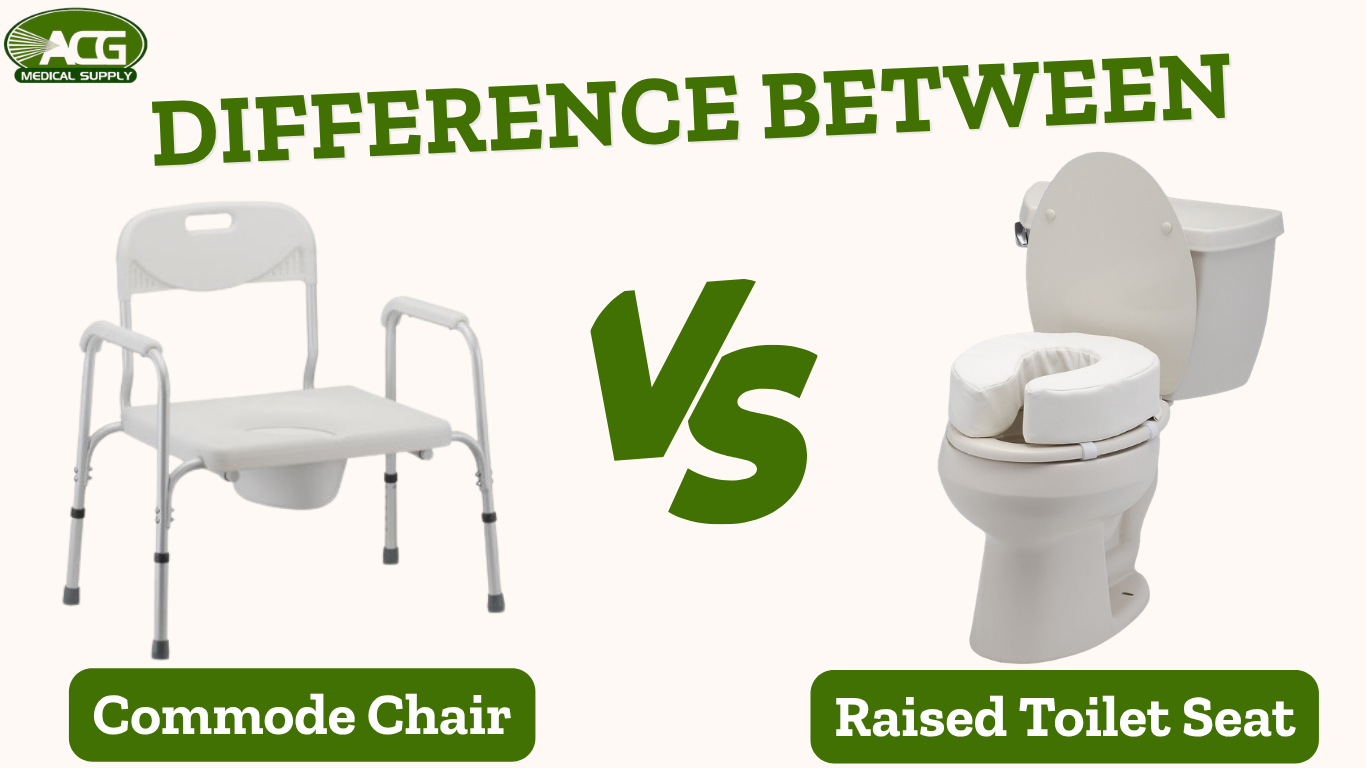
Commode vs Raised Seat

What Is the Difference Between a Bedside Commode Chair and a Raised Toilet Seat?

Bathroom aids don’t make for great dinner conversation. But when someone needs one, the difference between the right product and the wrong one matters a lot. A bedside commode chair and a raised toilet seat both help with toileting; they solve different problems. A commode moves the bathroom closer to the person. A raised seat makes the existing toilet easier to get on and off. ACG Medical Supply carries both, including portable and adjustable options, which is worth knowing because the right choice almost always comes down to what’s actually hard for the person using it.

What is a bedside commode actually?

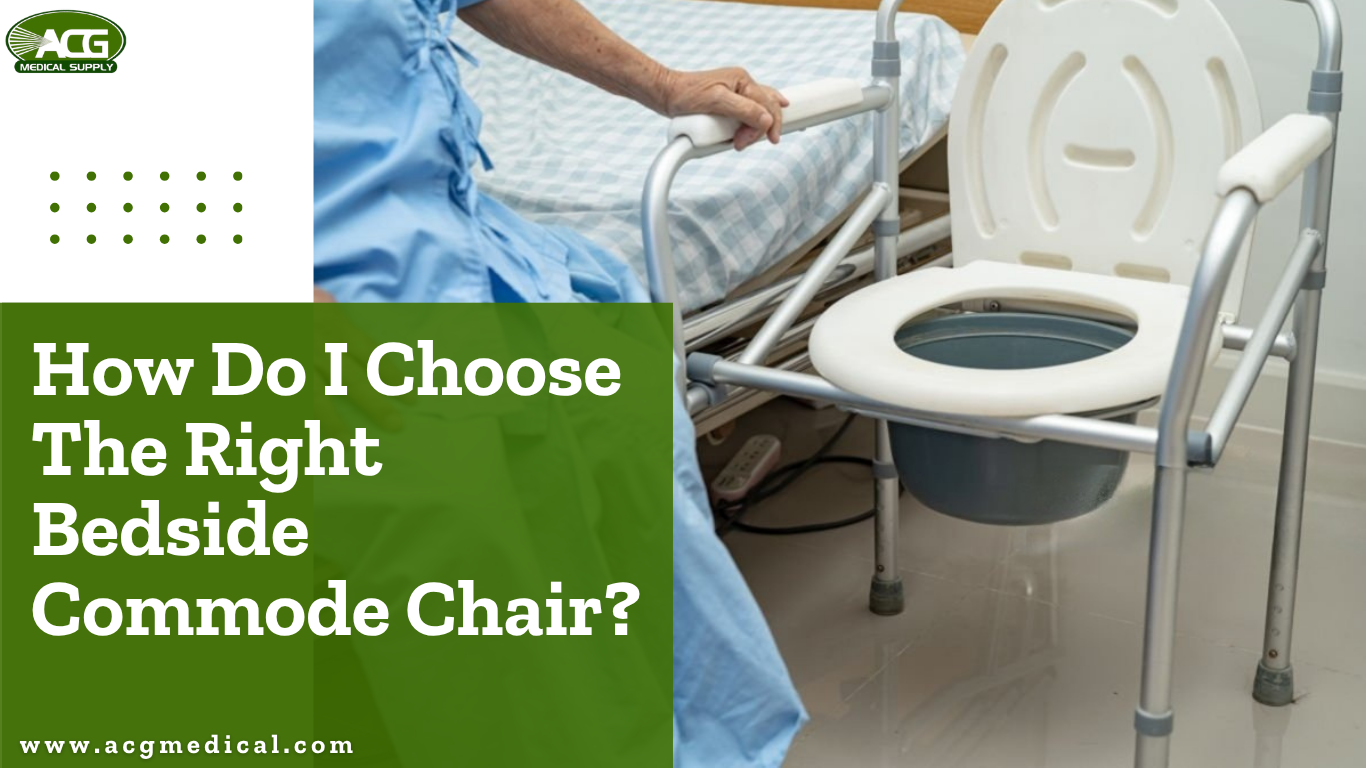
A bedside commode chair is exactly what it sounds like. A chair that works like a toilet. No plumbing. No fixed spot. It can sit right next to the bed. Or in a living room corner if needed. Some people even move it around during the day. That flexibility is the whole point.

It’s often described as a portable toilet for the elderly, but that doesn’t really cover it. It’s more about reducing effort. Cutting down those long, tiring walks. Especially at night. And nights are usually when things feel the hardest.

The benefits of bedside commode use tend to show up quickly:

  • Less distance to walk
  • Less urgency and panic
  • Less risk of slipping or losing balance
  • More control over timing

Some versions are simple. Others are more thought-out. A portable commode chair might fold away. A 3-in-1 commode chair can sit over a toilet or be used in the shower. An adjustable height commode chair makes sure feet stay grounded. These are all small details, but they add up to something big.

What is a raised toilet seat?

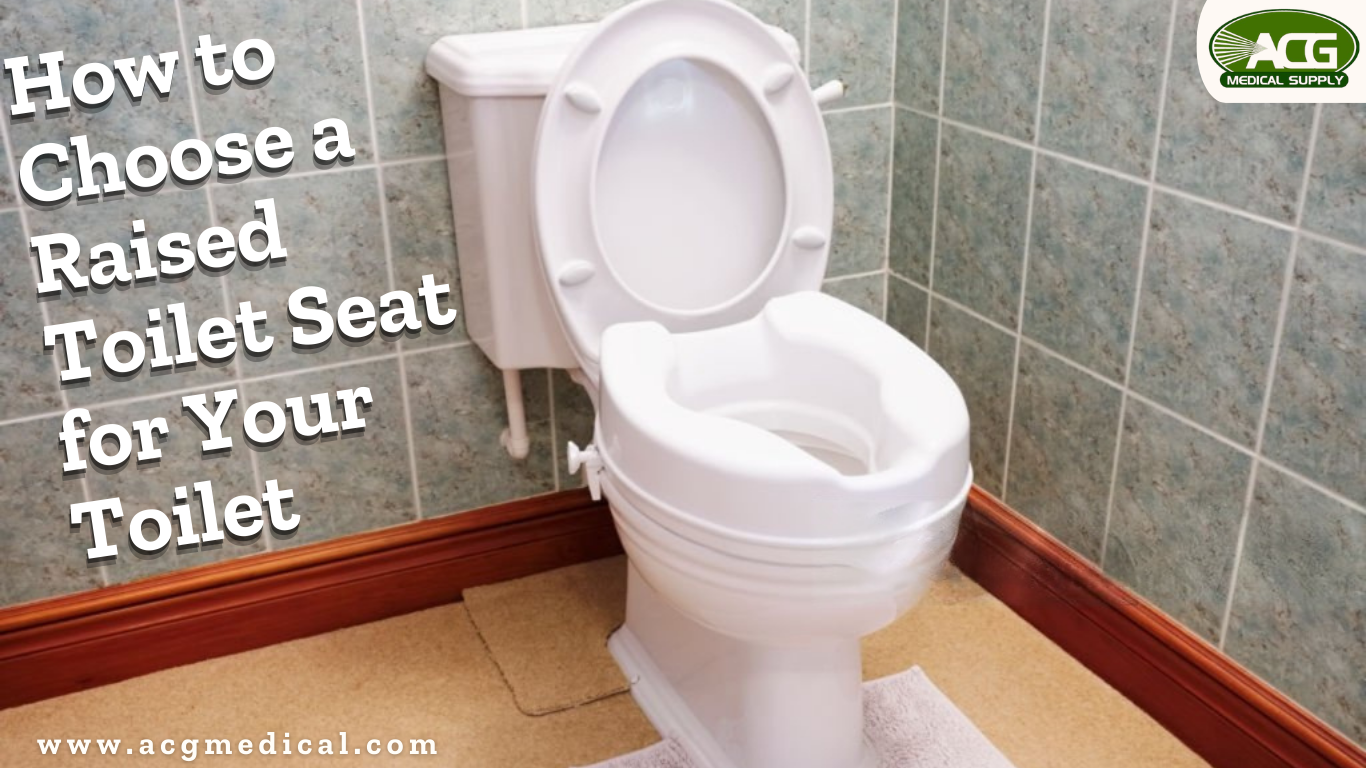
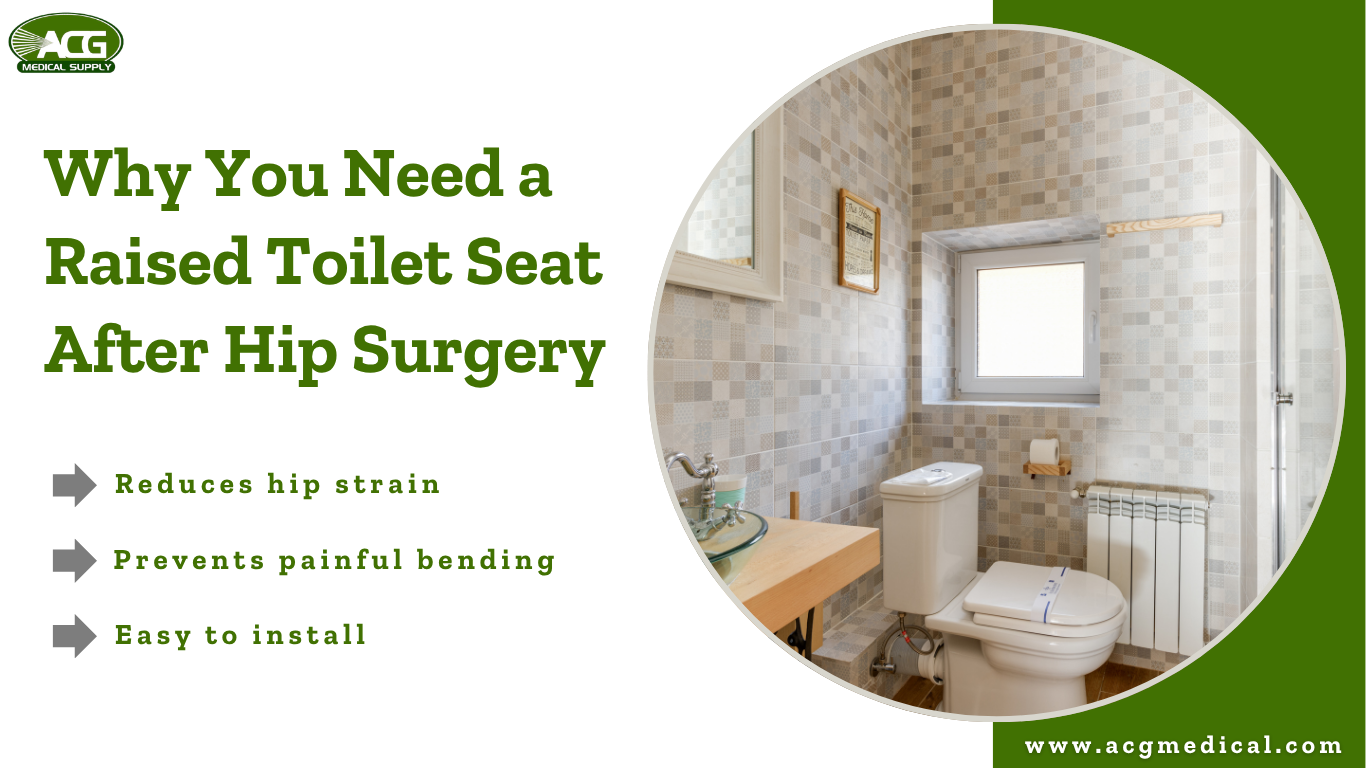
A toilet seat riser doesn’t replace the toilet. It just changes how it feels to use one. It adds height. That’s it. But that small change is important. Sitting down on a low toilet can be uncomfortable. Standing back up can feel worse. Knees, hips, lower back, everything gets involved. That’s where taised toilet seats come in handy.

The benefits of raised toilet seats are quieter. Less dramatic than a commode. But still important:

  • Less bending
  • Less pressure on joints
  • More stable standing
  • Less hesitation before sitting

Some models are basic. Some come with grip support, like a raised toilet seat with handles. Others are designed as a full medical toilet seat riser for added stability. It does not require replacing anything. Just making the existing setup easier to use.

The simple way to compare them

The easiest way to think about it is this: a commode is a separate chair that acts like a toilet. A raised seat stays on the toilet you already have and just gives it more height. That is why one is usually better for limited mobility, and the other is better for easier sitting and standing.

FeatureBedside Commode ChairRaised Toilet Seats
Main useA toilet near the bed or chairA higher toilet seat on an existing toilet
Best forPeople who cannot safely walk farPeople who can walk to the bathroom but need less bending
SetupUsually free-standing, no plumbingAttaches to the toilet bowl or seat
Extra supportOften comes with armrests, drop arms, or wheelsMay come with handles or a frame
PortabilityUsually more portableUsually stays on one toilet
Typical use caseRecovery, weakness, fall riskArthritis, joint pain, post-surgery support

The main types of people you see in real life

Not every commode or raised seat looks the same. That is where product choice gets a little more practical than fancy. For commodes, common bedside commode types include standard chairs, drop-arm models, folding versions, wheeled models, bariatric versions, and the 3-in-1 commode chair style that can work bedside or over a toilet. 

For raised seats, the common toilet seat riser types include basic raised rings, hinged models, padded styles, locking versions, and seats with handles. A raised toilet seat with handles is often the sensible pick when balance is shaky. A more basic medical toilet seat riser can be enough when the main issue is just the height of the toilet. ACG’s raised-seat range also includes portable and bariatric options, which give buyers more room to match the product to the person, not the other way around.

Which one makes more sense?

This is where the buyer’s mindset matters. A commode is usually the better call when getting to the bathroom itself is the problem. If you realize this is the solution your loved one needs, understanding how to choose the right bedside commode chair becomes the next practical step to ensure comfort and safety. Maybe the person is recovering, gets short of breath, or feels unsafe walking at night. A raised seat makes more sense when the toilet is reachable, but sitting down and standing up are the hard parts. That is the real split, and it is a practical one, not a fancy one.

A lot of people end up looking at the over-the-toilet commode options, too. That style sits over a standard toilet and works like a bridge between both categories. It can act like a commode, a raised seat, or even a shower chair in some cases. That flexibility is exactly why portable commode chairs and 3-in-1 models are so popular. They are not trying to do one tiny job. They are trying to make life easier in a messy, ordinary home.

A quick note on Medicare

Coverage is crucial. Under Medicare Part B, commode chairs are generally covered when they are medically necessary and prescribed. Toilet seat risers may be covered in some cases if deemed medically necessary, though coverage can vary by situation and plan. So Medicare coverage for commode chairs is a real possibility, but it is not something to assume without checking the details first.

That is one reason buyers often start with need, not price. A product that is prescribed and covered can save a lot of stress. A product that is not covered can still be worth it if it genuinely makes daily life safer and easier. That is especially true for people who need help every day, not just once in a while.

Why ACG Medical Supply is part of the conversation

ACG Medical Supply offers a range of bedside commode chairs and raised toilet seats designed for different levels of mobility and support. That includes lightweight versions, adjustable models, and heavier-duty options. For someone shopping with a real-world problem in mind, that variety matters more than fancy marketing ever will. It means the search is not just “buy a commode” or “buy a riser.” It is “find the one that fits the person and the bathroom.”

Conclusion

A bedside commode chair is best when walking to the bathroom is too hard or too risky. Raised toilet seats are better when the toilet is already reachable, but the seat is too low. One brings the bathroom closer. The other makes the bathroom easier to use. Both are useful solutions. No drama. Just practical help where it counts.

FAQ

1. Can a bedside commode go over a regular toilet? 

Yes, most 3-in-1 models are built for exactly that. Remove the bucket, position it over the bowl.

2. How much height does a raised toilet seat add? 

Typically 2 to 6 inches, depending on the model.

3. Are commodes only for elderly people?

No post-surgical recovery patients of any age use them regularly.

4. Can two people share a raised toilet seat? 

Generally, the height does not need to fit one person’s specific measurements.

5. How do you clean a commode bucket? 

Warm water and a mild disinfectant, or grab disposable bucket liners. ACG carries those.


Bedside Commode Chair

How Do I Choose The Right Bedside Commode Chair? 

You’re Not Buying a Bedside Commode Chair. You’re Buying Back Some Normal.

That’s what this really is. Not a medical purchase. Not a product decision. It’s an attempt, sometimes a desperate one, to get life back to something that doesn’t feel like a constant reminder of what’s changed.

Maybe your dad just got home after a knee replacement, and the bathroom is down a long hall. Picture your mom getting up three times a night, and you’ve stopped sleeping properly because you’re listening for her. Or perhaps it’s you, and that’s its own kind of hard to sit with.

Whatever brought you here, the goal is the same: find something that actually works for the specific human being who needs it. Not the average senior in some manufacturer’s brochure. Not a generic recovery patient. The real person, with a real bedroom and a real situation.

That’s what this is about.

First, Forget the Word “Commode” for a Second

People get weird about this purchase because the object itself carries social, emotional, and psychological weight. It signals something. That’s real, and it doesn’t help to ignore it.

But the thing is, a bedside commode chair is just a seat with support that happens to have a bucket underneath it. That’s the whole thing. And when you find the right one, it stops being a symbol of decline and starts being just a chair someone uses. Without drama. Without a fall.

That shift happens only when the chair fits the person, not when you just grab the first option on a search results page.

Start With How the Person Moves, Not What Looks Good Online

This part gets skipped the most. They see a price and some photos and order something. Then it arrives and doesn’t work for the actual human being who has to use it.

The user’s mobility level is probably the single most important thing to sort out before anything else. Can the person stand up on their own? Do they need to swing their legs off a bed first, grab something, and stabilize themselves? Are they being transferred from a wheelchair? That last scenario is a whole different situation from someone who just gets dizzy at night and needs something close by.

If the person transfers from a wheelchair, meaning someone helps them slide from one seat to another, a drop arm bedside commode is almost non-negotiable. The arm drops down so they can slide across without a bar blocking the way. That’s the whole point of the design. Some drop-arm models, like the Nova Padded Drop Arm Commode or the Lumex Imperial Collection, have arms that lower independently on each side, and that’s important. If someone always transfers from the left, you want just that arm to drop, not both.

For someone who walks on their own but unsteadily, a standard commode with fixed arms might actually be better. More rigid. Something to actually grip and push up from.

Weight Capacity Is the One Number You Cannot Fudge

No wiggle room here. A frame rated for 300 lbs will flex under 320, wobble after that, and eventually fail. When it does, that’s not an inconvenience; that’s a fall, and everything that comes with one.

A bariatric bedside commode or heavy-duty bedside commode exists precisely for this. Nova’s heavy-duty models support 450–500 lbs. The MJM Bariatric Bedside Commode is healthcare-grade, built for real daily use, not just occasional light loads. Weight Capacity is a hard ceiling, not a ballpark estimate. When there’s any doubt, size up. The price gap between a standard and a heavy-duty model is real, but it’s nothing compared to what a structural failure costs.

Seat Height, Nobody Talks About This Until It’s Wrong

Here’s what catches people off guard constantly: they buy a commode, set it up, and then realize the person using it can’t get back up without a struggle. Getting down is easy. Standing back up, when knees are bent past 90 degrees, takes significantly more leg and core strength. For anyone post-surgery or managing joint pain, that math matters a lot.

Seat height should roughly match the back of the knee when standing. The adjustable bedside commode chair options from Nova and Lumex let you dial this in by the inch, use that feature, and actually measure before locking it in. Seat height & comfort determine whether someone uses the chair without thinking about it or dreads every single trip.

Factor in padding too, especially for longer sitting sessions or anyone with skin sensitivity. The Lumex Platinum Collection has a cushioned seat and backrest that don’t read as medical equipment. That matters more than most people expect, visually and physically.

The 3-in-1 Design Is Smarter Than It Sounds

A 3-in-1 commode chair works three ways: as a standalone bedside unit with a bucket underneath, placed directly over a toilet as a raised seat with handles, or used as a safety frame around an existing toilet, no bucket, just support. For families navigating a recovery, that actually tracks with how things unfold. Week one: full bedside setup. A month later, they can reach the bathroom but need something to hold. Six weeks after that: just the height. One chair, three phases, no second purchase.

A folding bedside commode adds portability on top of that. The Nova Folding Commode Chair folds flat in seconds, useful for travel, small rooms, or just not wanting a medical chair sitting out when company’s over. Space & portability are worth thinking through early. A rigid full-frame commode does not fit in most car trunks and doesn’t tuck away anywhere gracefully.

Wheels Help Some People. For Others, They’re the Problem.

A commode chair with wheels lets a caregiver transport someone without them needing to walk at all. Drive Medical’s Aluminum Rehab Shower and Commode Chair does this with rear-locking casters that hold once the chair is positioned. Right setup, right situation, genuinely useful.

But wheels introduce a trust issue that rigid frames don’t have. The lock has to hold under actual load, every time, without the person thinking about it. For anyone already anxious about falling, an uncertain chair creates real damage before anything physically goes wrong. The anxiety itself changes how they move.

Stability features like locking casters, wide-set frames, and rubber-tipped legs aren’t spec-sheet checkboxes. They’re what determine whether someone feels secure or nervous every time they sit down. For home setups where no caregiver is doing transfers and rolling isn’t needed, four solid legs with rubber feet are the better answer. Nothing to lock, nothing to accidentally forget.

Quick Reference: Matching the Chair to the Situation

Commode TypeBest ForWeight Range
Standard 3-in-1Post-surgery recovery, general mobility limitsUp to 350 lbs
Drop ArmWheelchair users, lateral caregiver transfers300–500 lbs
Folding / PortableTravel, small spaces, part-time useUp to 350 lbs
Bariatric / Heavy DutyUsers over 300 lbs, wider seat needed450–600 lbs
Wheeled / TransportCaregiver-assisted movement, shower accessVaries by model

Conclusion

There’s a version of this where you get the right chair, set it up, and within a week, it just disappears into the room. Not a symbol. Not a reminder. Just a thing that works, quietly, every time.

Get the height right, verify the weight capacity, and think through how transfers actually happen. And if none of this feels clear yet, ACG Medical has showrooms in Plano, Rowlett, and Bedford where you can see these in person. For this purchase, that’s worth the trip.

FAQ

1. Can a bedside commode work over a regular toilet?

Yes. Remove the bucket and place it over the toilet.

2. Drop arm or fixed arm how do I decide?

Drop arm for sideways transfers. Fixed arms for stand-and-pivot use.

3. What’s the difference between a bariatric and a heavy-duty bedside Commode Chair?

Mainly, weight capacity and seat width. Heavy-duty supports up to 500 lbs, bariatric up to 600 lbs, with a wider seat. Skip standard models near 300 lbs.

4. How often should the bucket be cleaned?

After every use. Add water before use to prevent sticking. Liners help.

5. What if they refuse to use it?

It’s often about dignity. Position it as safer than nighttime walks and choose a less clinical-looking design.


Post of choosing raised toilet seats for the toilet

How to Choose a Raised Toilet Seat for Your Toilet

Somewhere between a hospital discharge and a frantic late-night Amazon search, a lot of people find themselves staring at a product category they never expected to care about. A raised toilet seat. No one talks about buying one at dinner. Nobody posts about it. But millions of families go through this exact moment every year, usually in a rush, usually stressed, usually without a clue what separates one option from another.

The whole process feels weirdly loaded. A parent just had a hip replacement, or a spouse tore their ACL, or grandma slipped last Tuesday, and now everything about the bathroom feels dangerous. That urgency clouds judgment. People grab whatever has the most reviews or the lowest price, and half the time it doesn’t fit, doesn’t lock, or doesn’t solve the actual problem.

This blog exists because that outcome is avoidable. Not with a buying guide. Not with a comparison spreadsheet. Just with some deep thinking about what these products do, who they’re for, and which details separate a good purchase from a regrettable one.

The kinds that exist (and what problem each one solves)

A toilet seat riser sounds like a single product, but the category splinters into several directions depending on the problem.

Standard Raised Toilet Seats sit on top of the existing bowl and add a couple of inches. That’s the entire pitch. For someone who only needs a modest height increase and has decent balance, standard gets the job done without overcomplicating anything.

Portable Raised Toilet Seats are lighter and designed to travel. Think: visiting the grandkids for a week, staying at a hotel, splitting time between two households. Sturdiness takes a backseat to packability. Fair trade for people who’d otherwise avoid trips because they can’t deal with an unfamiliar bathroom.

Locking Raised Toilet Seats clamp onto the porcelain so the seat stays dead still. This matters more than it sounds like it should. Half an inch of lateral movement during a sit-down is enough to spike adrenaline in someone with balance issues. Locks eliminate that variable.

A Raised Toilet Seat with handles and armrests bolted to either side turns the toilet into something a person can push off of. Post-surgical patients, people with weakened legs, and anyone who’s ever been stuck on a low seat and had to call for help. The handles rewrite that scenario.

Hinged Raised Toilet Seats swing up when not in use. Perfect for a shared bathroom. One person needs the riser; the rest of the household doesn’t. Nobody wants to remove and reinstall equipment twice a day. Hinged models skip that hassle.

Padded Raised Toilet Seats add cushioning to the sitting surface. For people managing pressure sores, thinning skin, or conditions that mean longer time spent seated, the foam layer prevents secondary discomfort from compounding the original issue.

Bariatric toilet seats carry higher weight ratings, wider frames, and reinforced construction throughout. Standard models cap around 250–300 pounds. A lot of adults exceed that. Bariatric designs exist because standard engineering has limits, and pretending those limits don’t apply to real bodies helps nobody.

Then there’s the raised toilet chair, which is a freestanding frame, almost like a separate piece of furniture, that positions over or around the toilet. When the toilet itself can’t support a clamp-on attachment or the bathroom layout creates awkward geometry, the chair sidesteps the issue.

What to actually look at before spending money

Seat Height & Compatibility catches more people off guard than any other factor. Toilets are either round or elongated, two different shapes, and a raised seat designed for one won’t clamp right onto the other. Round bowls measure about 16.5 inches front to back. Elongated, closer to 18.5. 

Beyond shape, measure the current seat height from floor to rim. Standard toilets stand around 15 inches; comfort-height models sit near 17–19. Most risers add between 2 and 6 inches. The sweet spot? A total height that lets the person sit with feet flat and knees bent at roughly 90 degrees. Too low is the obvious problem. But too high throws off balance in a different way, and people forget that.

Weight Capacity shouldn’t be estimated or assumed. Every model lists a maximum. Exceed it, and the failure mode isn’t “minor inconvenience.” It’s a collapse. Standard seats handle 250–300 pounds; bariatric goes up to 500 or 600. Leave a margin. Always.

Features and Benefits: handles, padding, locks, hinges. These aren’t upgrades in the way a heated steering wheel is an upgrade. Each one answers a specific physical limitation. Someone who struggles to stand needs handles. Skin sensitivity needs padding. Someone who shares a bathroom needs a hinge. Match the feature to the human situation, not to a price tier.

Material and Durability are important over the long haul. Molded plastic is the standard construction, but thickness and quality vary wildly from brand to brand. Thin plastic cracks under daily use within months. Heavier-gauge plastic lasts for years. Antimicrobial coatings, sometimes dismissed as marketing fluff, are actually useful on a product that lives in a bathroom permanently.

Hygiene and maintenance get underestimated until about week two of ownership. This thing needs constant cleaning. Smooth, non-porous surfaces with minimal seams wipe down in seconds. Textured plastic or foam with fabric covers? Those trap moisture, harbor bacteria, and develop odor. A product that’s hard to sanitize creates a new problem where there wasn’t one before.

Seat Installation spans a wide range. Some models drop on and tighten by hand no tools, no fuss, done in two minutes. Others bolt into the existing toilet hardware. A few require the original seat to be removed entirely. For someone living alone, or for an elderly person who can’t get on the floor with a wrench, tool-free installation should be a dealbreaker. The best product in the world is useless if it never gets out of the box.

Quick-reference comparison

A side-by-side snapshot of how the main types stack up across the factors worth weighing.

TypeHeight AddedWeight LimitHandlesPortableBest For
Standard2–4 in250–300 lbsNoNoBasic height boost
Portable2–4 in200–250 lbsRarelyYesTravel & visits
Locking3–5 in250–350 lbsSometimesNoBalance concerns
With Handles3–6 in250–350 lbsYesNoSit-to-stand aid
Hinged3–4 in250–300 lbsNoNoShared bathrooms
Padded2–4 in250–300 lbsSometimesNoPressure relief
Bariatric3–6 in400–600 lbsOftenNoHigher weight needs

The stuff people don’t think about until it’s too late

Wobbly toilets. Check the base before adding anything on top. A raised seat amplifies whatever instability already exists, and on tile or vinyl flooring, that’s a recipe for disaster.

Dark bathrooms at 3 a.m. White plastic on white porcelain is nearly invisible without light. A five-dollar LED nightlight near the base of the toilet fixes this. It’s a tiny investment, but it brings enormous peace of mind for nighttime trips.

And something that doesn’t show up on any spec sheet: the emotional weight of the purchase itself. People who’ve been dreading every bathroom visit, afraid of getting stuck, afraid of falling, afraid of needing to yell for help, often experience a shift within the first couple of days of having the right seat installed. They start drinking water again because the bathroom trip doesn’t feel like a risk. They sleep better because the 2 a.m. wake-up isn’t loaded with anxiety. Those ripple effects are the actual payoff of getting this decision right.

Conclusion

The best raised toilet seat is whichever one removes the fear. Measure the toilet. Know the weight needs. Think seriously about handles, locks, or padding based on the specific struggle at hand. Read the reviews written by people who’ve owned the product for months, not hours. The long-term reviews surface things that first impressions never do.

And if the whole thing still feels like too much, call an occupational therapist. Most people don’t think to do that, but OTs recommend these products daily and understand which features matter for which recovery scenarios better than any product listing ever could.

 FAQs

1. How much height do I actually need?

Usually, 2 to 4 inches works for most people. But it depends on your comfort when standing up.

2. Are handles necessary?

Not always. But if balance is a concern, they make a big difference.

3. Can I install it myself?

Yes. Most options are designed for quick, tool-free setup.

4. Will it fit any toilet?

Not all. Check if your toilet is round or elongated before buying.

5. Are padded seats better?

They’re more comfortable, especially for longer use. But they may need more cleaning care.

6. What’s the difference between a riser and a raised toilet chair?

A toilet seat riser sits on your toilet. A raised toilet chair stands independently.

Blog post regarding thing to consider before buying Shower Chair

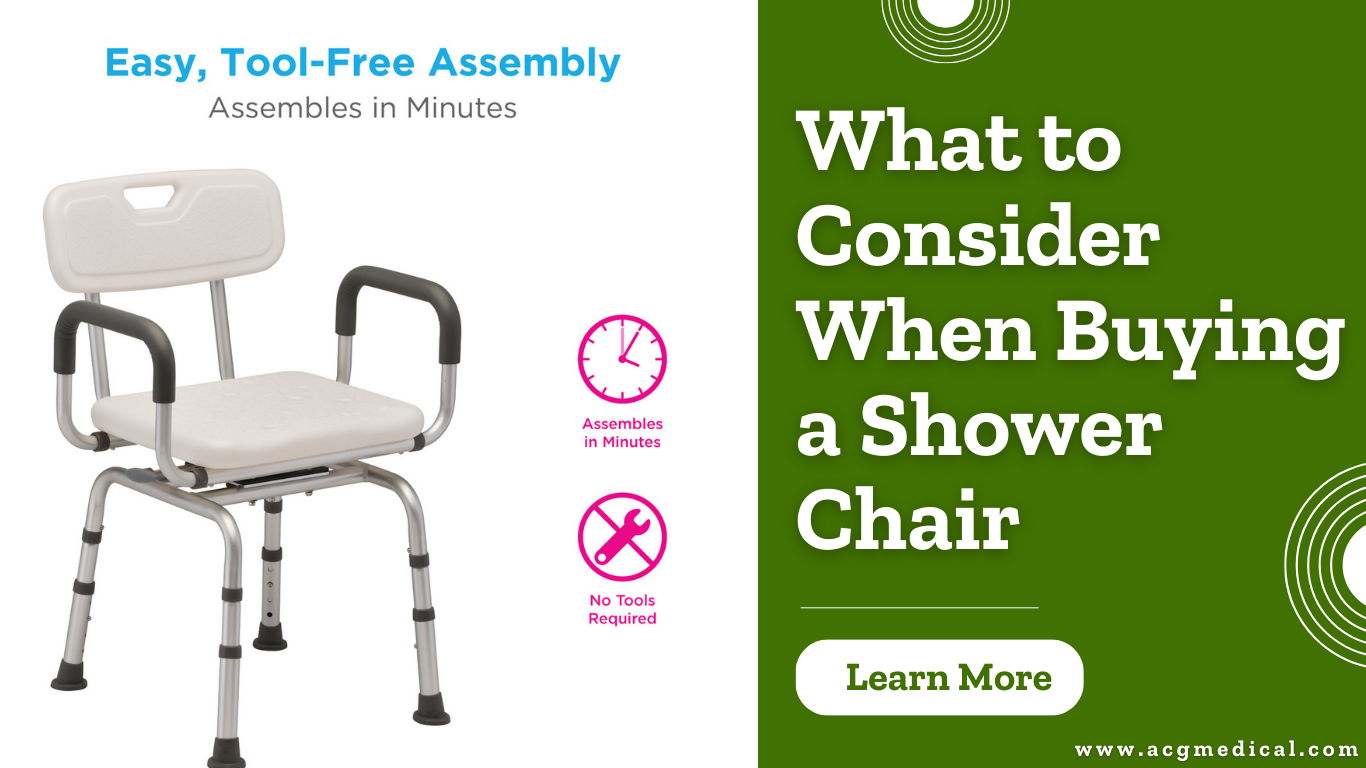
What to Consider When Buying a Shower Chair

It usually starts pretty quietly. Someone slips. Or almost slips. Or they start taking shorter showers because standing the whole time wears them out. Maybe it’s a parent. Maybe it’s you. Either way, now you’re Googling things you never thought you’d Google, and stumbling across a whole world of products you didn’t know existed.

That’s how most people end up looking at shower chairs. Not because they were planning for it. Because something happened, or almost happened, and now you’re trying to make the bathroom a little safer before things get worse.

Fair enough. Let’s walk through what’s actually important.

Start Here: What’s Actually Going On?

Not to get too deep about it, but you need to be honest about the reason before you start shopping. Because “I need a shower chair” covers a pretty huge range of situations, and the right chair for one person is completely wrong for another.

Are we talking about post-surgery recovery, where standing for five minutes feels like running a mile? Balance issues where a wet floor is genuinely scary? Pure exhaustion, maybe from an illness, chronic fatigue, or just being in your seventies and not bouncing back the way you used to? Or is it caregiver-related, with someone else helping with bathing and equipment to make that easier?

Different answers. Different chairs. Worth figuring out before spending money.

Okay — So What Are All the Different Types?

There are more types of shower chairs than most people realize. Here’s the honest version of each one:

The Shower Bench

A shower bench is wider than a regular chair; sometimes it spans a corner, sometimes it’s a simple, long seat that sits flat in the shower. No frills. Really good for people who want a place to sit without feeling like they’re in a medical facility. A lot of people recovering from hip or knee surgery go straight for this one. Some benches have backs; a lot don’t. That distinction is more important than people think. Let’s look at that in a second.

Shower Chair With Back vs. Without

A shower chair with a back sounds like a small upgrade, but if you’re dealing with any real fatigue or balance wobble, that backrest changes everything. Washing your hair when you’re exhausted and dizzy is harder than it sounds. Having something to lean against is not a luxury. It’s practical.

Meanwhile, a shower chair without a back works perfectly well for someone who mainly wants to sit down and doesn’t need that extra support. Lighter. Easier to store. Fine for what it is.

The Folding Shower Chair

A folding shower chair folds up flat so you can tuck it away when other people use the shower. That’s basically the whole value proposition. If you share a bathroom, or the person who needs it uses it only sometimes, it’s worth a shot. The one trade-off is that folding designs are a little less rigid than fixed ones. Totally fine for most situations, just worth knowing if stability is a top concern.

Shower Stool

Honestly, a shower stool is kind of the stripped-down version of all of this. No back. No arms. Just a seat on four legs. Usually cheap, sometimes under twenty bucks. It’s fine for someone who wants a perch for a few minutes but doesn’t have major mobility concerns. If any real shakiness or weakness is happening, a stool is probably not the right answer.

Rolling Shower Chair / Shower Chair with Wheels

This is where it gets more serious. A rolling shower chair, also called a shower chair with wheels, is less of a chair and more of equipment. You roll it into the shower. Some models roll over the toilet too. They’re designed for people who have significant mobility limitations and often need a caregiver’s help transferring in and out. Big, heavier, more involved. But if that’s what the situation calls for, nothing else really works as well.

Commode Chair

A commode chair is dual-purpose; it works in the shower and over the toilet. Has an opening in the seat. Not exactly a conversation piece, but genuinely useful when getting on and off the toilet is its own challenge. Home health aides and nurses often recommend them in post-hospital situations. Not glamorous. But extremely practical.

Specialty Shower Chairs

Then there’s everything else. Specialty shower chairs are a catch-all category for larger body frames, pediatric versions for kids with disabilities, reclining shower chairs, and full shower gurneys for people who can’t sit upright. If none of the standard options seem to fit, this is the category to dig into. They cost more. They’re also built for things regular chairs can’t handle.

A Quick Look at Common Shower Chair Styles

Type of ChairWhat It’s Usually Best ForThings Buyers Notice
Shower StoolSmall showers or tight spacesCompact and easy to
move
Shower BenchLarger showers need a side
support
More sitting space
Shower Chair With BackLarger showers needing a side
support
Feels stable and secure
Shower Chair Without
Back
Users needing freedom of
movement
Easier turning and
reaching
Folding Shower ChairShared bathroomsSaves space
Rolling Shower ChairLimited mobility transfersReduces standing
movement
Commode ChairMulti-use bathroom supportWorks beyond the shower

Weight Capacity — Seriously, Don’t Ignore This

Every chair has a weight capacity stamped somewhere on it. Usually, somewhere between 250 and 500 pounds for standard models. You need to buy one that’s rated for more than the person actually weighs, not just barely enough. Ten percent over the limit isn’t a safety margin. It’s a liability.

Bariatric chairs go higher, up to 600 or 700 pounds. They also tend to have wider seats, which matters for comfort even before weight becomes a factor. If this is relevant to your situation, skip the standard section entirely and start in the bariatric aisle. There’s no reason to try to make a regular chair work when the right option exists.

The Features That Are Actually Important

“Shower chair features” sounds like marketing talk. But a few things actually make a difference in daily use:

  1. Non-slip feet. This shouldn’t even need to be said, but yes, check for rubber tips on the legs. Wet tile is unforgiving. Some cheap chairs skip proper rubber grips. Don’t buy one that does.
  2. Height adjustability. Most chairs have it, but verify. Too low and it’s hard to stand back up. Too high and your feet dangle awkwardly. You want the person’s feet flat on the floor with knees at a comfortable angle.
  3. Armrests. Optional for some people. Non-negotiable for others. If standing up from a seated position is already a challenge, armrests make it possible without help.
  4. Drainage holes. A solid-bottom seat traps water and becomes a breeding ground for mildew. Look for a seat with cutouts or holes so water runs through.
  5. Frame material. Aluminum outlasts steel in a wet environment. Cheap steel rusts. If you’re planning to use this for more than six months, you must pay attention to this as well.

Beyond that, think about your specific bathroom. Walk-in shower or tub? How wide is the floor space? Is there a lip to step over? These details trip people up after purchase. Better to measure before buying than to return it after.

The Part of This That Nobody Brings Up

Here’s the thing. Buying a shower chair (especially for yourself) can feel like more than just a purchase. It can feel like giving something up. Like admitting that the bathroom used to be simple and now it isn’t. That’s a weird grief, and it’s real.

And if you’re buying it for a parent? That hits different, too. There’s something about seeing your mom or dad needing a seat in the shower that isn’t in a place regular shopping doesn’t.

But here’s what’s also true: bathroom falls are one of the most common causes of serious injury in older adults. Broken hips. Head injuries. Long recoveries. And the thing that could have prevented much of it was a $40 piece of equipment. Learn more about the growing importance of shower chairs for senior care and bathroom safety.

Before You Buy — Run Through This

  1. Who is using it, and what’s the main issue? Fatigue, balance, and transfer help it change what type makes sense.
  2. What’s their actual weight, and does the chair’s capacity clear it comfortably? Not just barely.
  3. What kind of shower? Walk-in, tub, tub-shower combo, they all have differentspace constraints.
  4. Do other people share the bathroom? A folding shower chair might be worth it just for the storage.
  5. Is a caregiver involved? Rolling models and commode chairs are designed for assisted bathing in ways regular chairs aren’t.
  6. What’s the budget, and have you checked insurance? Don’t leave money on the table.

    Answer those honestly, and you’ll have a pretty short list left.

Conclusion

Don’t let the number of options freeze you. It happens. People spend two weeks comparing chairs and end up buying nothing because they’re afraid of making the wrong choice. But there’s no perfect chair. There’s just the one that fits the situation.

Read the weight rating. Check the return policy. Look at the floor space in your bathroom one more time. Then buy the thing. If it wobbles or feels wrong when it arrives, send it back. That’s what return windows are for. You’ve got this.

FAQs

  1. How do I choose the right weight capacity?
    Pick a chair rated above the user’s body weight so it stays stable and durable.
  2. Are commode chairs safe for showers?
    Yes. Many commode chairs are made with water-resistant materials and drainage seats.
  3. What are Specialty Shower Chairs?
    They are chairs designed for specific needs, such as extra support, reclining seats, or caregiver assistance.
  4. What affects Shower Chair Cost and types?
    Price usually depends on materials, strength, adjustability, and mobility features.
  5. Will Medicare pay for a shower chair?
    Usually not. Standard shower chairs are rarely fully covered, though some plans may offer partial help.

Bath Chairs and Shower Benches

Choosing Bath Chairs and Shower Benches for the Elderly

Bath time can be tricky for seniors. A slippery floor or tired legs can turn a simple shower into a stressful moment. That’s where bath chairs and shower benches come in. It’s nothing fancy (just a sturdy place to sit) but it makes a huge difference. Sitting down when fatigue hits or the floor feels slick can prevent slips and give peace of mind.

At ACG Medical Supply, we don’t just sell chairs. We choose products that help seniors feel stable, confident, and a little more independent—day after day.

Why Bath Chairs and Shower Benches Matter

If you’ve ever looked after an older family member, then you must know that the bathroom is a really high-stakes zone. Bath safety for seniors isn’t just about avoiding slips and falls; it’s also about privacy and independence. And a simple chair changes everything:

  • Instead of rushing through showers out of fear, seniors can take their time.
  • Long baths become more comfortable when there’s somewhere stable to rest.
  • Caregivers get extra support when they are helping loved ones take a bath.

In short, it’s about changing a stressful space (and experience) into a safe one. That’s all there is to it. And adding a small equipment like a simple shoer chair truly has a huge and positive impact.

Types of Shower Chairs and Benches

Finding the right chair is not tricky at all. There is a simple secret: match the chair to the person’s comfort, mobility, and bathroom space. Let’s check out the different types of shower chairs and benches and see what makes each one useful.

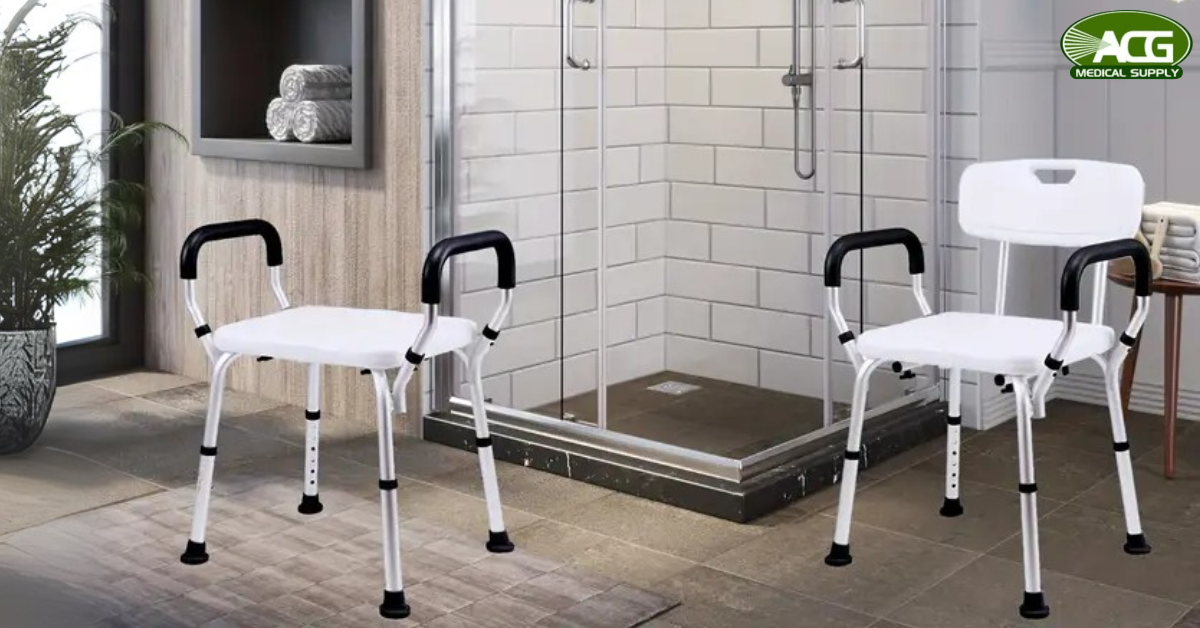
Shower StoolsShower Stools are simple and compact. They can fit in smaller showers and give just enough support for someone who wants a place to rest without fuss.

Bath Chairs – A sturdier option with a backrest and often armrests. These give extra support, making it easier to relax and wash without worrying about balance.

Transfer Benches – Built to straddle the tub, these let someone sit on the outside and slide in safely. They remove the risk of lifting legs over high edges—ideal for those with limited mobility.

Bath Commode Chairs – A practical multi-tasker, combining a shower chair with a commode. They cut down on transfers, making routines safer and less tiring.

A Quick Tour of Types of Shower Chairs and Benches

TypeBest ForKey Features & Benefits
Shower StoolsSmall spaces, light supportCompact, easy to move, offers a quick resting spot without taking much room
Bath ChairsSeniors needing extra stabilityIncludes backrest (sometimes armrests), provides comfort and balance during showers
Transfer BenchesLimited mobility, bathtub entry safetyStraddles the tub; user sits outside and slides in safely, avoiding high steps
Bath Commode ChairsMaximum assistance, multi-purpose useIt functions as both a shower chair and a commode, reduces transfers, easier for caregivers

Factors to Consider When Choosing a Shower Chair or Bench

You can’t just buy the first shower chair or bench you see. There are several important factors to consider when choosing a shower chair or bench. Most important ones are-

  • Make sure it safely supports the user.
  • Pick one with legs you can adjust, so sitting and standing feel easier.
  • Some seats are soft for comfort, while others have little gaps to let the water drain. 
  • If a person is in need of even more support, go for a chair with armrests or a backrest.
  • If you have got a small shower, instead of a bench, get a simple stool; it might fit better.
  • Choose one that won’t rust and is quick to wipe clean.

The goal is to find a chair that provides the ultimate safety and comfort, and also fits well in your bathroom.

Why ACG Medical Supply Is a Smart Choice

With so many options out there, it helps to have a trusted source. ACG Medical Supply has spent years curating products that aren’t just practical, but thoughtfully designed.  Seniors and families rely on us because our range isn’t about flashy extras — it’s about what truly works for a person in their everyday life.

Conclusion

Bathing should never feel scary or stressful, everyone deserves to feel safe and comfortable. For seniors, or anyone who finds moving around a bit tricky, even something as simple as a bath chair, stool, or bench can make a world of difference. They are not just for sitting down; they are about catching your breath, feeling steady, and knowing you’re not at risk of slipping. And when you pick the right one from a trusted place like ACG Medical Supply, it’s not just a chair, it’s safety and peace of mind every single day of the year.

FAQs

Q1. Do shower stools work as well as benches?’
They’re sturdy and practical but usually hold less weight and provide less surface space than benches.

Q2. Are transfer benches difficult to use?
Not at all. They’re designed for easy sliding movement, reducing the effort of stepping into tubs.

Q3. How do I clean a bath commode chair and aslo keep it that way?
Just wipe down the commode chair or any bath chair with a soft cloth and mild soap and water after each use. Do this regularly, and it will keep it clean, fresh, and ready to use.

Q4. Are these chairs very difficult to assemble?
Not at all. Most bath and shower chairs today come with tool-free assembly.

Seniors Life Medical Aids

7 Must-have Gadgets to Simplify Senior Life: 2024 Edition

As we get older, staying independent and comfortable becomes really important. Luckily, nowadays, seniors have lots of cool gadgets to help make life easier and more fun. Whether you need stuff to help you walk, keep you safe, or just stay organized, there are plenty of options out there for seniors in 2024.

In this guide, we’ll introduce you to seven gadgets and gifts that are perfect for seniors. These items are not only useful but also fit right into your daily routine without any fuss.

Walking Canes

Walking canes have come a long way from being merely functional tools. Today’s walking canes are designed to provide optimal support while also being stylish accessories. Modern canes feature ergonomic handles that reduce hand strain, and adjustable heights to suit individual needs. Some canes also come with foldable designs, with attached seats making them easy to carry and store. 

Bath and Shower Chairs

The bathroom is one of the most hazardous areas in the home, especially for seniors. Bath and shower chairs provide a safe and comfortable solution for those with mobility issues. These chairs are equipped with skid-resistant tips and sturdy frames to prevent falls. Many models are adjustable in height and have reclining options to cater to individual comfort needs. Some even come with padded seats and backrests for extra comfort. By providing a secure place to sit while bathing, these chairs and stools help seniors maintain their hygiene routine with ease.

Grab Bars

Grab bars are a simple but highly effective way to enhance safety in the home. Installed in key areas such as bathrooms, hallways, and near stairs, grab bars offer extra support to prevent falls. Learn exactly how to Install Grab Bars in Your Bathroom to ensure maximum security. They come in various sizes and designs. Made from durable materials like stainless steel, grab bars can support substantial weight and are easy to clean. This small investment can significantly improve a senior’s safety and provide peace of mind for both them and their caregivers.

Freedom Alert Emergency Wall Communicator

The Freedom Alert Emergency Wall Communicator is a lifesaving gadget that provides seniors with instant access to emergency assistance at the touch of a button. This wall-mounted two-way voice communicator device allows seniors to contact emergency services or family members in case of a fall or medical emergency, ensuring prompt help when it is needed most. With easy installation, this gadget offers peace of mind and reassurance for both seniors and their loved ones.

Apex 7-Day MediPlanner

Managing multiple medications can be challenging for seniors, but the Apex 7-Day MediPlanner simplifies the process with its organized and easy-to-use design. This pill organizer features seven removable daily pill cases with compartments for morning, noon, evening, and bedtime doses. With clear labeling and compact size, the Apex 7-Day MediPlanner from ACG Medical Supply is a handy gadget that can help seniors stay on track with their medication regimen and avoid missed doses.

PVI Rubber Threshold Ramp

Navigating doorways and small steps can be challenging for seniors, especially those using mobility aids. The PVI Rubber Threshold Ramp provides a smooth transition over thresholds, making it easier to move around the house or enter and exit. Made from durable, slip-resistant rubber, this ramp is a safe and practical addition to any home.

Mobility Electric Scooter

For seniors who love to stay active and independent, a mobility electric scooter is a game-changer. These scooters are designed for comfort and ease of use, featuring adjustable seats, easy-to-use controls, and long battery life. Whether running errands or enjoying a day out, a mobility scooter provides freedom to the elderly to move around without fatigue.

Choosing the Right Products

When it comes to selecting gadgets and gifts for seniors, one size certainly does not fit all. Each individual has unique needs, preferences, and challenges, which is why it’s crucial to consider these factors when making purchasing decisions. At ACG Medical Supply, we understand the importance of finding products that cater to specific requirements while also providing comfort and convenience.

Our extensive range of products is carefully curated to enhance senior living in every aspect. From mobility aids to home safety devices, we offer a diverse selection designed to address a variety of needs. 

Conclusion At ACG Medical Supply, we believe that aging should be a journey filled with comfort, safety, and independence. The seven innovations highlighted in this guide are just a glimpse of the possibilities available to seniors today. By incorporating these gadgets and gifts into their daily lives, seniors can enjoy a higher quality of life and continue to pursue their passions with confidence. 

Bathroom Safety Aids

Enhancing Bathroom Safety and Fall Prevention for Adults

In the healthcare industry, ensuring safety and accessibility within the home environment is paramount, particularly in spaces like the bathroom where slips and falls are common occurrences. For adults facing mobility challenges or seniors wishing to maintain independence, investing in bathroom safety aids and fall prevention solutions becomes imperative. We recognize the importance of creating a safe and comfortable bathroom environment for individuals of all abilities. Let’s go through a few essential bathroom safety aids and fall prevention strategies to promote independence and well-being.

1. Shower Chairs & Transfer Benches

For individuals with mobility limitations, shower chairs and transfer benches are invaluable aids that provide stability and support during bathing. These devices offer a secure seating option, allowing users to bathe comfortably while reducing the risk of slips and falls. At ACG Medical Supply, we offer a diverse range of shower chairs and transfer benches to accommodate varying needs and preferences. From lightweight and portable options to sturdy, bariatric designs, our selection ensures optimal safety and convenience for users of all sizes. Buying a personal shower chair can help create a spa-like ambiance during what’s supposed to be a relaxing experience.

2. Bath Lifts

Bath lifts are another essential bathroom safety aid designed to assist individuals with entering and exiting the bathtub safely. These innovative devices feature powered lifting mechanisms that gently lower users into the tub and raise them back out again with ease. With ergonomic designs and user-friendly controls, bath lifts offer a dignified bathing experience while minimizing the risk of falls. At ACG Medical Supply, we offer high-quality bath lifts from trusted brands, providing peace of mind and independence for our customers.

3. Raised Toilet Seats

Maintaining independence in the bathroom often requires modifications to existing fixtures, such as toilet seats. Raised toilet seats are specially designed to elevate the seating surface, making it easier for individuals with mobility issues to sit down and stand up from the toilet safely. With adjustable height options and secure attachment mechanisms, raised toilet seats offer enhanced accessibility and comfort for users of all ages. ACG Medical offers a variety of raised toilet seats to suit different preferences and needs, ensuring optimal safety and convenience in the bathroom.

4. Bathroom Care Accessories

In addition to major bathroom safety aids, smaller accessories play a crucial role in enhancing overall safety and comfort. Handheld shower heads, for example, provide greater flexibility and control during bathing, allowing users to reach and rinse with ease. Bathroom grab bars offer additional support and stability, especially near showers, toilets, and sinks where slips are more likely to occur. We provide a wide range of bathroom care accessories, such as bath and shower benches, shower stools, bath chairs, bedside commodes, commode pails, commode liners, and more at an affordable cost. These accessories are designed to complement our larger safety aids, ensuring comprehensive protection and convenience for our customers.

5. Bathroom Mobility Solutions

ACG Medical understands that every individual has unique needs and preferences when it comes to bathroom safety and accessibility. That’s why we offer a diverse range of mobility solutions designed to promote independence and well-being. Whether you require a simple grab bar installation or a complete bathroom remodel, our experienced team is here to help. We work closely with our customers to assess their specific requirements and recommend tailored solutions that meet their needs and budget.

Ensuring bathroom safety and fall prevention for adults is essential for maintaining independence and well-being. By investing in quality safety aids and implementing practical strategies, individuals can enjoy greater confidence and peace of mind in their daily routines. Other mobility tips for the elderly, to avoid falls and slips, include regular physical exercise to overcome mobility issues, balancing practice to avoid stability problems, adequate lighting in the living space to avoid dangerous risks, and using mobility equipment to ensure freedom and avoid exhaustion.

At ACG Medical Supply, we’re committed to providing innovative solutions and exceptional service to support our customers’ unique needs. Explore our comprehensive range of bathroom safety aids and mobility solutions today and take the first step toward a safer, more accessible bathroom environment.

Search Articles

Medical Tips in Your Inbox

Get expert recovery advice, equipment guides, and caregiver tips — delivered weekly. No spam, unsubscribe anytime.

Need equipment today?

Same-day or next-day delivery in the DFW area. Call us now for immediate assistance.