ACG Medical

Braces And Support

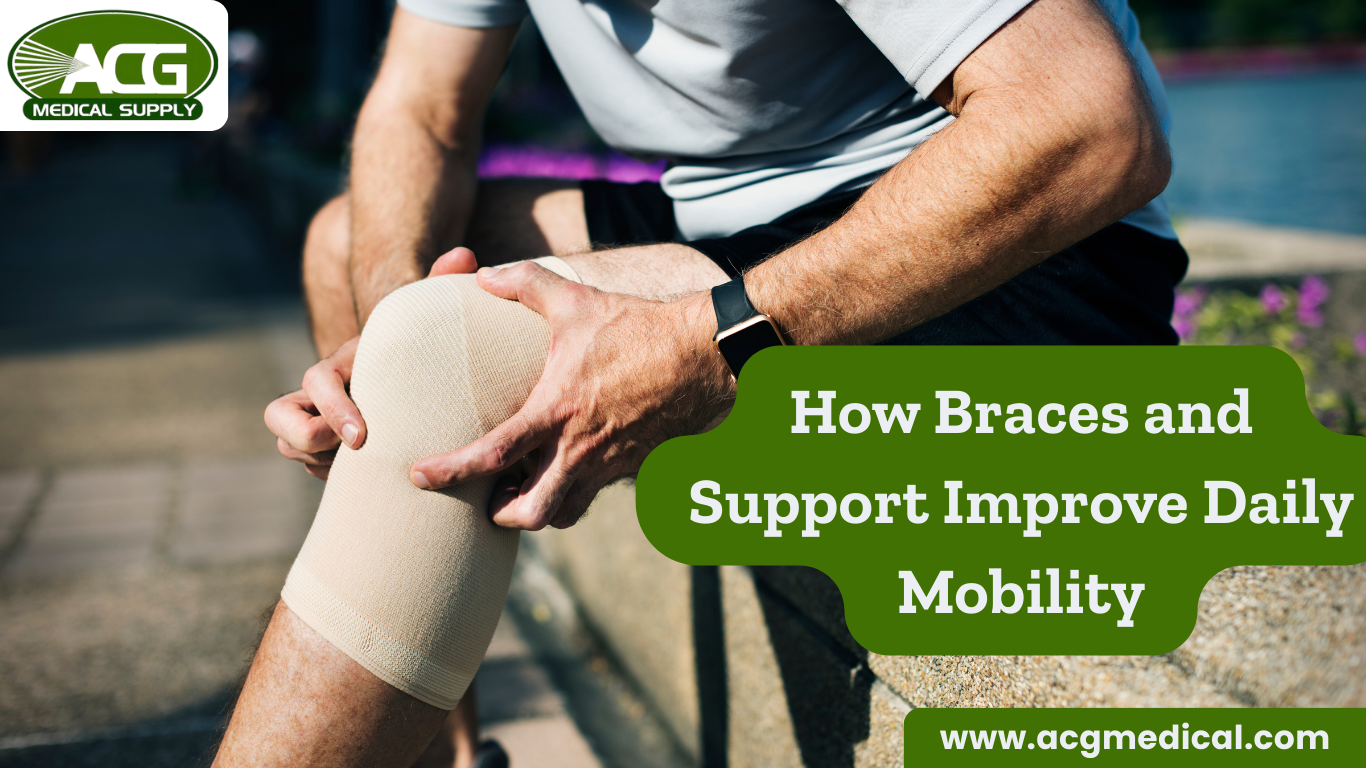
How Braces and Support Improve Daily Mobility

For people living with joint pain, muscle weakness, or injury, it can be difficult to perform simple activities such as walking or standing on one’s feet for an extended period of time. The result is that many individuals end up limiting their physical activities due to these types of challenges. This, in turn, means that they are not able to remain active and healthy for the long term. A brace or support can help stabilize the body during movement, reduce pain and discomfort, and help restore an individual’s ability to move confidently during daily activities.

Why Braces and Support Matter

Braces and supports are intended to help stabilize your joints, minimize tension, and encourage safer movement patterns. The design of a brace or support provides a means of aligning the body in a manner that will allow for more direct use of your muscle and ligament strength. For individuals who experience weakness, orthopedic braces offer a structural element in an area of the body where they feel weak, while medical braces provide compression and stability to alleviate pain.

Types of Braces and Supports

Braces and supports are available in various forms, including knee, shoulder, leg, and general braces, each providing specific benefits based on which body part requires support. The advantages of supports and braces can include increasing stability, decreasing daily overload on the body from gravity, improving proper joint alignment, and providing specific relief from pain or weakness. There can also be disadvantages, such as being bulky, restricting movement, having different levels of comfort based on the fit, and requiring the correct adjustments. Knowing both the strengths and limitations of braces and supports will make finding the appropriate assistive device easier for everyday mobility.

TypeThe Good StuffThe Annoying Stuff
Knee Braces Knee Support & Knee SleevesKnee pain, instability, arthritis To relieve pressure from our knees, give us a better range of motion, and be more stable by
attaching straps, and reducing pain through increased warmth and compression.
Shoulder BracesShoulder instability,
tendon/strain injuries
tendon/strain injuries 
Improve our posture and how much stress we
put on our bodies while lifting and reaching
(which may benefit most people who work in
an office or similar environment.
Leg Braces & SupportsMuscle weakness,
balance issues, leg injury
recovery
Align our legs correctly, provide stability, and reduce the chances of falling while standing/walking.
General Supports & BracesBack, wrist, ankle, and
other joint discomfort
other joint discomfort 
Help to target our pain and have better supportive movements to help keep us more comfortable every day throughout vulnerable
body parts.

How to Choose the Right Braces and Support

The correct product will depend on what you are doing, how much support you require through your day-to-day life, and what limitations you have due to injury or illness. Here are some tips that may help make your choice easier: 
 Think about the location of your pain or weakness. 
 Determine if you prefer hard (as in rigid) support or soft compression. 
 Understand how comfortable, breathable, and fitted to your body the device will be. 
 Consider the activities that you do most frequently. 
 A properly-fitting device provides users with the maximum benefit of their brace or support without causing unnecessary discomfort or limits to movement.

Benefits of Using Braces and Support

Orthopedic products like braces and supports assist in decreasing the amount of pain individuals experience due to securing joints and preventing excessive stress on their joints through unnecessary motion. Users of the brace or support can also improve their posture, which allows them to move easily and safely. In particular, for those recovering from an injury, wearing a brace or support will promote recovery by alleviating stress on the injured body area.

Conclusion

Braces and support devices aid individuals in the performance of their daily activities with more comfort and confidence. Braces for the knee, shoulder, leg, and other locations are available at Acg Medical Supply to create a stable platform around the affected joint. The proper brace may help to alleviate pain, improve stability, or keep you active if you have experienced an injury. ACG Medical Supply is a reputable manufacturer of high-quality braces and support devices for daily use to improve movement and stability. Acg medical equipment remains a trusted product that will help you achieve a better range of motion and stability.

FAQs

Who is a Suitable Candidate for Using Braces and Support

Braces and support can be an advantageous solution for those suffering from joint pain or instability due to injuries or muscle weakness. Individuals suffering from the effects of arthritis, sporting injuries, recovery from surgery, and individuals with balance problems frequently use braces and support for greater stability and comfort while performing daily tasks.

Can I Wear a Brace and Support Every Day?

Many people take advantage of the benefits of using braces and support daily to reduce discomfort while improving their ability to move. The recommended duration of usage will be determined by the type of brace and your individual condition, and your physician’s recommendation. There are braces created for constant wear, and others created for specific sports or exercise activities.

How Can I Determine Which Type of Brace is Right for Me?

The type of brace you choose will depend on the location of your pain or weakness. If your knee is sore, you may need a knee brace or knee sleeve; if your shoulder is painful, you may need a shoulder brace. If you are uncertain, consult with your healthcare professional before selecting a brace.

Are braces and other support products comfortable when worn long-term?

Most orthopedic braces and supports are made from breathable materials, adjustable straps, and cushioned padding. When you get a proper fit of your brace or support, it should give you a feeling of support while also being relatively unrestricted in your ability to move normally.

Will using braces and support products help prevent you from sustaining future
injuries?

Yes! The use of braces and support products stabilizes the joint, therefore reducing the likelihood of re-injury by limiting excessive and harmful movement of the joints. Brace support products should only be used in conjunction with a proper exercise program and the advice of a physician.

Stair Lifts

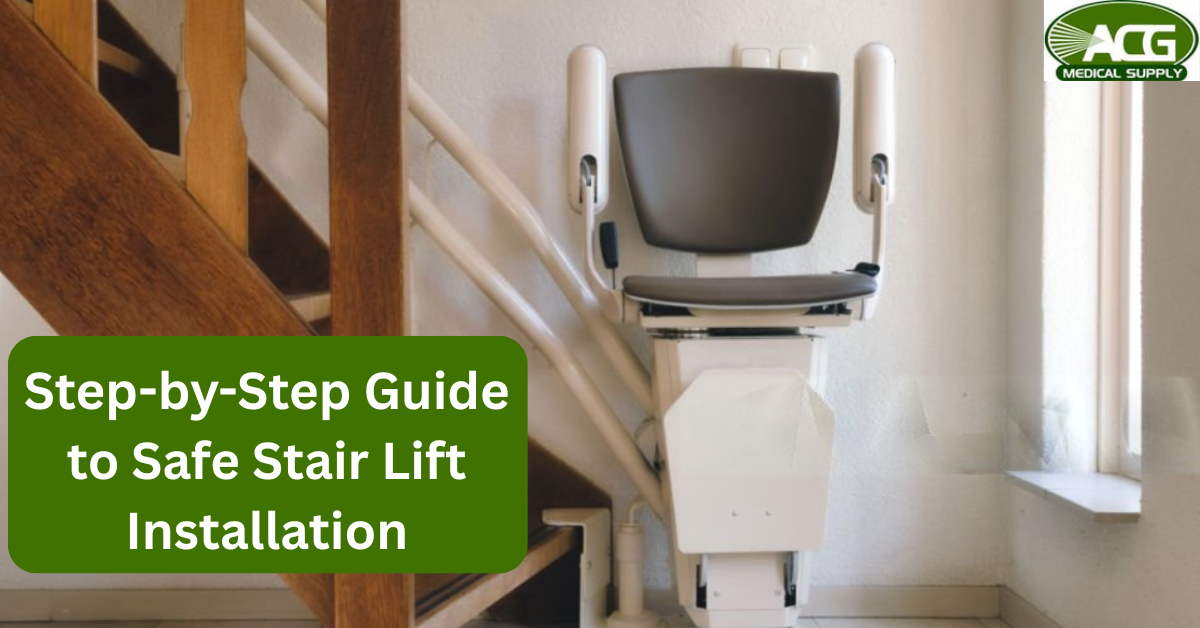
Step-by-Step Guide to Safe Stair Lift Installation

So, you’ve decided to get a stair lift – or you’re at least seriously thinking about it. Good call. But before installation day rolls around,  you should be aware of what actually happens when the technicians show up. 

Most people know stair lifts make life easier, but not many realise what goes into getting one set up safely and properly.

Don’t worry, it’s not as complicated as it sounds. Here’s a simple walk-through of what really happens during the stair lift installation process.

Step One: Pre-Installation Assessment

It all begins with a quick home check. A technician drops by to take a look at your staircase and see what they’re working with. They’ll measure the steps, check the angle, look for nearby power outlets, and decide whether a straight or curved stair lift fits best.

Straight ones are the easy kind – they use pre-made rails, so they’re quicker to set up and usually lighter on the wallet. Curved lifts take a bit more time since everything has to be custom-fitted to your staircase’s twists and turns.

Step Two: Discussing Budget and Options

This is the planning stage, where you go over details, pricing, and setup timelines. The stair lift installation cost usually includes more than you think – rail, seat, controls, wiring, and sometimes even future service visits.

A basic straight model, like the Harmar Pinnacle Stair Lifts, can often be installed in a few hours. A curved or heavy-duty version, as those ACG Medical Supply offers, requires extra prep time and higher costs since they’re custom-built. Outdoor models are another category – they’re weatherproof, designed to handle sun, rain, and dust without wearing out quickly.

If your home already has nearby power outlets, great—it speeds things up. If not, your installer might coordinate with an electrician to make sure everything’s ready before the big day.

Step Three: Installation Day

When installation day arrives, expect a small crew. They’ll bring in tools, rail sections, and safety gear. You’ll want to clear the stairway area and any furniture nearby. Most installs, unless it’s a curved model, finish within the same day.

The process usually goes something like this:

  1. Rail and Mounting Setup – Technicians anchor the rail base along your steps or wall (depending on design).
  2. Chair Assembly and Wiring – The lift chair, motor, and electronics come next, ensuring smooth travel along the rail.
  3. Testing the Ride – Once power is connected, the lift goes through several full rides for calibration.
  4. Safety and User Training – You’ll get a short walkthrough on controls, folding the seat and footrest, and what to do if it stops midway.

Step Four: Safety Checks (The Stuff You Shouldn’t Skip)

Before the installer packs up, they’ll run through a few important checks to make sure everything’s solid and safe to use. Stair lift safety checks protect you long after the installation is done.

Here’s what technicians typically verify before sign-off:

  • Rail Stability: The rail should feel firm and stay put when you’re on it—no shifting or odd squeaks.
  • Battery Backup: They’ll make sure it can still go up and down once if the power ever cuts out.
  • Seat Locks and Sensors: The seat should feel secure before it moves, so you get a steady, comfortable ride every time.
  • Footrest Safety Edges: If anything blocks the path (like a pet or a dropped object), the lift should automatically stop.
  • Emergency Stop Function: Every stair lift has one – make sure you know where it is and how to reset it.

Think of this as your “final inspection.” If something feels off or louder than normal, speak up before the crew leaves.

Post-Installation Maintenance

Nobody talks about maintenance until something breaks. But stair lift safety checks are important and should be done year-round. Weekly? Just wipe down the seat and rails. Nothing complicated. But annually (or closer if you use it a lot), a professional needs to check the brakes, inspect electrical connections, lubricate moving parts, and verify that bolts haven’t loosened.

Ignoring this? Motors wear out faster. Brakes degrade. Battery backup fails when you need it most. It’s not dramatic stuff, but it’s real.

How Installation Timelines Usually Compare

Stair Lift TypeTypical Installation TimeCost Range (approx.)Notes
Straight Stair Lift2–3 hoursLower costPre-fabricated rail
Curved Stair Lift3–4 weeks (custom rail)Higher costCustom design
Heavy Duty Stair Lift3–5 hoursMid to high rangeFor higher weight capacities
Outdoor Stair Lift3–6 hoursVariableWeatherproof components

Conclusion

Installing a stair lift isn’t rocket science, but it deserves respect. Get a professional assessment. Understand what you’re choosing – straight or curved, regular or heavy-duty, indoor or outdoor stair lifts. Understand the cost upfront.

And then once it’s in? Maintain it. Seriously.

Suppliers like ACG Medical Supply handle this stuff day in, day out. They know what works. If you’re ready to get this sorted, reach out to them. Get an evaluation. See what a Harmar Pinnacle Stair Lift or a different model looks like in your specific staircase.

Independence shouldn’t feel complicated. With the right stair lift and solid installation, it isn’t.

FAQs (Frequently Asked Questions)

Q: How long does installation take?
A: Straight lifts are often done in a few hours. Curved ones? A couple of days is normal.

Q: Can outdoor stair lifts handle weather?
A: Yes. Made for rain, sun, and snow with materials that won’t quit.

Q: Is DIY a good idea?
A: Nope. Professionals ensure it’s safe, secure, and runs right.

Q: What about maintenance?
A: Clean regularly, charge batteries weekly, and get pro checkups every 6-12 months.

Mobility Scooter and Wheelchair Ramps

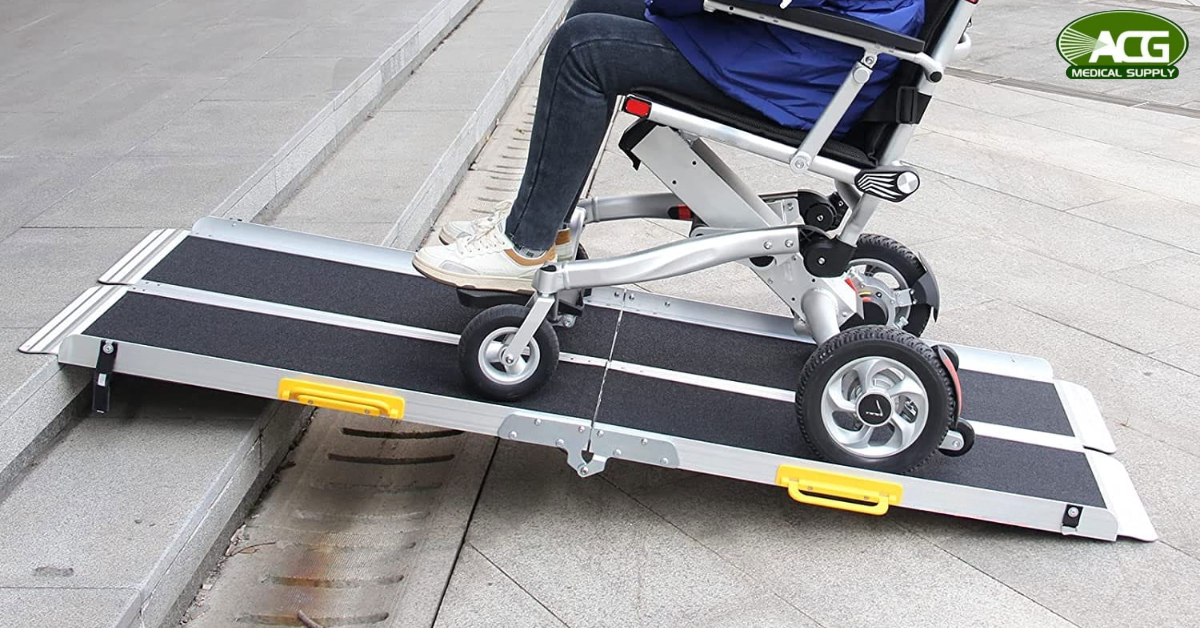
How to Choose the Right Size for Mobility Scooter or Wheelchair Ramp

Most people don’t wake up excited about buying a ramp. Usually it goes like this: you’ve got a step or threshold that’s become a problem, you search online, and boom — 47 different ramp options with specifications that might as well be written in another language. Let’s fix that. Here’s what you actually need to know about choosing a mobility scooter or wheelchair ramp.

Start Simple: How to measure rise for a ramp?

Here’s where everyone starts. You need to know the “rise” — that’s just the vertical height from ground to wherever you’re going. A doorway, a porch, the back of your van. Grab a tape measure and measure straight up. That’s it.

Write that number down. Inches. Let’s say… 18 inches. That one little number? Yeah, it basically decides everything else. Doesn’t sound exciting, we know. But honestly, we just can’t skip it; it’s the most important part.

The 1:12 rule (And why it matters)

So once you’ve got your rise, there’s this rule that’s very popular and everyone keeps mentioning: the 1:12 rule. Basically, for every inch of height, you need a foot of ramp. So 18 inches up? That’s an 18-foot ramp. And it meets the ADA ramp slope requirements.

The ADA came up with this standard for a reason. That gentle slope means you’re not fighting gravity the whole way up. It means you can control your speed on the way down. If you’ve ever pushed a wheelchair up something too steep, you get why this matters. 

Now, some people say “but I don’t have 18 feet of space.” Totally fair. If you’ve got a power scooter, you might be able to go a bit steeper. Like 1:10, 1:8 maybe. Shorter ramp, less space used. But then you’re trading off a little safety and control. It’s a balance.

Width: It’s Not Just a Number

The law says 36 inches minimum. That’s the legal baseline. But here’s the thing — when you’re actually using the mobility ramp, you want more breathing room than the bare minimum. A power wheelchair? A scooter with attachments? Aim for 42 to 48 inches if you can swing it.

Why? Because you need room to move safely. If you drift to one side, you need space to adjust. If you turn too quickly, extra width keeps you from feeling cramped. Those extra inches can make the ramp feel a lot safer.

Oh, and don’t forget about what happens at the top and bottom. You need flat landing space on both ends. That’s where you pause, turn, figure out your next move. It sounds obvious, but a lot of people forget this part.

Pick Your Ramp Type

Not all ramps are the same.

Threshold ramps are small. We’re talking 1-2 inches usually, for doorways and sliding glass doors. Rubber or aluminum, lightweight, affordable. If you just need to get over a door lip, grab one of these.

Portable ramps fold up. Seriously useful if you travel or visit places. Not a permanent solution, but they work when you need flexibility.

Modular ramps are a full commitment. Interlocking pieces that snap together. ACG Medical Supply sells these, and they’re solid. You can configure them for corners, different heights, whatever your space throws at you. They look professional. They last.

Materials: What Works and What Doesn’t

This part’s pretty practical. Different materials behave differently, especially outdoors.

MaterialProsConsBest For
AluminumLightweight, rustproof, durableCan get slippery without texture, pricier upfrontOutdoor use, modular systems, portable ramps​
SteelIncredibly strongHeavy, rusts without coatingCommercial or high-traffic permanent installs
WoodLooks natural, can be custom-builtNeeds sealing every year, can warp or splinterCustom residential ramps where appearance matters​
RubberQuiet, grippy, absorbs shockHeavy for its sizeThreshold Ramps, indoor transitions​

Making It Work in Real Life

Okay, real scenario. You measure your porch and it’s 24 inches high. The 1:12 formula says you need 24 feet of ramp. Problem is, you don’t have 24 feet of space. Now what?

Option one: Use a steeper slope if the user has a power scooter. A 1:8 slope cuts that down to 16 feet. Still long, but manageable.​

Option two: go modular with a turn. Instead of one straight shot, ACG Medical Supply and similar providers can design an L-shaped ramp with a landing in the middle. It takes up less linear space and still meets safety standards.​

Or maybe you’re just trying to handle a threshold. In that case, forget the math — grab a 2-inch rubber wedge ramp and call it done. It’s not always complicated.

The key is matching what size ramp for a wheelchair or scooter to the actual user and space. Cookie-cutter advice doesn’t always work.

It Doesn’t Have to Look Bad

Look, there’s a reason people avoid accessibility equipment sometimes. A lot of it looks like it came straight out of a hospital supply catalog from decades ago. That generic institutional vibe nobody asked for.

But that’s changing. Modern aluminum ramps? Clean lines. Look intentional. They blend into a home instead of sticking out. When something looks like it belongs, people feel different about using it. It stops being “the accessibility thing” and becomes just part of your space.

ACG Medical Supply gets this now. Our products meet every technical requirement but don’t scream “medical.”

Conclusion

Get your rise measurement right. Calculate your slope. Pick materials that work where you live. That’s really it. Everything else is just details.

A good ramp means you’re not thinking about logistics when you want to leave your house. You’re just going. That’s the whole point.

FAQs

1. How do I actually measure rise for a ramp?
Measure from ground level straight up to the top of the step or landing. Use inches. That number is your rise.

2. What’s the length I need for a 12-inch rise?
Using 1:12 standard, you’re looking at 12 feet. For a powered scooter at 1:8, you’d get by with 8 feet.

3. Can a ramp elevate home design?
Absolutely. Minimalist aluminum and modular ramps can complement any modern aesthetic.

4. Why does slope matter so much?
Because gravity never negotiates. ADA’s ramp slope requirements keep it in check.

5. Is it possible to use Threshold Ramps indoors?
Yes — they’re perfect for subtle transitions in doorways or uneven flooring.

Free Blood Pressure Checks

Where to Get Free Blood Pressure Checks in 2025

Checking your blood pressure should be as simple as grabbing a coffee. And in 2025, it really is. Across the U.S., more places are offering free screenings, making it easier than ever to keep tabs on your health without spending a dime.

Regular monitoring is important not just for people with high blood pressure; everyone should know their numbers, because catching changes early is way better than dealing with a surprise down the road. 

If you’ve ever searched for a free blood pressure check near me, then this guide is for you, as it lays out all your options and explains why checking in on your stats is one of the simplest, smartest things you can do for your health.

Why free blood pressure checks are a must-have

Blood pressure is the “silent indicator” of underlying heart problems. You don’t always feel when something’s off, but ignoring it can lead to long-term health issues. That’s why free checks can be such a helpful accessory in daily life. They give people quick access to data without having to book a doctor’s appointment or buy equipment upfront.

Free checks are about creating awareness, not just about saving money. By getting a reading at a local pharmacy or community event, you build a habit of monitoring your health. 

Free checks like these are especially handy for people who don’t have regular insurance, who don’t want to bother their doctor with a simple measurement, or who just feel unsure about those grocery store machines (which, by the way, are fine, but a real person is always a plus).

ACG Medical Supply: More than just a store

Located in three bustling Texas cities—Rowlett, Plano, and BedfordACG Medical Supply is more than just a medical gear shop. Sure, we’ve got everything from mobility aids to diagnostic tools, but what really turns heads is our regular free blood pressure check events. You can stop by any of our three showrooms, and we offer complimentary blood pressure checks with our knowledgeable staff on hand to guide you through the process.

The best part is these aren’t just one-off events. ACG Medical Supply hosts these free checks every single month, so you can keep a routine eye on your heart health.

Other places to get free blood pressure checks

Okay, so maybe you’re not in Texas, or you’re just curious about other options. There are a few other solid picks for where to get blood pressure checked for free. Big chain pharmacies like CVS sometimes run ‘CVS free blood pressure screening’ events, especially for heart health awareness months. But these are often limited-time offers, not year-round services. 

Local community health fairs, wellness events, and even clinics sometimes set up shop for free screenings, too, with nurses and volunteers ready to help. If you’re really curious about ‘free health screenings 2025 USA,’ a quick online search with your city and ‘free blood pressure check’ will usually get you the information on the latest events in and around your city.

The essential home tool: Invest in your own monitor

Here’s a thought. Why not check your blood pressure at home? ACG Medical offers the essential wireless blood pressure monitor, a sleek, user-friendly device that syncs with your phone, so you can track your numbers over time without scribbling them down on napkins. It’s accurate, easy to use, and, once you buy it, checks are free forever.

Other popular monitors, like the One Touch blood pressure monitor, do much the same, storing your readings and making it easy to share them with healthcare providers. Having a good monitor at home means you’re never far from your numbers, and honestly, isn’t it nice to have one less thing to worry about?

Quick comparison: Free checks vs. At-home monitors

FeatureFree checksAt-home monitors
CostAlways freeOne-time purchase required
ConvenienceAvailable at pharmacies, events, or showroomsCheck anytime at home
AccuracyReliable, performed by trained staffHigh accuracy with proper use
FrequencyLimited to when screenings are offeredDaily or multiple times a day if needed
Record keepingUsually, no history is  providedStores readings for long-term tracking
Best forOccasional checks, quick reassuranceConsistent monitoring and condition management

Both approaches have their place. Free checks offer convenience when you’re out and about, while at-home monitors give consistency for daily tracking.

Conclusion

Finding a free blood pressure check near me in 2025 isn’t hard—what matters is making the most of it. Free screenings at pharmacies, community events, and medical supply showrooms are more than a convenience; they’re a way to stay connected to your health. 

Visit any of ACG Medical Supply’s three showrooms and enjoy free blood pressure checks year-round.

FAQs

Why bother checking if I feel fine? 
High blood pressure mostly goes unnoticed because it usually has no symptoms. Regular checks can catch problems early, when they’re easiest to manage.

Where else can I get a free blood pressure check?
Pharmacies (CVS, Walgreens) sometimes offer free screenings during awareness months or special events, and community health fairs are another great source.

Do I need to make an appointment to get a free check?
Nope, just walk in during the event, it’s that simple at ACG Medical Supply showrooms.

Are these screenings accurate?
Yes, ACG Medical Supply checks are performed by trained staff, just as reliable as any doctor’s office.

Walker and Rollator Safety Checks

Why Regular Walker and Rollator Safety Checks Matter for Seniors

Mobility really is freedom. For so many older adults, that freedom doesn’t come from something fancy; it’s often just a simple walker or rollator. These sturdy aids carry a lot of responsibility, giving seniors the confidence to stay independent. But here’s the part that slips under the radar for a lot of families: even the toughest mobility aid isn’t built to run forever without care. They need a little routine attention if they’re going to stay safe and reliable.

Why routine safety checks matter

The truth is, walkers and rollators take a beating. They go over curbs, bump down cluttered hallways, and sometimes get dragged across damp sidewalks. Bit by bit, certain elements of the walker or rollator start to wear down. For example, wheels lose their smooth roll, bolts get a little loose, and brakes don’t feel as sharp. And you don’t need a big failure for trouble—sometimes it’s just one wobbly wheel, and suddenly that quick walk to the kitchen turns into a scary slip or even a fall. If you catch those little issues early, before a wheel sticks or a cable gives out, you can avoid a lot of that risk.

And here’s the best news for North Texans: Visit ACG Medical Supply—any one of its three showrooms in Plano, Rowlett, or Bedford—and you’ll get free safety checks on walkers and rollators, mobility scooters (mobility devices) by certified technicians. That’s a zero-cost safety net.

How a pro checks your walker or rollator

A thorough inspection takes less than ten minutes and targets the five parts most likely to fail:

CheckpointWhat the tech looks forWhy it matters
Wheels & tiresFlat spots, wobble, debrisSmooth rolling prevents stumbles
Brakes & cablesPad wear, cable tensionReliable stops on inclines
Frame & jointsCracks, bent tubingStructural strength
Handles & gripsLooseness, torn rubberSteady handhold and posture
Seat & basket (rollators)Tears, loose boltsSafe resting spot & storage


Technicians tighten hardware, adjust brake tension, and recommend replacements when parts are past their prime. Many fixes happen on the spot.

Quick DIY checklist between pro visits

Seniors and caregivers can keep problems from snowballing with a once-a-week glance:

  • Wipe the frame with mild soap and water—grit shortens the life of moving parts.
  • Spin each wheel; it should turn freely and silently.
  • Squeeze the brake levers. They should lock the wheels without pulling to one side.
  • Check rubber tips or tires for cracks.
  • Make sure handles sit at wrist height when the user stands tall—no hunching.

If anything feels off, book the showroom for help or search for ‘free walker safety check near me’ to find community clinics. Simple steps like these mean seniors can use their aid with confidence instead of hesitation.

Senior mobility aid maintenance guide—How often?

  • Daily: Quick visual once-over before leaving home.
  • Weekly: Full DIY checklist above.
  • Every 3–6 months: Professional tune-up (or sooner after a fall or trip).
  • Immediately: After exposure to rain or extreme heat, dry it and check the brakes.

Spot-on brake care

Rollator stoppers are lifesavers on ramps. Keep them crisp with these rollator brake inspection tips:

  1. Test on a gentle slope. Levers should halt motion without max hand strength.
  2. Inspect cables for frays. Replace if any wire strands show.
  3. Lightly lubricate pivot points, never the pads.
  4. If wheels still creep, a tech at ACG Medical can adjust tension in minutes.

Conclusion

A walker or rollator is tough, and they are built to last, but like anything that’s used every day, they also need a little care. A quick look over at home—or even better, a check by a professional, can be the difference between something that’s perfectly safe to use and something that could put someone at risk.

Thanks to ACG Medical Supply, seniors in North Texas can get free safety checks on walkers and rollators at any of the three showroom locations. That small step means fewer falls, greater confidence, and the kind of independence that every senior deserves.

Because when mobility is safe, freedom follows.

FAQs:

How often should I book a professional safety check?
Every six months – or sooner if you hear grinding, feel a wobble, or notice brake slippage.

Can I adjust rollator brakes myself?
Yes, minor tweaks are doable, but over-tightening can ruin cables. If in doubt, let a tech handle it, ACG’s checks are free.

What’s the lifespan of a walker?
Walker frames can last for years, but tips, wheels, and grips often need swapping annually, depending on mileage and terrain.

Does insurance cover maintenance?
Health plans rarely pay for upkeep, but the no-cost service at ACG removes that hurdle entirely.

Do safety checks include scooters?
Absolutely. ACG’s teams also look over batteries, tires, and throttles on mobility scooters during the same visit.

Patient Transfer Lifts

How to Safely Use Patient Transfer Lifts: A Guide for Caregivers

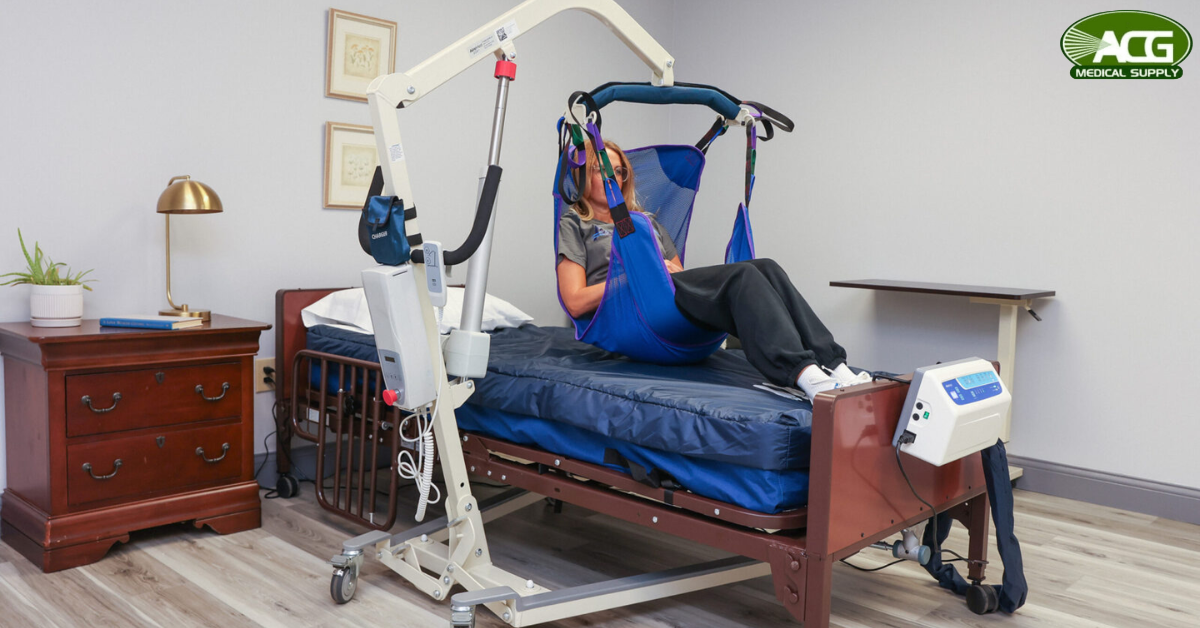
Caring for a loved one who has limited mobility is a big act of love, but it can take a toll on shoulders, backs, and peace of mind. ACG Medical Supply stocks an entire lineup of patient transfer lifts that lower the physical strain on caregivers while keeping transfers secure and dignified for the person in the sling. This guide breaks down what today’s lifts can do, types of lifts available, and—most importantly—how to use a patient lift the safe, confidence-building way.

Why a Patient Lift Belongs in Every Home-Care Toolbox

Lifting an adult isn’t just heavy; it’s downright awkward. Twisting while supporting weight places up to 1,200lbs of force on a caregiver’s spine.

Here’s why every home-care setup benefits from a lift:

  • Saves your back (and shoulders). Lifts take the heavy strain off, so you’re not twisting or overexerting yourself every time you help someone move.
  • Ensures patients are transferred from one to another comfortably without feeling pulled or dragged.
  • Creates safer environments by lowering the chance of falls or skin tears.
  • Saves time and energy, leaving more room for quality interactions instead of stressful lifting.

And it’s not just about muscles and joints. Safe transfers mean fewer skin tears, less chance of falls, and none of that unsettling “being manhandled” feeling. In short, a lift protects bodies and relationships.

Types of Patient Transfer Lifts

Different households and care needs call for different styles of lifts. Here’s a breakdown of common types:

Lift StyleBest ForKey Benefits
Manual Hydraulic LiftBudget-conscious homes or occasional transfersNo batteries required, simple to use, reliable
Electric Sit-To-Stand Patient Lift ChairUsers who can bear some weight and follow cuesEncourages leg strength, supports quick bathroom trips
Full-Body Electric (Hoyer-style)Individuals with no weight-bearing abilityQuiet motor, smooth and steady lifting
Bariatric ModelsPatients over 400 lbsReinforced frames, wider booms for added stability

Each type of lift has its place. Some families go with a manual patient lift because it’s budget-friendly and dependable. Others lean toward using a Hoyer Lift at home when patient transfers are more frequent and comfort is the utmost priority.

How to Use a Patient Lift: Step-by-Step Guide

Using a lift isn’t that difficult, but like most new things, using the lift feels easier after a little practice. The trick is to take it slow and follow the same pattern each time. Here’s a step-by-step patient lift guide:

1. Prep the Lift and Sling

Before anything else, give the lift a once-over. Are the wheels rolling smoothly? Brakes locking in place? If it’s electric, check that the battery isn’t on its last leg because you don’t want it dying halfway through. Lay the sling out flat and untangled; a twisted sling is a headache you don’t want mid-transfer.

2. Position the Sling

This part feels tricky at first, but gets easier. Gently roll your loved one onto their side, slide the sling under them, then roll them back. Smooth it out under the shoulders and thighs so there’s no bunching or pinching; comfort matters more than speed here.

3. Attach and Begin the Lift

Clip the sling straps into the hooks, then pause and double-check every single one. Nothing’s worse than realizing a strap isn’t secure once you’re mid-air. When you start lifting, go really slow. If the person looks anxious, take a minute and reassure them.

4. Move with Care

Don’t unlock the brakes until you are actually ready to move, and when you do, take it easy around rugs, furniture, or whatever clutter’s in the way. Always keep an eye on how the person in the lift is feeling, and talk to them through it. Saying simple things like “We’re moving now” or “almost there” can make them feel safer and more involved.

5. Lower and Settle

Lock those brakes again before lowering the patient. Guide them gently into the chair, bed, or wherever they’re headed. Only unclip the sling once they’re sitting safely and securely.

Patient Lift Safety Tips for Every Caregiver 

A patient lift certainly makes things a lot easier, but safety still comes first. A few golden rules:

  • Read the manual. Is it boring? Yes. But is it necessary? Also yes.
  • Take your time. This isn’t a race. Rushing usually ends in mistakes.
  • Double-check every strap and clip before lifting.
  • Clear the floor. Even a stray sock can turn into a hazard.
  • Keep talking. Let the patient know what’s happening so there are no surprises.
  • Stick to the weight limits. No exceptions.
  • Practice first. Run through it with a friend, a pillow, or even just on your own before trying it with the patient.

Conclusion

Patient transfer lifts really are lifesavers, for both the person doing the lifting and the one being lifted. They take away so much of the stress and strain that usually comes with patient transfers. Instead of worrying about your back giving out or whether you’ll lose balance and fall, you can actually relax. And honestly, once you’ve practiced a few times, using a lift feels easier than ever. It just becomes part of the routine, like second nature.

FAQs:

Q1: Manual vs. electric—what’s the difference?
Manual lifts use a pump handle and they are more affordable. Electric lifts run on a motor, less effort, smoother motion.

Q2: Sit-to-Stand or full-body?
If the person can bear some weight, go Sit-to-Stand. If not, a full-body (Hoyer) is safer.

Q3: How do I transfer safely at home?
Take it slow, check straps and brakes, and walk them through each step.

Q4: Do lifts need maintenance?
Yes, you should check brakes, wheels, and slings regularly. If you using an electric one, then recharge or replace batteries when needed.

Q5: Are they hard to learn?
Not really. The first time might feel a little awkward and tricky, but after a couple of times you’ll get the hang of it.

Electric Hospital Bed

How to Choose the Right Full-Electric Hospital Bed

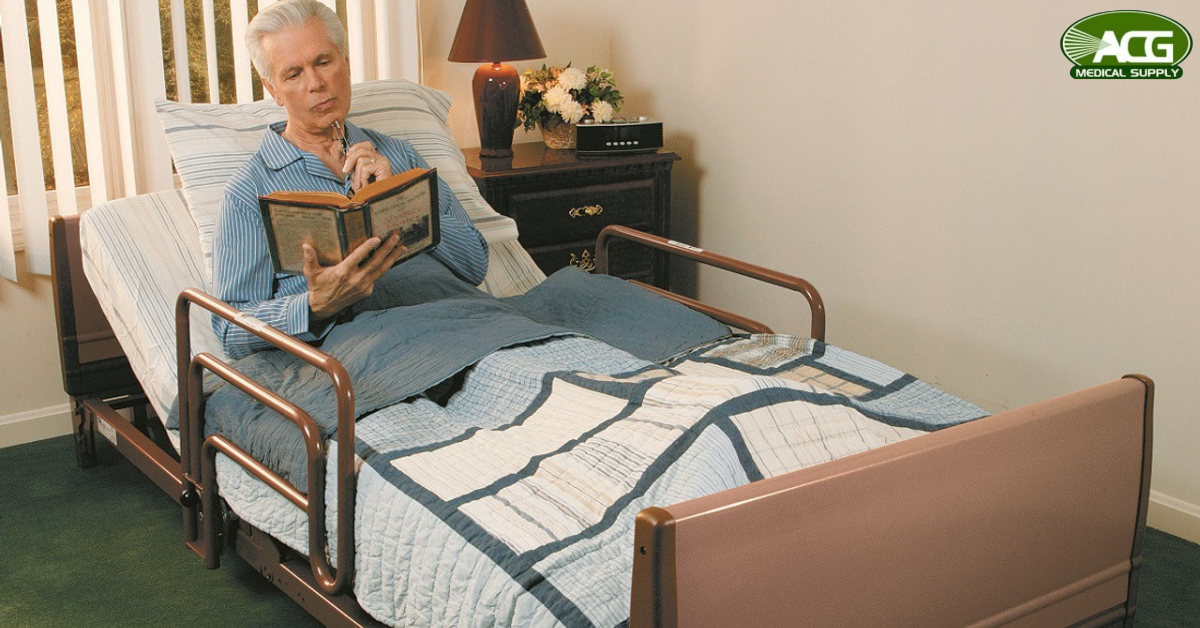
Caring for someone you love has a way of throwing you for a loop. Suddenly, things you never gave much thought to (like mobility, safety, or how easy it is to sit up in bed) start shaping your everyday life. And pretty quickly, one of the biggest decisions on your plate becomes choosing the right bed. If you’ve already gone down the Google rabbit hole, you’ve probably seen the Full-electric Hospital Bed come up again and again.

Now, let’s be clear, this isn’t the cold, squeaky bed frame you probably remember from hospital visits. These are made with home life in mind. They’re comfortable, practical, and, honestly, they give back a lot of independence to the person using them. And for caregivers? They can take a load off their shoulders too.

In this guide, we’ll walk you through everything you need to know before making your decision.

Why a Full-Electric Hospital Bed Feels Like a Game-Changer

The phrase “hospital bed” doesn’t exactly make most people light up with excitement. You might think of something clinical, sterile, maybe even intimidating. But here’s the twist: a full-electric hospital bed is nothing like that. It puts the power—literally—right in your hands with a simple remote control.

Think about this:

  • You want to sit up and read without stacking pillows? Push a button.
  • Do you need to elevate your legs after a long day or to reduce swelling? Push a button.
  • If you are struggling to stand up from a low position? You can raise the whole bed (yep, by pushing a button).

For someone who’s been relying on others for every little adjustment, the ability to move on their own is huge. You can actually see the relief (and even pride) on someone’s face the first time they adjust the bed themselves.

The Details That Really Make a Difference

When you start shopping for Hospital Beds, it quickly becomes obvious that they’re not all built the same. Some are bare-bones, some are semi-electric, and then there are the fully electric ones that feel almost tailor-made for comfort and safety.

Here are the features worth paying attention to:

  • Adjustable Height – This feature is a total game-changer for caregivers. It saves your back and makes things like grooming or dressing so much easier. And for the person in bed, getting to a walker or wheelchair also becomes far less scary.
  • Head and Foot Adjustments – These aren’t just nice-to-have features; they can improve breathing, reduce acid reflux, or simply let someone find their sweet spot for a nap.
  • Safety Rails – They help with stability and give peace of mind, especially at night.
  • Remote Control – Forget fiddly cranks and levers. A remote keeps things simple—just a couple of buttons, and you’re set.

And here’s something many people forget: the accessories. Hospital Beds and Accessories go hand in hand. A great Hospital Bed Mattress, a handy tray table, or even supportive Medical Pillows can transform the bed from “functional” to “actually cozy.”

Manual vs. Semi-Electric vs. Full-Electric: The Quick Breakdown

Bed TypeAdjustabilityEase of UseCaregiver EffortBest For
Manual BedHand-crankLowHighShort-term or tight budgets
Semi-ElectricHead/foot motorized, height manualModerateMediumPatients needing partial support
Full-ElectricFully motorized (head, foot, height)HighMinimalLong-term comfort and care

If you’re caring for someone at home, that last row pretty much explains why so many families go for full-electric.

Choosing Your Perfect Bed (And Why It Doesn’t Have to Be Overwhelming)

Let’s be real for a moment, buying a hospital bed probably isn’t something you ever thought you’d be doing. But here you are, and the good news is, it doesn’t have to feel extremely clinical or stressful. In fact, finding the right bed can actually feel empowering. You’re making life easier for your loved one, and for yourself too.

At ACG Medical Supply, we understand this isn’t just a random purchase; it’s a big and scary step. That’s why we don’t rush you into a decision; we walk you through options. You’ll see everything from the popular adjustable electric hospital bed to extras like trapeze bars, specialized mattresses, and more. You’re never left to figure it out on your own. Our team is here to answer questions, share real guidance, and help take a big chunk of the stress off your plate.

Conclusion

Every family’s situation is unique, but one thing always holds true: having the right hospital bed at home can completely change the day-to-day. It eases some of the constant struggles and makes the space feel safer and more peaceful. And when you’re looking after someone you love, those little wins? They matter more than anything.

FAQs

1. Are full-electric hospital beds hard to use?
Nope. They’re designed for simplicity. If you can use a TV remote, you can use one of these.

2. Do I need a special mattress?
Yes, you’ll want a proper Hospital Bed Mattress. Regular mattresses don’t always fit well, and they won’t give the needed support.

3. Can I add accessories?
Definitely, things like rails, tables, or Hospital Bed Accessories make a huge difference day-to-day.

4. Are these only for long-term care?
Not at all. They’re just as helpful for short recovery periods after surgery or illness.

5. Where can I buy one?
Check out ACG Medical Supply—we’ve got a wide range and friendly staff who actually care about finding you the right match.

Stair Lifts

Home Stair Lifts Installation and Service: A Simple Guide

Stairs are just stairs, until they aren’t. For many people, stairs start to feel like something that’s more of a barrier than a way through. Suddenly, stairs stand between them and their own bedroom, or the backyard they used to love hanging out in. Every step starts to feel like a battle, which is part worry, part pride, part pure exhaustion. 

But there are simple solutions like stair lifts that can make all of that go away (without taking away your independence). A stair lift can greatly improve the quality of life. And this guide breaks it all down clearly, without fluff or false promises. Whether you’re buying for yourself, a parent, or a client, here’s what truly matters.

Stair Lifts: Why They’re More Than a Machine

It’s easy to think of stair lifts as just motorized chairs. But ask anyone who’s had one installed, and they’ll tell you it’s something else entirely: it’s relief.

A stair lift restores your control. The user doesn’t need to wait for assistance. They don’t need to cling to railings or count steps. They sit, press a button, and move safely. That’s dignity.

And what’s even better is that stair lifts today aren’t what they used to be. Take the Pinnacle Stair Lift SL300; it’s not big or bulky. It’s slim, quiet, and folds up nicely, so it stays out of the way. And because it runs on a low-maintenance drive, you don’t have to think about it much. It just works—day in, day out—giving you one less thing to worry about.

If you have steps outside, then the Harmar Outdoor Stair Lift is made for that. It can handle any weather, be it rain, heat, or wind, without slowing down, so getting to your porch or backyard isn’t a hassle anymore. And if someone needs a bit more support, the Harmar Pinnacle Heavy Duty Stair Lift is up for the job. It’s strong and steady, but still comfortable.

So yes, a stair lift is a machine, but the freedom it offers is deeply personal.

What the Installation Really Looks Like

If you’ve been picturing drills, drywall damage, and a week of noise—forget that. Installing a stair lift is surprisingly clean and fast.

Here’s how it usually works:

  1. Evaluation: A professional from ACG Medical Supply visits the home. They take measurements, look at the stair structure, and check clearances.
  2. Model Selection: Straight stairs? Curved? Outdoor? ACG helps match the right model to the user’s mobility needs and home layout.
  3. Mounting the Rail: Contrary to what most think, the rail mounts to the steps, not the wall. No hammering into plaster or tiles.
  4. Install Day: For straight lifts, the setup takes a few hours. Curved installations take longer since the rail is custom.
  5. Training: The installer shows you how to use the lift, test controls, and charge the battery. It’s all simple stuff—no manual memorization required.

And if you’re wondering whether the work that gets done is reversible, then yes, it is. If down the line you don’t need the lift anymore, it can be removed without leaving your staircase in ruins.

Stair Lift Quick Facts

WhatWhy It MattersHow It Helps
Fast InstallationNo wall drilling neededClean setup, done in a day
Compact DesignFolds away when not in useKeeps the stairs open for others
Keeps the stairs open for othersSimple buttons or a remoteNo learning curve
Weather-Ready OptionOutdoor models availableAccess the backyard or porch easily
Regular ServiceQuick checkups & tune-upsLong-lasting, worry-free use

Servicing Your Stair Lift Without Headaches

Here’s the truth—stair lifts are dependable, but they’re still machines. And like all machines, they run better with a little care.

ACG Medical Supply offers regular servicing, which keeps the system working safely and quietly. No sudden lurches. No surprises when you need it most.

A typical service appointment includes:

  • Checking and replacing the battery if it’s ruined 
  • Lubricating the rail and gears
  • Testing the motor and remote
  • Making sure all safety sensors respond properly

Why ACG Medical Supply Is the Name You Should Know

There are stair lift retailers, and then there’s ACG Medical Supply. We aren’t just another equipment vendor. We’re known for providing premium stair lifts for home use, yes, but it’s our people-first mindset that sets them apart.

We don’t push what’s expensive. We only recommend what’s appropriate, whether it’s straight or curved, compact or heavy-duty. ACG focuses on real-life use, not showrooms.

We also carry reliable brands like Harmar Stair Lifts, and we’re there for you long after the install. 

Conclusion

Stair lifts make a person’s life really easy, it’s as simple as that, they help people who have trouble walking up the stairs move freely and stay safe and feel more at home. And when you get a stair lift from ACG Medical Supply, the whole process is simple and stress-free.

FAQs

1. Can more than one person in the home use the same lift?
For sure. As long as each person can sit comfortably and safely, and the user’s weight is within the lift’s limit.

2. Will my home be too small or narrow to get a stair lift installed?
It’s highly unlikely. Many models, including the SL300, are built for narrow staircases and fold neatly when not in use.

3. How much does one usually cost?
It depends. Straight stair lifts start at lower ranges, while curved or outdoor models cost more due to customization. ACG Medical Supply provides honest quotes tailored to your setup.

4. Is the installation process of a stair lift noisy or messy?
Nope. It’s a fairly clean process, it usually gets done in one day, and there’s also no need to drill into walls or tear up floors.

5. Will it work during a power outage?
Absolutely. Most units come with backup batteries that charge automatically.

Compression Garments

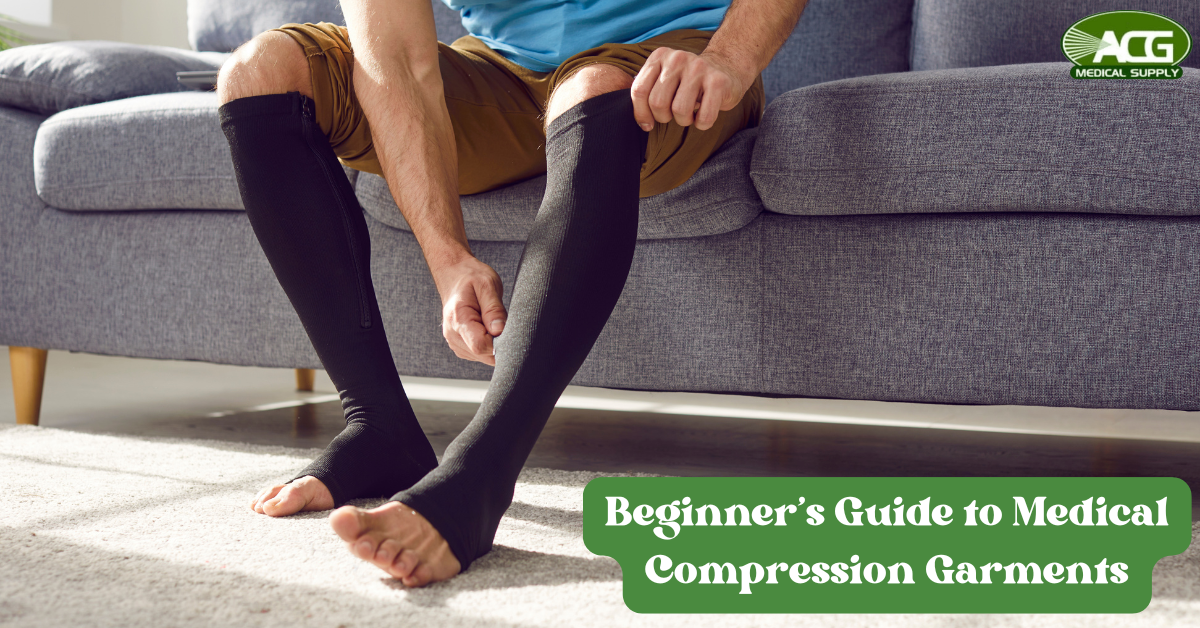
Beginner’s Guide to Medical Compression Garments

There’s no loud advertisement or dramatic before-and-after story behind compression garments. In fact, most people only hear about compression garments when they need them, after surgery, during treatment, or through someone quietly managing swelling or circulation issues.

And that’s part of their value. They don’t draw attention. They do their job.

Unlike many wearable health aids, compression isn’t about high-tech sensors or trends. It’s about consistent, carefully applied pressure that supports the body’s natural circulation, helps reduce swelling, and adds stability where needed.

At ACG Medical Supply, these garments aren’t treated as just another product. They’re part of a broader focus on practical solutions that help people live and move better, day by day.

Understanding Compression Garments

The purpose of compression garments is straightforward: apply controlled pressure to help with circulation and reduce swelling.

Common types you will come across while researching include:

  • Sleeves are for arms
  • Socks and compression stockings are for legs
  • Wraps and bodysuits are for torso support

Doctors often recommend these for people who are recovering from a major abdominal surgery, dealing with varicose veins, or are suffering from chronic swelling. In cases like lymphedema support, they’re absolutely necessary.

And sometimes, people use them simply because standing for 10 hours a day takes a toll on their legs.

Who Are They For?

You don’t need to have a medical condition to benefit from compression garments. People who turn to medical compression garments come from all kinds of backgrounds:

  • People who work in a warehouse, nurses, and other people who are on their feet all day
  • People who run or go to the gym, as they most probably have sore or inflamed muscles
  • People who have had a recent surgery
  • Frequent travelers dealing with circulation issues
  • Those managing lymphoedema treatment for the legs

And of course, those under medical care for venous insufficiency or DVT risk rely on these garments long-term.

Types of Compression Garments

Not all compression garments are the same. There are specific garments made to support specific areas and needs. 

You’ll see compression stockings used mostly on the legs, ankle up to the thigh. They’re not fancy, but they help more than you’d expect. If your calves tend to swell up by the end of the day, stockings can really take the edge off. Then there are arm compression sleeves, they are less talked about but they are just as useful, mostly for people who are healing from surgery or people who are managing lymphedema, post-surgery compression garments also help in recovery after surgery, for example, surgical bras or full-body suits, offer that extra bit of support the body needs to heal without any complications while helping keep fluid buildup in check.

Choosing the Right Compression Level

There are several levels of compression a garment can provide. Fair warning, compression levels are measured in mmHg, which sounds like medical jargon, but it really only means how much pressure the garment puts on your body. 

8–15 mmHg (Mild)

Light support. This compression level is ideal for tired legs, mild swelling. No medical reason is needed for this level of compression.

15–20 mmHg (Moderate)

A bit stronger. This level of compression is great if you are pregnant, stand a lot at work, or have noticed early signs of varicose veins. This level also can be used without a prescription.

20–30 mmHg (Firm)

More structured support. This level is supposed to be used after suffering through a surgery or for issues like mild lymphedema. Check with a doctor before use.

30–40 mmHg (Extra Firm)

Medical-grade pressure. This level of compression is usually prescribed for serious vein or lymph issues. Use extra firm compression only when a doctor prescribes it.

Tips for Care and Comfort 

Here are a few small changes and habits that can make getting used to wearing medical compression garments every day a lot easier:

  • Wear them right after waking up; that’s when the swelling is at its lowest
  • Use gloves, they help grip the fabric and avoid damage while pulling them on
  • Wash regularly, either by hand or using cold cycles. Air drying preserves the elastic fibers
  • Replace them every 3 to 6 months or as soon as they feel loose or stretched

And here’s a detail that is really important to follow: if something feels off—too tight, too itchy, or just wrong—it’s okay to stop using it and get a refit. Compression should support you, not restrict you.

Conclusion

Compression garments are not really a flashy purchase when it comes to garments, but for those who need them, they’re absolutely life-changing. They do their job quietly and help people feel stronger, move more easily, and recover faster.

And with providers like ACG Medical Supply, finding the right fit is just a few clicks away.

FAQs

Q1: Do I need a prescription?
Not for all garments. Light and moderate pressure levels can often be bought over the counter.

Q2: Can I sleep in them?
Unless your doctor says so, it’s better to remove them at night. Body position changes while lying down.

Q3: How long should I wear compression garments?
Preferably all day, you should put them on first thing in the morning and remove them before going to bed at night, unless told otherwise.

Q4: Are they hard to put on?
They can be, especially higher-pressure ones. But gloves or a simple plastic aid can help a lot.

Q5: Are compression garments only for older adults?
No. People of all ages use them for work, travel, recovery, and comfort.

Foot Care Products

7 Best Medical Foot Care Products for Diabetics

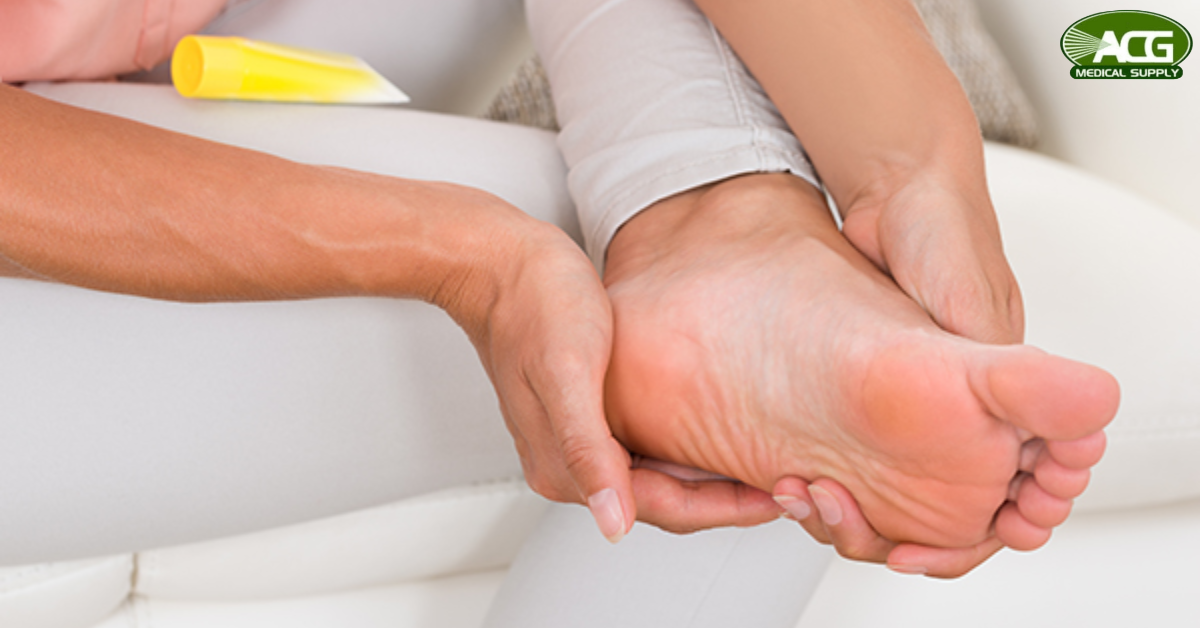
Living with diabetes isn’t exactly a walk in the park. Some days are easy, and others? Not so much. And while there’s a lot to manage (blood sugar, food, meds), foot care often slips through the cracks. But here’s the thing: even something as small as a blister or dry patch can turn into a big deal if you don’t catch and treat it early. That’s why using the right foot care products is essential—they help you stay ahead of problems before they start.

The good news is that ACG Medical Supply has made it a whole lot easier. If you’re dealing with cracked heels, stubborn bunions, or just looking for some solid support to get through the day, we have a lineup of diabetic-friendly tools that are practical, easy to use, and actually make a difference.

1. Gentle Foot Cleansers

A good cleanser doesn’t just wash off the day’s dirt; it protects your skin. If you’ve got diabetes, then harsh soaps, strong fragrances, and drying ingredients are a no-go. They usually end up doing more harm than good. What your feet really need is something that gets the job done but gently, without stripping away your skin’s natural barrier or leaving things feeling tight and dry.

So, you should look for cleansers that are:

  • pH-balanced to keep your feet’s skin calm and does not further irritate it
  • Antibacterial but still gentle, to reduce infection risk
  • Moisturizing, so your feet don’t feel tight and dry afterward

2. Deeply Nourishing Foot Moisturizers

Once your feet are clean, it’s all about locking in that moisture. This is where the PediFix Diabetic Defense Daily Therapy Foot Moisturizer comes in. And trust us—it’s a game-changer.

This stuff is lightweight but super effective. It contains tea tree oil (which helps in fighting bacteria and odor) and ginger (to stimulate circulation). It is also non-greasy, so you won’t be slipping and sliding around after you have applied it.

If you want more out of the moisturizer then slather it on your feet before bed and wear a pair of cotton socks. You’ll wake up with noticeably softer feet.

3. PediFix Visco-GEL Bunion Guard

Bunions are painful, ugly, and stubborn. But instead of jumping straight to surgery, try giving this little gadget a go: the PediFix® Visco-GEL® Bunion Guard. It cushions the bunion area, reduces pressure, and fits easily into your shoes.

It won’t cure the bunion, but it will help you walk without wincing. Which, honestly, is a huge win.

4. Toe Care Products to the Rescue

Let’s be real for a minute, toes get weird. Corns, overlapping toes, blisters, diabetes can turn your toes into little troublemakers. That’s why toe care products are so handy. These small tools can help relieve pressure, straighten toes, and protect against friction.

Toe separators, gel caps, toe sleeve, there’s a lot to love. They’re the unsung heroes of diabetic foot care.

5. Spenco Total Support Insoles

We’ve all been there—those thin, floppy insoles that come with new shoes and feel like, well… nothing. Seriously, who are those even helping? That’s why Spenco Total Support Insoles feel like such a revelation. These aren’t your average shoe insoles, they actually do something, they offer arch support that actually arches and has incredible shock-absorbing layers your joints will absolutely love. 

Seriously, they do wonders to reduce foot fatigue, making you feel more balanced just walking to the fridge. They’re also ideal for anyone who spends a lot of time on their feet, or frankly, just wants significantly better support from their footwear.

6. Heel Cups for Extra Support

Heel pain isn’t fun for anyone, and diabetics often deal with plantar fasciitis or pressure point pain. If you don’t want to go for full insoles, then that’s exactly where Heel Cups become your saviour. They add cushioning under your heels and help take the stress off your feet. It’s easy to use, and slips easily into all types of shoes.

They don’t cost much either, but they do make a big difference by the end of the day when your feet would normally be screaming in pain.

7. Cushion & Protect: PediFix FelTastic Callus Protectors

Calluses and blisters can really mess with your day, especially if you’re already dealing with sensitive feet. That’s why PediFix FelTastic Callus Protectors are such a great little fix. They’re soft, stretchy, and stick right where you need them, on your heel, the ball of your foot, or wherever things start to rub and irritate. They help take the pressure off the calluses and blisters, so you’re not wincing with every step. 

Conclusions

Managing diabetes is a full-time job most days. It’s a lot—meals, meds, numbers… it adds up fast. But here’s the good news: foot care doesn’t have to be another stressor. With the right essentials—like the foot moisturisers and cleansers, and other foot care products we’ve talked about—you’re not just checking a box. You’re giving your feet the support and care they need. 

So don’t wait for a blister or a sore to pop up. Start small. Moisturize. Use the good clippers. Pick the shoe inserts that make walking fun again. Your feet carry you through life—give ‘em something back.

FAQs

Q1. Can I just use regular lotion on my feet?
It is not recommended. Diabetic skin is more prone to cracks and infections. 

Q2. How many times should I apply the foot lotion?
Daily! Make it part of your night time routine. Just skip between the toes (too much moisture there = bad news).

Q3. Can I use regular insoles or do I need diabetic ones?
While any insole is better than none, diabetic insoles like Spenco Total Support Insoles are designed to reduce pressure and risk of injury more effectively.

Q4. Can I wear bunion guards and toe spacers with shoes on?
Yep! Most are designed to be worn inside regular footwear. You might just need a bit of wiggle room.

Q5. Where can I buy all of this stuff easily? You guessed it, ACG Medical Supply.
We carry everything on this list and more. We’ve kind of mastered the art of being useful without being complicated.

Search Articles

Medical Tips in Your Inbox

Get expert recovery advice, equipment guides, and caregiver tips — delivered weekly. No spam, unsubscribe anytime.

Need equipment today?

Same-day or next-day delivery in the DFW area. Call us now for immediate assistance.