
Blog
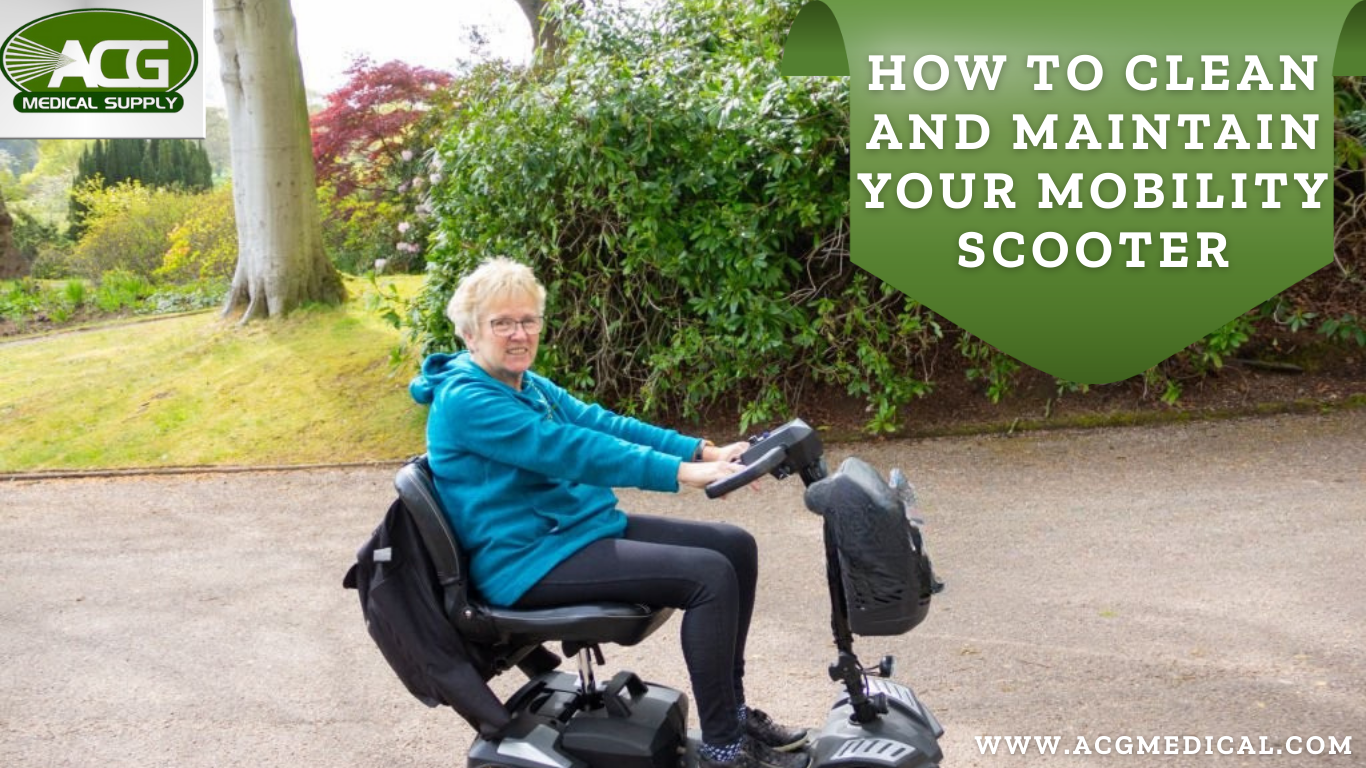
A mobility scooter is used. That’s really the starting point. Short trips. Regular routes. Days when it barely leaves the house and days when it’s out for hours. Over time, that use shows.
Most of the impact doesn’t come from big mistakes. It comes from small things piling up. Dust that isn’t wiped off. A battery left low once too often. A noise that’s noticed and then ignored.
Looking after a scooter isn’t technical. It’s more about noticing patterns. How it usually sounds. How it normally turns. When something feels slightly different, it’s worth paying attention.
Regular mobility scooter maintenance tends to keep everything steady. The scooter starts when expected, moves without effort, and stops the way it should. When that happens, it doesn’t demand much thought. It just works in the background of the day.
Here is a basic guide to help you out.
The “not-so-secret” cleaning routine
Most people see a bit of mud and think they should grab the garden hose. Stop right there! That is a huge mistake. Mobility scooter cleaning is a “dry and gentle” kind of job. These things are packed with wires and little computer chips that hate water more than a cat does. If you spray it down, you’re basically asking for a short circuit.
After a bit of use, dust settles into places you don’t really notice at first. Along edges. Around joints. In small gaps. It builds slowly.
For cleaning electric mobility scooters, a damp cloth is enough most of the time. No soaking. No scrubbing. Just enough moisture to lift what’s there.
If something feels sticky and won’t come off easily, a small amount of mild dish soap helps. Not much. Wipe it away. Dry the area. Then move on.
You have got to be extra careful around the “tiller”. That’s the part with the handles and buttons. It’s the brain of the whole scooter. Wipe it down, but don’t, at any cost, let moisture seep under the buttons. Also… don’t forget the underside! These mobility scooter wheel cleaning tips are super simple: just take a peek at the axles. You would not believe how much hair, string, and random gunk get wrapped around the wheels. If you see a mess, pull it out. If the wheels can’t spin freely, the motor has to work way harder, and that just drains your battery and wears out the parts.
The battery: Feed it regularly
Your battery is basically the “stomach” of the machine. If you don’t feed it, it won’t work. One of the biggest mobility scooter maintenance mistakes is waiting until the little red light flashes to plug it in.
Imagine if you only ate once every three days… you’d be exhausted! Mobility scooter battery maintenance is way easier if you just plug it in every night, even if you only went down the block. These batteries actually stay “healthier” when kept fully charged.
While you’re at it, take a peek at the mobility scooter battery terminal. That’s the spot where the wires click onto the battery. If you see anything that looks like blue or white crusty salt, that’s corrosion. It’s gross, and it blocks the power. A quick wipe with a dry cloth keeps the energy flowing smoothly.
Tires and brakes: The “stay safe” stuff
Look, you don’t need to be some master mechanic with a garage full of fancy tools just to stay safe. It really boils down to two things: how you roll and how you stop.
First off, just give your tires a good squeeze now and then. If they feel soft or squishy, they need air. Mobility scooter tyre care is actually a huge deal because when those tires are low, your motor has to work twice as hard just to move you. It’s exactly like trying to walk through deep, dry sand… It’s exhausting, and it just kills your battery life. While you’re down there, do a quick mobility scooter inspection for any thorns, thumbtacks, or bits of glass stuck in the rubber. Catching a tiny leak now beats getting stuck with a flat tire when you’re halfway to the store.
Then there are the brakes. Most electric mobility scooter maintenance is easy because the brakes are automatic. When you let go of the handle, you should hear a solid “click” and stop pretty fast. If you’re coasting like a runaway train, something is wrong. For this, the best brake maintenance tips are dead simple: test them in your hallway before you head out. If they take too long to grab, don’t risk it. That’s the time to call for professional mobility scooter servicing to get things tightened up.
| Part to Check | What to Look For | How Often? |
| Tiller/Dash | Dust and sticky buttons | Every few days |
| Battery Level | Make sure it’s in the “green” | Every night |
| Tires | Cracks or low air | Once a week |
| Lights/Horn | Make sure people can see/hear you | Before every trip |
| Underside | Cobwebs, sticks, or mud | Once a month |
Storage shapes long-term performance
Where a mobility scooter is parked affects how it performs over time. Not only while it’s being used, but while it’s sitting idle as well. Damp air, cold temperatures, and poor airflow slowly affect wiring, metal fittings, and battery connections.
If you want your ride to last, try to keep it inside where it’s dry. When that isn’t possible, storage areas like garages need extra care. Moisture control is more important than visibility. Covers should allow airflow rather than trap condensation, and the scooter should never be left directly against cold walls or floors.
Basic mobility scooter safety checks tie into this as well. Small changes in sound, alignment, or movement tend to show up first after poor storage conditions. Noticing those changes early prevents them from turning into reliability issues later. Over time, this awareness becomes routine, not effort. It’s simply part of keeping the scooter dependable.
Mistakes that shorten scooter life
Many issues don’t come from neglect. They come from assumptions.
Mobility scooter maintenance mistakes:
- Using excess water during cleaning
- Ignoring small changes in sound or feel
- Storing with fully drained batteries
- Skipping annual servicing
- Skipping annual servicing
These habits don’t break scooters immediately. They wear them down over time.
Conclusion
A mobility scooter works best when it’s treated like part of everyday life, not a device that only gets attention when something goes wrong. Most scooters don’t break suddenly. They change little by little. A sound that wasn’t there before. A turn that feels heavier. A charge that doesn’t last quite as long. Those things show up long before anything actually stops working.
Paying attention is usually enough. Wiping dust away. Plugging it in without waiting. Noticing when something feels different and dealing with it early, before it becomes a disruption.
When you take care of your mobility scooter consistently, it delivers real value for money over time. Regular mobility scooter maintenance keeps it reliable, safe, and ready for daily use. And if you are looking for good quality scooters or trusted mobility scooter providers, ACG Medical Supply is a prominent name known for dependable mobility solutions.
FAQs
- How often should mobility scooters be cleaned?
Once a week is usually enough. More often after outdoor use. - Is it safe to clean electric parts?
Yes, using a damp cloth. Avoid direct water contact. - Do tyres need regular replacement?
Only when the tread or grip is reduced, regular checks prevent surprises. - Why does battery performance drop gradually?
Charging habits and terminal condition play a major role. - Is professional servicing necessary?
Annual mobility scooter servicing helps catch internal wear early.

The curb at the end of a driveway doesn’t look like much. A couple of inches of concrete. Easy to ignore. But for someone using a walker, that small rise can decide how the day goes. Step over it, and the walk continues. Hesitate, and the outdoors feels less inviting. That thin line between smooth flooring and unpredictable ground changes how people move, and how confident they feel doing it.
Most people start shopping for walkers with one word in mind: sturdy. What they often end up with is something that behaves well inside the house, then starts drifting, catching, or wobbling the moment it touches grass or loose gravel. It’s not dangerous, exactly. Just uncooperative.
At ACG Medical Supply, the inventory reflects a reality that isn’t always polished: the outdoors is messy. Pavement cracks. Tree roots lift sections of sidewalk. Gravel shifts under weight. Rain changes how everything feels underfoot. A walker that works outside has to deal with all of that, not just look good in a product photo. The frame is important, sure. But so does what happens where the rubber meets the ground.
Understanding Outdoor Walking Needs
A walker meant for outdoor use needs to handle changes without forcing the user to adjust every step. The ground shifts. The angle changes. The grip of the surface varies. None of that should require extra effort from the person walking.
A reliable best outdoor walker for seniors should support:
- Steady movement on rough ground
- Safe handling on slopes
- Comfortable grip for longer walks
- Easy turning on sidewalks
Outdoor walking has less to do with how fast you move and more to do with staying steady from one step to the next.
What Makes a Walker Suitable for Outdoor Use
Not every walker is built for outdoor conditions. The difference usually comes down to a few key design features.
Wheel Size and Quality
Small wheels behave nicely on smooth floors. Outside, they catch in cracks, hesitate on gravel, and stop suddenly on softer ground. A walker with wheels designed for outdoor use usually has larger, thicker wheels that roll over uneven surfaces instead of fighting them.
Frame Strength
A solid frame improves stability. A heavy-duty outdoor walker feels more secure on slopes and rough paths and supports higher weights without wobbling.
Height Adjustment
Posture affects balance. Handles set too low pull the body forward. Too high, and the shoulders tighten up. Adjustable outdoor walkers let the body stay in a more natural position, especially on longer routes.
Folding Design
A foldable outdoor walker makes transport easier. Most outdoor folding walkers collapse flat and fit into car boots without hassle.
Seating Option
Longer walks often need rest breaks. An outdoor walker with a seat provides a safe place to sit without needing to search for a bench.
These features aren’t about comfort alone. They make outdoor movement safer and more practical.
Types of Walkers That Work Well Outdoors
Different walker styles behave differently once they leave the house.
Four-Wheel Rollators
Four wheel Rollators roll smoothly and rely on brakes rather than lifting. That makes them easier to manage over longer distances.
They suit people who:
- Walk longer distances
- Visit parks or shops regularly
- Want built-in seating support
Many consider them the best walker for outdoor use because of their balance and ease of movement.
Two-Wheel Walkers
These have wheels in the front and stationary legs at the back. They offer more control than rollators and suit users who prefer slower, more supported movement. They work well as an outdoor walker for balance support.
Lightweight Models
Lightweight walkers are easier to lift and transport. They suit people who travel often but still need reliable outdoor performance.
Lightweight should never mean weak support. Outdoor models still need solid wheels and strong frames.
Handling Uneven Surfaces
Cracked footpaths, gravel, grass, and sloped driveways can make outdoor walking harder. A A A
proper outdoor mobility walker handles these surfaces without sudden stops or tipping.
Good walkers for uneven surfaces usually include:
- Large rubber wheels for grip
- Shock-absorbing frames
- Non-slip hand grips
- Wide bases for balance
These features reduce jarring movement and help keep walks steady and controlled.
Quick Feature Comparison
| Feature | Basic Indoor Walker | Outdoor Walker | Heavy Duty Outdoor Walker |
| Wheel Size | Small | Large | Extra Large |
| Frame Strength | Light | Strong | Very Strong |
| Weight Capacity | Low | Medium | High |
| Folding Design | Limited | Yes | Yes |
| Seat Option | No | Often | Often |
This shows why indoor walkers often fall short outdoors.
Balancing Strength and Weight
People often want a walker that feels solid but isn’t difficult to lift. Modern heavy-duty outdoor walker designs now use strong materials like aluminium or reinforced alloys that stay stable without being overly heavy.
A foldable outdoor walker makes daily life easier. It fits into cars, stores neatly, and supports regular travel. The easier a walker is to move, the more likely it is to be used often.
Safety and Comfort That Actually Help
A good outdoor walking aid supports the body properly.
Adjustable outdoor walkers help maintain better posture. Handles set too low cause slouching. Too high, and the shoulders strain. Proper adjustment keeps movement natural.
An outdoor walker with a seat also adds confidence. Being able to rest whenever needed makes longer walks less tiring and more enjoyable.
Brakes, grip comfort, and smooth steering matter more than appearance.
The Value of Staying Mobile
Mobility affects more than physical movement. It supports independence, routine, and social life.
With the right outdoor walking assistance, people can:
- Visit local shops
- Walk in parks
- Attend appointments
- Spend time outdoors comfortably
ACG Medical Supply focuses on providing walkers that support everyday life, not just basic
movement.
Choosing the Right Outdoor Walker
The best walker for outdoor walking depends on daily habits.
Consider:
- Where walks usually happen
- How long do they last
- Whether rest breaks are needed
- Storage and transport needs
- Balance and strength levels
Some people prefer lightweight walkers for short trips. Others need a heavy-duty outdoor walker for rougher terrain. The right fit always feels stable and easy to control.
Practical Tips for Outdoor Walking
- Check brakes before slopes
- Walk carefully on wet or uneven ground
- Keep both hands on the handles
- Adjust height correctly
- Use the seat when needed
Small habits make outdoor walking safer.
Why ACG Medical Supply
ACG Medical Supply offers walkers built for real outdoor use. Their range includes:
- Best walker for outdoor use with large wheels
- Outdoor walker with a seat for comfort
- Outdoor folding walkers for easy transport
- Best outdoor walker for seniors with stable frames
Their focus is on reliability, safety, and everyday usability.
Conclusion
Outdoor walking doesn’t follow a script. Some days, the pavement behaves. Other days it doesn’t. A walker that works well outside doesn’t try to control the environment. It works with it.
The right setup makes uneven ground feel less disruptive and longer walks feel less demanding. Bigger wheels keep things moving. A stable frame keeps the body steady. A seat offers a pause when it’s needed. None of these features stand out on their own, but together they change how outdoor movement feels.
ACG Medical Supply focuses on walkers that hold up under real conditions, not just in controlled spaces. When the equipment responds the way it should, walking outdoors becomes less about managing the surface and more about simply getting where you want to go.
No rush. No pressure. Just steady movement, one step at a time.
FAQs
- Are rollators better than standard walkers for outdoor use?
Rollators handle outdoor surfaces better because of their four wheels and braking system. - What wheel size works best outdoors?
Larger wheels perform better on uneven ground and pavement cracks. - Can outdoor walkers be folded?
Most outdoor folding walkers are designed for easy storage and transport. - Are heavy-duty walkers necessary?
A heavy-duty outdoor walker offers better stability and higher weight support. - Do outdoor walkers help with balance?
Yes A proper outdoor walker for balance support improves posture and reduces fall risk.
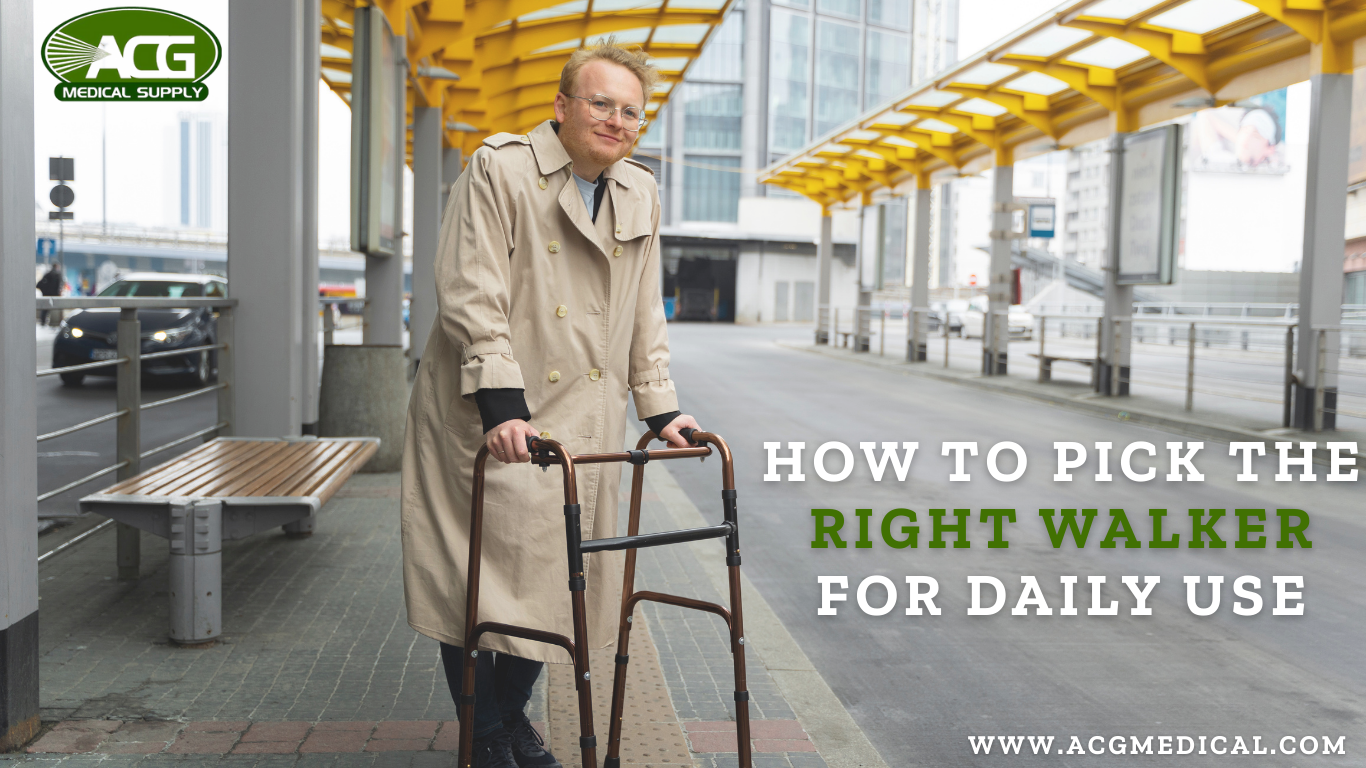
The need for a Right walker often comes from subtle changes. Longer walks across the house. Less confidence on uneven surfaces. More effort when standing. These shifts may seem minor, but they affect how a person moves through their space.
When choosing from the selection at ACG Medical Supply, the priority is finding a Right walker that supports movement without complicating it. A good fit should feel steady, predictable, and easy to use throughout the day.
Everyone walks differently. Some need more balance. Some need more support when standing. Some just need something reliable to lean on during longer trips across the house. That’s why when picking the right walker, you shouldn’t just focus on trends or features on paper. You should also focus on how it will feel in real rooms, on real floors, during real days.
Navigating the Mechanics of Medical Walkers
The most common mistake people make is assuming that more features equal a better product and experience. That isn’t always true, nope. Sometimes, the most stripped-back Standard walkers (those aluminum frames without any wheels) are the only logical choice for someone with significant balance issues. These require the user to pick up the frame and set it down, creating a deliberate, stable pace. It’s slow, yes, but it offers a level of grounding that wheels cannot provide.
However, many people find the “pick-up” motion exhausting. This is where rolling walkers enter the conversation. Adding two wheels to the front allows for a more naturalgait. But there is a hidden complexity here: the back legs usually have rubber tips or glides. If those glides wear down, the walker might “stutter” on tile or snag on carpet. Checking the wear and tear on walker accessories like glide skis or tennis ball covers is a maintenance task that often gets overlooked until a near-miss happens.
Then there is the matter of height. An adjustable height walker setup is mandatory. If the handles are too low, the user leans forward, shifting their center of gravity dangerously far over their toes. If they are too high, the elbows can’t lock, and the arms tire out in minutes. To get it right, have the user stand straight and look at where their watch sits on their wrist. That’s where the handle should be. ACG Medical Supply stocks various frames because even “standard” heights vary wildly between a 5’2″ grandmother and a 6’4″
retired athlete.
Stability Profiles: 3 Wheels vs. 4 Wheels
The choice between 3-wheel walkers and 4-wheel walkers is essentially a trade-off between agility and a place to rest. A 3-wheel model is shaped like a triangle. It’s narrow. It can zip through a crowded restaurant or a tiny bathroom without banging into the doorframe. But, and this is a big “but”, they don’t have seats. They are meant for people who just need a bit of a “steadying hand” while they move.
On the flip side, the 4-wheel walkers (often called a walker rollator) are the SUVs of the mobility world. They are wider and require more “parking space,” but they come with a built-in walker with a seat. This is a massive psychological relief. Knowing that you can stop and sit down at any moment, whether you’re in the pharmacy line or at a park, changes how far a person is willing to venture from home.
| Equipment Type | Frame Weight | Turning Radius | Built-in Seat | Surface Compatibility |
| Standard Walkers | 6–8 lbs | Zero (Lift-and- place) | No | Best for indoor/level floors |
| 3 Wheel Walkers | 12–15 lbs | Tight/Sharp | No | Indoor/Smooth pavement |
| 4 Wheel Walkers | 15–22 lbs | Wide/Arcing | Yes | All-terrain (depending on tires) |
| Heavy Duty Walkers | 20–30 lbs | Wide | Yes | Reinforced for high- capacity |
| Knee Walkers | 20–25 lbs | Moderate | No (Knee pad) | Best for smooth surfaces |
For those recovering from specific lower-leg surgeries, knee walkers provide a different kind of relief. Instead of hobbling on crutches (which are notoriously hard on the armpits and ribs), you rest your injured leg on a padded platform and scoot with the good leg. It’s a much more efficient way to get across a kitchen.
The Reality of Weight and Portability
Weight is a deceptive metric. A walker might feel light when you pick it up in a store, but after pushing it for twenty minutes, every extra pound feels magnified. This is why lightweight walkers are so popular. Usually made from high-grade aluminum, they balance structural integrity with ease of movement.
However, “lightweight” can sometimes feel “flimsy” to a user who needs to put their full weight on the frame. For larger individuals, heavy-duty walkers are the only way to ensure the frame doesn’t flex or “give” during a transition from sitting to standing. These models feature reinforced cross-bracing and wider seats.
Then there’s the car problem. A folding walker’s design is non-negotiable for anyone who still travels or gets driven to appointments. Some fold flat, while others “tuck” in a side-to- side motion. If you have a small trunk, you have to measure the walker when it’s collapsed, not just when it’s open. Many people buy a walker rollator only to find it won’t fit behind the driver’s seat of their compact car.
Thinking Beyond the Frame
The environment dictates the gear. A person living in a carpeted apartment has different needs than someone with a gravel driveway. At ACG Medical Supply, the focus often shifts to the tires. Small, hard plastic wheels are fine for linoleum, but they vibrate painfully on uneven sidewalks. Larger, foam-filled or rubber tires absorb that shock, making for a much shorter feeling walk.
Other details are important too:
| Feature to Check | Why it’s Important |
| Hand Brakes | Must be easy to squeeze for those with arthritis. |
| Seat Width | Needs to be wide enough for comfort but narrow enough for doors. |
| Basket/Pouch | Essential for carrying water, phones, or medications. |
| Locking Mechanism | Ensures the walker with a seat doesn’t roll away when you sit. |
Conclusion
The right walker doesn’t draw attention. It blends into daily life. It supports movement without slowing it down. It offers rest without stopping progress. Whether it’s a standard walker, a walker with a seat, or a knee walker, the goal stays the same: safer steps, better balance, and more confidence with every move.
FAQs
- Are rolling walkers safe for older adults?
Yes. Rolling walkers provide steady movement and often include brakes for control. - Which walker works best outdoors?
4-wheel walkers handle uneven surfaces more smoothly. - Do all walkers fold?
Many folding walkers are designed for easy storage, but not every model collapses. - Are lightweight walkers durable?
Yes. Lightweight walkers use strong materials while staying easy to lift. - What makes a walker “heavy duty”?
Heavy-duty walkers have reinforced frames and a higher weight capacity for added stability.
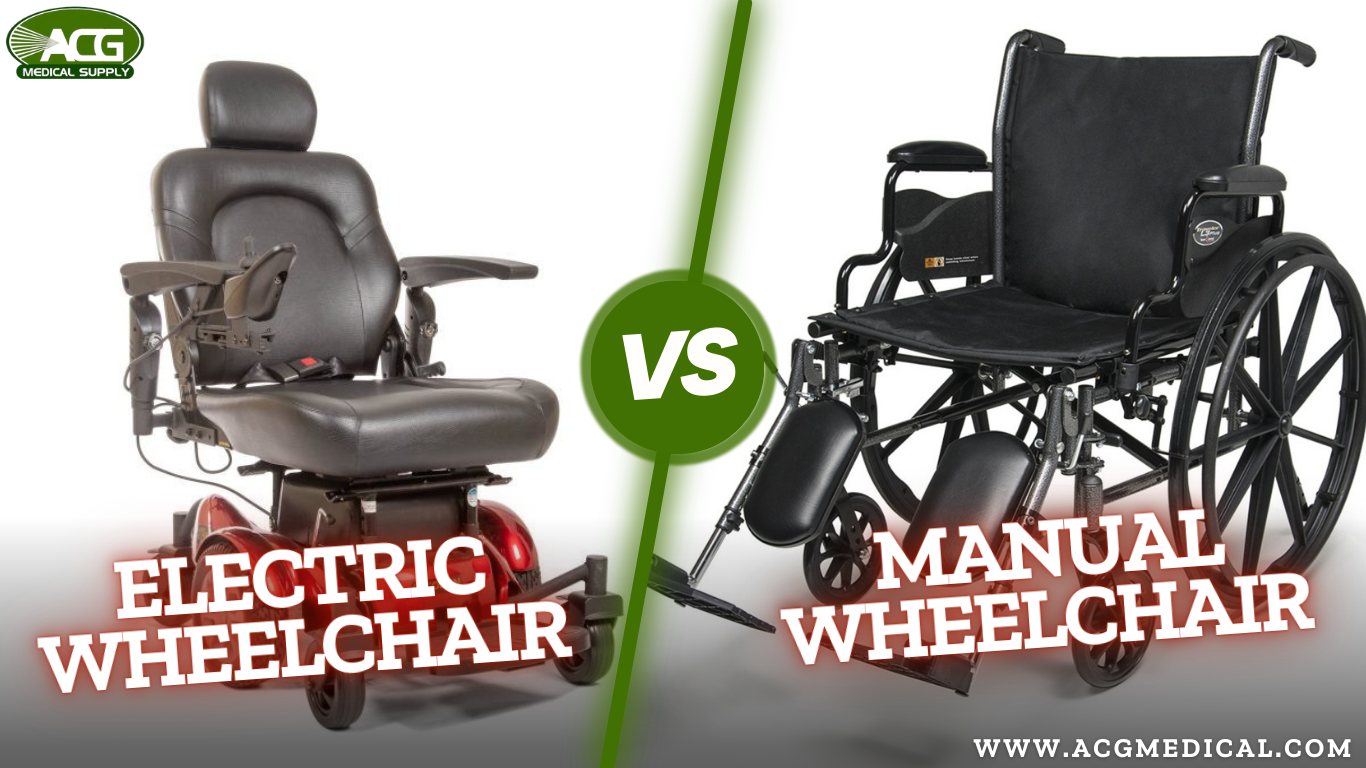
This choice isn’t medical in the way people think it is. It’s not a box to tick. It’s more like deciding how much of your day you want to spend managing your body.
People often prefer to frame a manual wheelchair versus an electric wheelchair as an effort versus an ease. Exercise versus laziness. That framing is lazy. The real question is distance. How far do you want to go in a day, how often, and how wrecked you’re willing to feel afterwards? A manual chair limits your radius. An electric one changes it. That’s the honest difference.
At ACG Medical Supply, this shows up every week. Someone comes in frustrated because their shoulders are done by lunchtime. Someone else is nervous about trusting a battery outside the house. Both reactions make sense. Neither person is wrong. If you’re looking for the best wheelchair 2026 has lined up, forget the shiny features for a second. The real answer lives in the parts most brochures skip. Fatigue. Anxiety. Confidence. How much thinking do you want to do just to get through a normal day. That’s where the difference actually is.
The Manual Wheelchair: The Minimalist’s Best Friend
A manual wheelchair is basically the “acoustic guitar” of the mobility world. It’s light, it’s responsive, and it doesn’t need a power outlet to sing/move.
Manual Wheelchair Benefits
- Zero Battery Anxiety: You never have to worry about being “stuck.” If you’ve got arms (or a helpful friend), you’ve got power.
- The Workout Factor: For many, the manual wheelchair benefits include keeping the upper body toned. It’s a constant, low-impact gym session for your shoulders and core.
- The “Trunk” Test: Most high-end ACG Wheelchairs in the manual category are incredibly easy to fold. You can usually pop them into a sedan’s trunk in under 30 seconds.
The Reality of the “Daily Grind”
On the flip side, manual wheelchair consequences are real work. Repetitive strain injury (RSI) in the shoulders is the most common complaint for long-term users. And let’s be honest—carpets, grass, and steep ramps feel like climbing Mount Everest after a few hours.
A Quick Note on Capacity: People often worry about durability. Today, manual wheelchair weight capacity has surged. While a standard lightweight frame supports around 250 lbs, heavy-duty bariatric models can now safely handle 450 to 700 lbs without feeling like a tank.
The Electric Wheelchair: The “All-Terrain” Independent
An electric wheelchair isn’t really a chair. It’s closer to a personal vehicle. You don’t choose it because you want an easier ride. You choose it because you want to arrive somewhere with enough energy left to be present in the moment.
Electric Wheelchair Benefits
- Total Autonomy: This is the big one. If you have limited hand or arm strength, the joystick control is a game-changer.
- Distance is No Object: You can travel miles on a single charge. Whether it’s a boardwalk or a large museum, your “range” expands significantly.
- Advanced Ergonomics: Power chairs often feature “tilt-in-space” or “recline” functions. This isn’t just for luxury; it helps prevent pressure sores and improves circulation.
The “Consequences” of Going Electric
The most obvious electric wheelchair consequences are weight and logistics. You aren’t lifting a 200-lb power chair into a Honda Civic. You’ll likely need a van with a ramp or a specialised hitch lift. Then there’s the electric wheelchair battery life. You have to be diligent. If you forget to plug it in, your day is effectively cancelled.
Comparison Chart: Manual vs. Electric
| Feature | Manual Wheelchair | Electric Wheelchair |
| Drive System | Self-propelled or Attendant- pushed | Motorized (Battery powered) |
| Average Weight | 15 – 45 lbs | 150 – 300+ lbs |
| Typical Range | Limited by user stamina | 10 – 20 miles per charge |
| Transportability | Fits in most car trunks | Requires van/lift/ramp |
| Maintenance | Low (Tires, brakes, bearings) | High (Batteries, motors, wiring) |
| Best For | Short trips, indoor use, active users | All-day use, outdoor travel, low strength |
Maintenance 101: Keeping the Wheels Turning
Maintenance isn’t optional. Not because something dramatic will happen right away, but because the chair slowly starts resisting you. And you don’t always realise why.
Manual Wheelchair Maintenance Tips
Quick-release axles clog up. Hair, lint, dust. The wheels still turn, just not well. So you work harder and blame your arms.
Tyres lose air. Slowly. You don’t notice until everything feels heavier than it used to. Check them once a month. That’s enough.
Power Wheelchair Maintenance Tips
For power chairs, the electric wheelchair battery life is your biggest priority.
Don’t “Deep Cycle”: Try to keep it above 20 per cent. Letting it drain completely, again and again, shortens its life faster than most people realise.
Charge Nightly: Even if you barely used it. Ten minutes still counts. Think of charging as routine, not a reaction to a low-battery warning.
Clean the Joystick: That little control is basically the brain of the chair. Dust, moisture, sticky fingers. None of that helps. A quick clean goes a long way.
So, Should I Get a Manual or an Electric Wheelchair?
The “right” answer usually reveals itself when you ask: What is my biggest obstacle?
- If your obstacle is transportation (you travel a lot by car and have someone to help), a manual chair is a win.
- If your obstacle is fatigue (you stay home because you’re too tired to move), you definitely need to look at an electric model.
Manual vs electric wheelchair prices are a factor, too. Manual chairs are cheaper. Most land is in the $300–$900 range. Electric wheelchairs cost more, sometimes a lot more. Entry- level models often start around $1,800 and don’t stop there. Cheap deals look good on a screen. Living with them is another thing.
Conclusion
Choosing a wheelchair is a very personal thing. It’s about more than just wheels; it’s about how you interact with your family, your job, and your community.
If you’re still on the fence, come chat with us at ACG Medical Supply. We can help you “test drive” a few options to see which one feels like a natural extension of your body. You can Browse our current selection at ACG Medical Supply Wheelchairs.
FAQs
- Is a manual wheelchair better for long-term use?
Only if strength and endurance stay consistent. Many users transition later.
- How often do electric wheelchair batteries need replacement?
Typically, every 1.5 to 3 years, depending on usage and care.
- Are electric wheelchairs difficult indoors?
Most modern models handle tight spaces well once adjusted.
- Can I switch from manual to electric later?
Yes, and many people do. The earlier you notice fatigue, the easier the transition.
- Which wheelchair offers more independence?
Independence depends on effort. Electric chairs reduce physical dependency.
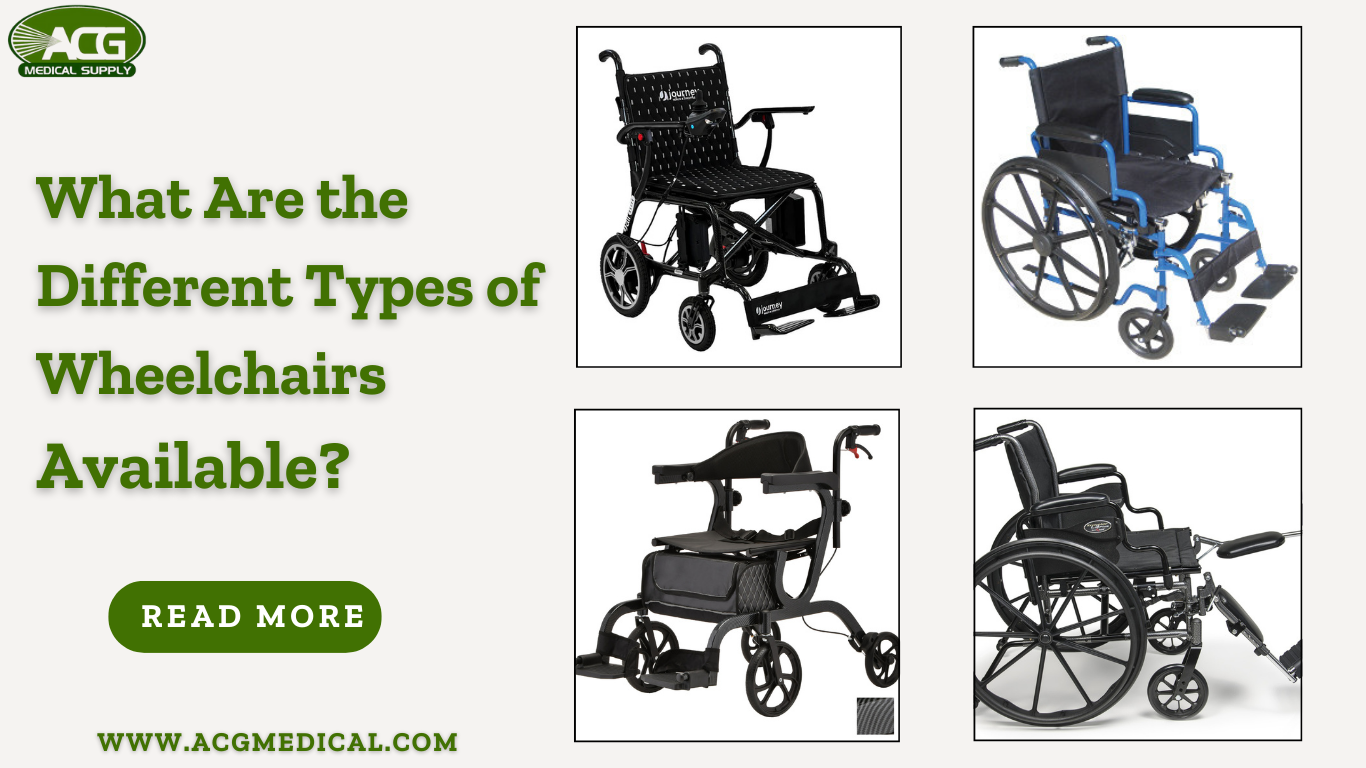
Most people don’t set out to “learn about wheelchairs.” They end up here because something changed. Maybe walking got unpredictable for them. Balance feels off. Maybe their energy runs out faster than it used to. For a while, you work around it. Then one day, you realize you need answers, and the search goes from “just looking” to very specific, very fast.
And that’s where frustration kicks in. Everything online sounds the same. Clean lists. Neat categories. Words that feel copied and pasted. Real life is messier than that, so let’s talk about wheelchairs the way people actually encounter them, in small real moments, not brochures.
Manual Wheelchairs
Manual wheelchairs are familiar because they’ve been around forever. Two large rear wheels, push rims, brakes you learn to trust, and a frame that does exactly what you ask of it. Nothing more. They work well in controlled spaces. Homes. Clinics. Smooth floors. Short outdoor stretches. For users with upper-body strength, they offer a sense of control that powered chairs can’t quite replicate. You feel the movement. You decide the pace. But manual chairs demand energy. Over time, that effort adds up. Slopes feel longer. Rough ground feels unforgiving. For some people, that’s manageable. For others, it becomes the reason the chair stays unused more often than planned. As a medical wheelchair, it sits somewhere in the middle. Dependable and simple, but not the right fit for everyone, every day.
Electric and Power Wheelchairs
An electric wheelchair, also known as a power wheelchair, offers a distinctly different experience. Instead of pushing, you steer using a joystick or control panel. These chairs are built for people who need mobility support throughout the day and want to move independently without physical strain. They’re great indoors, but many models handle outdoor terrain surprisingly well, too. They’re heavier. They cost more. And yes, you need to remember to charge them. But for many users, the freedom is worth it. If you’re considering long daily use, have limited strength, or simply want smoother Movement, this type of mobility chair can be a game-changer.
Lightweight Wheelchairs
A lightweight wheelchair is exactly what it sounds like. Less bulk. Easier lifting. Less effort. These are often made with aluminum or similar materials and are popular with people who travel, drive frequently, or need something that folds without a wrestling match. They’re also easier for caregivers to handle. There is a downside. Lighter frames aren’t built for heavy use or higher weight limits. But for short-term needs or part-time use, they’re often a really practical middle option.
Transport Wheelchairs
A transport wheelchair resembles a standard manual chair, but with one significant difference. Smaller wheels in the back.
This type isn’t designed for self-propelling. It’s meant to be pushed by someone else. Think airport terminals, hospitals, shopping trips, or quick outings.
They’re compact, easy to fold, and fit nicely into car trunks. If the user won’t be moving Transport chairs, independently, make a lot of sense. But how do you choose the best one? Let’s dive into Essential Tips for Selecting the Right Transport Wheelchair.
Heavy-Duty Wheelchairs
A heavy-duty wheelchair is built for strength and stability. Wider seats. Reinforced frames. Higher weight capacity. These chairs are designed for users who need extra support without sacrificing safety. They’re commonly used as long-term medical wheelchair solutions and are built to last. They are heavier, yes. But they’re also more durable. And honestly, comfort and safety are usually more important than shaving off a few pounds.
Folding Wheelchairs
A folding wheelchair is all about flexibility. Fold it. Store it. Load it into a car. Open it again in seconds.
Most manual and lightweight chairs fold in some way, but some are designed specifically for frequent transport. If storage space or travel is a concern, this feature matters more than people expect.
Wheelchair Accessories
A chair rarely stays “just a chair.” Over time, people add wheelchair accessories to make daily life easier.
Some common ones include:
- Cushions for pressure relief
- Storage pouches and trays
- Anti-tip bars
- Weather covers
These small add-ons can change comfort levels dramatically, especially for long-term users.
Quick Comparison Table
| Type | Best For | Key Benefit | Things to Consider |
| Manual Wheelchair | Short to moderate daily use | Simple, affordable | Requires strength |
| Electric Wheelchair | Full-day independence | Minimal physical effort | Needs charging |
| Lightweight Wheelchair | Travel and transport | Easy to lift | Lower weight limits |
| Transport Wheelchair | Assisted mobility | Compact and portable | portable Not self-powered |
| Heavy Duty Wheelchair | Higher weight support | Stability and durability | Heavier frame |
| Folding Wheelchair | Storage and travel | Space-saving | Fewer custom features |
Choosing What Actually Works
Here’s where people get stuck. They focus on labels instead of daily habits.
Ask yourself:
- How many hours a day will it be used?
- Indoors, outdoors, or both?
- Self-powered or assisted?
- Will it be transported often?
That sounds obvious. But it’s not. Many people buy the wrong chair simply because it “looked right.” At ACG Medical Supply, this is why selection matters. A well-matched ACG Wheelchair isn’t about features on paper. It’s about how it fits into real life, day after day.
Conclusion
There isn’t one perfect wheelchair. There’s only the right one for how someone actually lives.
Some people need independence. Some need support. Some need something that folds, fits, and disappears into the trunk without fuss. Understanding the different types makes that decision easier. And honestly, less stressful. Which matters more than people admit. Because mobility isn’t just about moving. It’s about feeling comfortable doing it.
FAQs
- Which wheelchair is used most often?
Manual wheelchairs remain the most widely used due to their simplicity and accessibility.
- Is an electric wheelchair suitable for indoor use?
Yes. Many electric wheelchairs are designed for tight indoor spaces and smooth navigation.
- Are lightweight wheelchairs durable?
They are durable within their intended use. A lightweight wheelchair is best for moderate daily use and frequent transport.
- What situations call for a transport wheelchair?
A transport wheelchair works well for appointments, travel, and any situation where Assistance is always available.
- Can accessories be added later?
Yes. Most wheelchair accessories can be added over time as needs change.
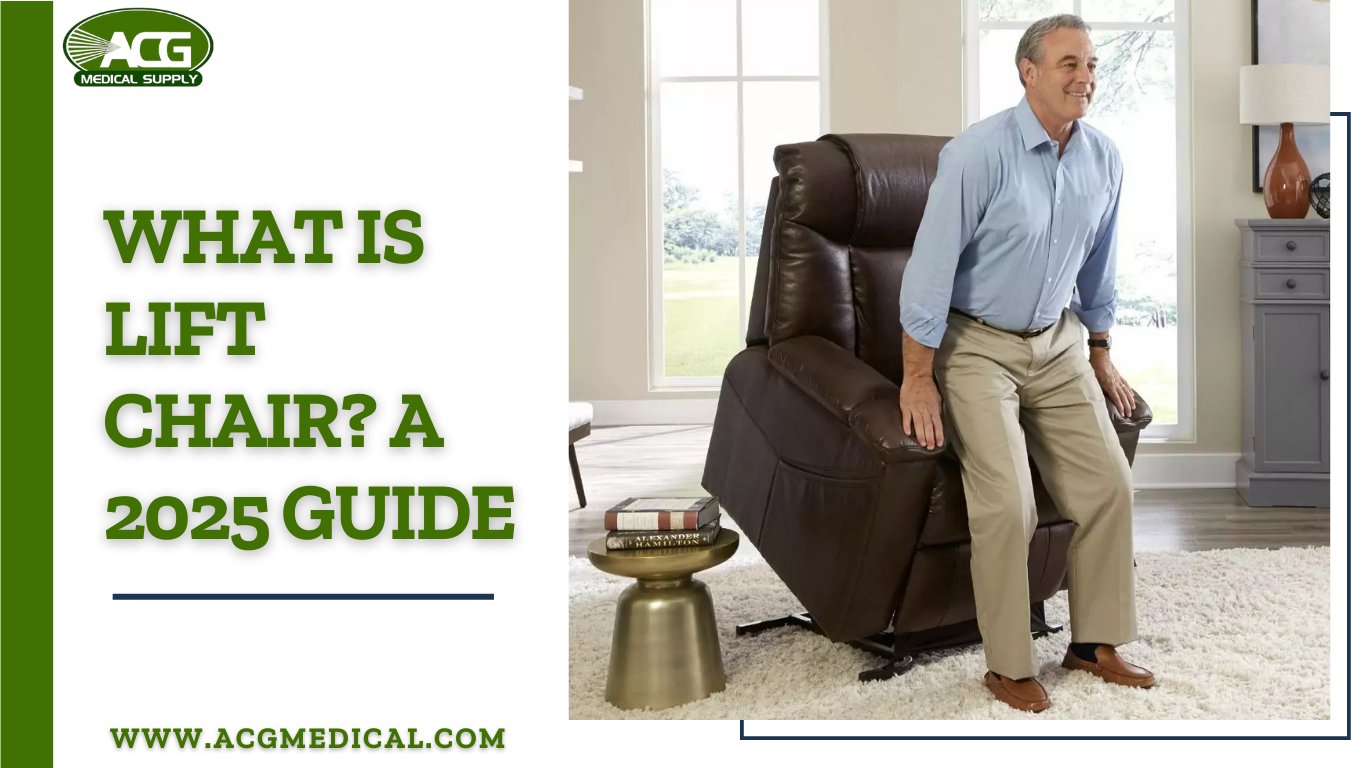
Most lift chairs are bought later than they should be.
Not because people don’t need them. Because needing one feels like admitting something hard to name. That getting up isn’t automatic anymore. Those chairs have becomesomething you calculate instead of sitting in.
By the time someone starts searching for lift chairs, they’ve usually already adjusted their behavior. They sit less. They choose certain seats. They hesitate before standing. None of this is dramatic enough to talk about, but it’s constant.
The market doesn’t help. Some chairs are clearly built for care facilities and look like they belong there. Others are sold as comfort furniture with a motor added, as if standing up were a minor feature instead of the whole problem. A proper power lift chair sits awkwardly between those extremes. It has to work mechanically, quietly, every single day, without turning the room into a reminder
That awkwardness is why lift chairs are misunderstood. They aren’t luxury recliners. They aren’t medical props either. They exist because bodies don’t move in straight lines forever, and furniture usually refuses to acknowledge that.
What Is a Lift Chair, Plainly Speaking?
To be blunt, calling it a “chair” is a bit of an understatement. An ACG Lift Chair is basically a heavy-duty steel lifting platform wrapped in upholstery.
Standard recliners use a manual lever or a simple motor to kick the footrest up. A power lift chair uses a high-torque motor and a scissor-mechanism frame to lift the entire base of the chair. When you press the “up” button, the chair doesn’t just recline; it rises vertically and then tilts forward. It meets you where you are standing. You lean back into it, hit the “down” button, and it slowly, safely lowers you into a seated position.
This isn’t just a convenience. For someone dealing with severe osteoarthritis or post- surgical fragility, that controlled motion of the chair is the difference between staying independent and needing a full-time caregiver just to help them use the restroom or get a glass of water from the kitchen.
The Landscape of Choice: Positions and Tiers
When people start looking at power lift chairs, they often get bogged down in the “positions” talk. It sounds like marketing jargon, but the mechanical differences are significant.
2-Position and 3-Position Models
These are the entry-level options. A 2-position chair is a bit of a misnomer; it can stop anywhere in between, but it generally only reclines to a 45-degree angle. It’s fine for reading. A 3-position lift chair recliner goes back further—roughly to a 150-degree angle. In both cases, the backrest and footrest are linked. If the feet go up, the back goes down. There is no choosing one or the other.
Infinite Position and Zero Gravity
This is where brands like Golden Technology lift chair designs start to pull away from the pack. These use dual motors. You can have the backrest straight up while your feet are elevated—which is a godsend for anyone with lower back pain who still wants to watch TV.
Then there is the “Zero Gravity” or “Twilight” positioning. This isn’t just a fancy name. It’s a specific ergonomic tilt that shifts your hips and elevates your knees above your heart level. For people dealing with congestive heart failure or chronic edema (leg swelling), this isn’t a luxury; it’s a medical requirement.
When to Use a Lift Chair
A lift chair may be useful when one or more of the following situations start showing up regularly:
Standing up from a chair requires extra effort or repeated attempts
You rely heavily on armrests or nearby furniture to get upright
You avoid sitting down because getting back up feels tiring
You choose chairs based on how easy they are to exit
You stay seated longer than intended to avoid standing again
Situations where a lift chair is especially helpful:
Balance issues: Dizziness when moving from sitting to standing (orthostatic hypotension) increases fall risk. An electric lift chair slows the transition and improves stability.
Neurological conditions: Parkinson’s disease and multiple sclerosis can cause delayed muscle response or freezing. A chair that initiates the standing motion reduces dependence on assistance.
Post-surgical recovery: Limited strength or mobility after surgery makes controlled standing safer.
Caregiver strain: Regular lifting by a spouse or family member often leads to back and shoulder injuries. A mobility lift chair reduces physical load and supports independence.
A lift chair is typically appropriate once standing up no longer feels consistent, even if
Mobility issues aren’t present all the time.
The Details People Miss Until It’s Too Late
Most first-time buyers focus on looks. Fabric. Color. Price.
The long-term comfort comes down to less obvious things:
Seat height that allows feet to rest flat
Seat depth that doesn’t strain the knees
Armrests placed for balance, not decoration
Motor noise that doesn’t become irritating after a while
Weight capacity that isn’t pushed to its limit
And there’s one test that’s more important than any showroom demo. Sitting in the chair for two uninterrupted hours. You will know everything you need to know in that time.
Lift Chairs in Everyday Life
A mobility lift chair becomes part of the routine real quick. Morning coffee. Afternoon rest. Evening television. The mechanics fade into the background.
What changes is behavior. People stop hesitating before sitting. They stop planning exits from chairs. They move more freely around their homes.
ACG Medical Supply sees this shift often. Many customers expect to use the chair briefly. Many keep it long after.
Comparison Table: Lift Chair Options
| Feature | Basic Lift Chairs | Advanced Lift Chairs |
| Lift Assistance | Yes | Yes |
| Recline Range | Limited | Full |
| Independent Controls | No | Yes |
| Suitable for Recovery | Occasionally | Often |
| Typical Use Time | Short sessions | Extended daily use |
Insurance and Coverage Basics
Medicare may cover the lifting mechanism portion of a medical lift chair if a doctor prescribes it. Upholstery and non-lift components are usually not included.
Documentation matters. Supplier guidance helps.
Conclusion
Buying a lift chair recliner is an admission that things have changed physically, and that can be a hard pill to swallow. But there is a massive difference between “giving up” and “gearing up.” Using the right tool for the job—whether that’s a hammer for a nail or a power lift recliner for a stiff set of knees—is just common sense.
At ACG Medical Supply, we don’t think of these as “senior furniture.” We think of them as independent machines. If you can get out of your chair without pain, you’re more likely to go for a walk, more likely to engage with your family, and more likely to stay in the home you’ve spent a lifetime building.
FAQs
What is a lift chair used for?
A lift chair assists with sitting and standing when mobility, balance, or joint strength are limited.
When should someone start using a lift chair?
When standing up feels unpredictable, painful, or requires extra effort.
Are electric lift chairs safe for daily use?
Yes. Electric lift chairs are built for repeated daily movement and stability.
Do lift chairs look like medical equipment?
Many modern ACG Lift Chair designs resemble standard living room recliners.
How long does a power lift recliner last?
With proper use, several years. Motor quality and daily usage play major roles.
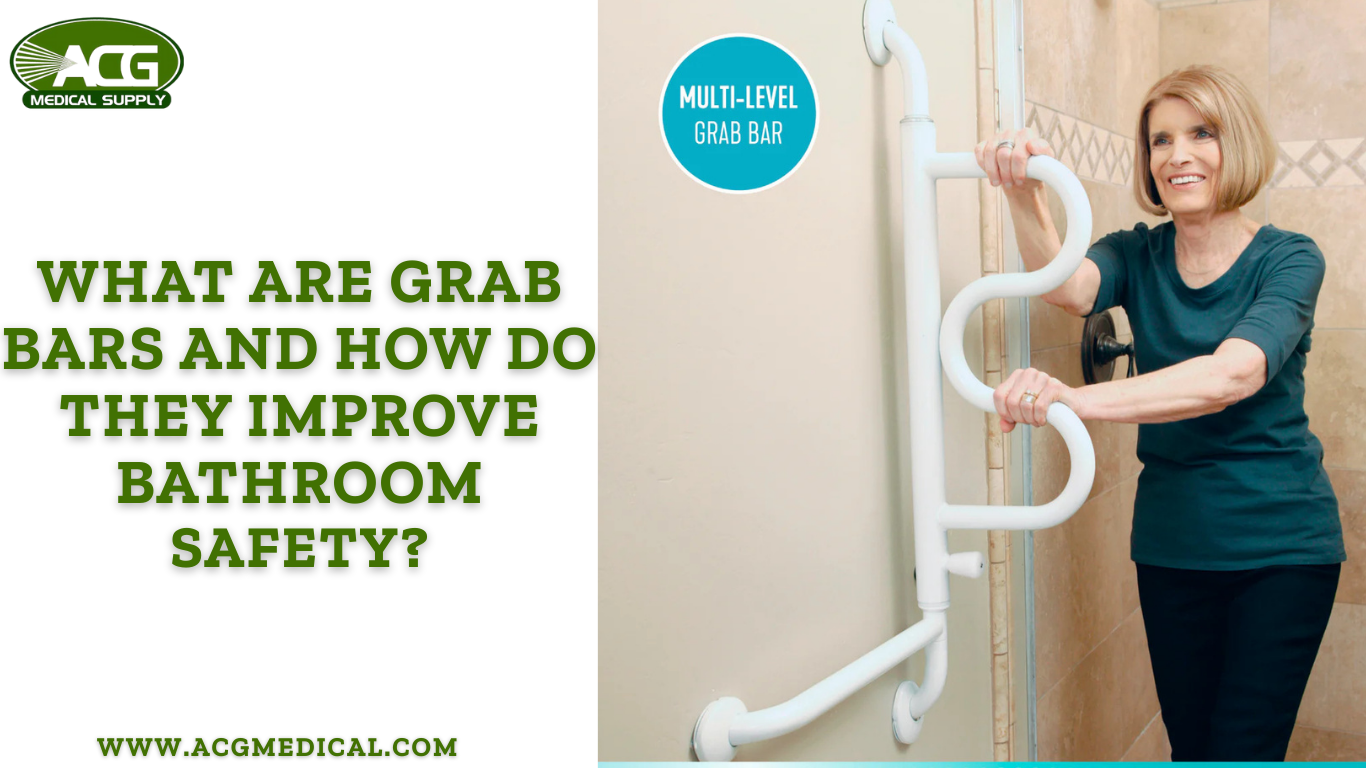
Most home accidents don’t happen during anything dramatic. No ladders. No power tools. They happen during everyday moments. Stepping out of the shower. Sitting down on the toilet. Reaching for balance when your foot slips a little. That’s where grab bars quietly do their job. They’re not flashy. They don’t beep or blink. However, when installed properly, they can transform the sense of safety in a bathroom almost instantly. And not just for seniors, either. Anyone who’s ever lost footing on wet tiles knows how fast things can go wrong. Let’s break it all down.
What Exactly Are Grab Bars?
Grab bars are fixed support bars installed in key areas of the home, most commonly bathrooms. You’ll see them near toilets, inside showers, along bathtubs, and sometimes along walls where balance tends to be tricky. Unlike towel rods or soap holders, safety grab bars are designed to hold body weight. That’s the big difference. They’re anchored into the wall structure, not just surface-mounted. And yes, they’re meant to be grabbed. Hard. In a moment when you need support and balance.
You’ll find different types depending on where they’re used:
● Shower grab bars for stepping in and out safely
● Toilet grab bars or toilet hand rails for sitting and standing
● Bathtub grab bars for slippery edges
● Bathroom handrails for general movement and balance
Why Bathrooms Are the Biggest Risk Zone
Bathrooms combine three things that don’t play well together:
● Water
● Hard surfaces
Add a person with limited mobility, joint pain, or even just fatigue, and a simple shower turns risky.
Grab bars for bathroom use reduce that risk by giving you something solid to hold onto. It sounds obvious. But it works. They help with:
● Entering and exiting the shower
● Shifting weight safely
● Standing up without strain
● Regaining balance if you slip
And here’s the thing, people don’t always admit. Even younger adults use them once they’re installed. Because stability feels good for everyone Period.
How Grab Bars Improve Safety
Grab bars don’t prevent accidents by themselves. They give you options when something goes off balance. They work as a backup.
● If your foot slips, you grab.
● If your knee gives out, you steady yourself.
● If you feel dizzy, you pause.
That pause is important. For grab bars for elderly users, that moment can be the difference between a near miss and a hospital visit. For caregivers, it means less physical strain while assisting. And for everyone else? Extreme peace of mind.
Common Types of Grab Bars and Where They Work Best
Here’s a simple table to make sense of where each type fits.
| Shower grab bars | Inside the shower or near the entry | Stability on wet surfaces |
| Toilet grab bars | On either side of the toilet | Easier sitting and standing |
| Toilet handrails | Along the tub walls | Weight support and balance |
| Bathtub grab bars | Along tub walls | Safer entry and exit |
| Toilet handrails | Along bathroom walls | General movement support |
| Shower handrails | Vertical or horizontal | Extra grip while bathing |
Different homes need different setups. There’s no one-size layout, despite what some guides suggest.
Grab Bar Installation: What’s Actually Important
This part gets skipped too often. Grab bar installation isn’t just about drilling wherever it looks neat. It also means structure.
Key points:
● Bars must be anchored into wall studs or reinforced backing
● Height should match the user’s natural reach
● Placement should support the movement of the person, not force awkward grabs
Improperly installed grab bars can fail. And that’s worse than not having one at all. ACG Medical Supply provides guidance or recommends professional installation, which honestly makes sense if this is your first time.
Are Grab Bars Only for Seniors?
Short answer: no.
Yes, grab bars for elderly users are common. But they’re also useful for:
● People recovering from surgery
● Those with arthritis or balance issues
● Pregnant individuals
● Anyone planning to age in place
Installing them early avoids rushed decisions later. And it avoids the panic install after an accident.
Design Has Improved A Lot.
Old grab bars looked like hospital equipment. Cold. Obvious. Kind of intimidating. Today’s bathroom safety products are more subtle. Matte finishes. Clean lines. Neutral colors. Some don’t even look like safety equipment at first glance. Which helps. Because when something looks normal, people are more likely to use it.
Conclusion
Installing grab bars doesn’t mean you are giving up your independence. It just means you are protecting it. Once they’re in place, most people stop noticing them. Until the day they need them. And on that day, they matter more than anything else in the room. If you’re thinking about improving bathroom safety, starting with grab bars, especially Reliable options from ACG Medical Supply, is one of the simplest, smartest moves you can make. Maximum support. Solid grip. Fewer accidents. Sometimes that’s all home safety really needs.
FAQs
How much weight can grab bars support?
Most quality grab bars support 250–500 lbs when properly installed. Always check
manufacturer specs.
Can grab bars be installed in tiled bathrooms?
Yes. Tiles can be drilled safely with proper tools. The bar still needs to anchor into studs or
backing behind the tile.
What’s the difference between towel bars and grab bars?
Towel bars are decorative and not weight-bearing. Grab bars are reinforced and built
specifically for support.
Where should grab bars for the toilet be placed?
Typically, on one or both sides of the toilet, around 33–36 inches from the floor. Placement
may vary based on user height.
Do grab bars require professional installation?
Not always, but it’s recommended. Incorrect installation defeats the purpose and creates
risk.
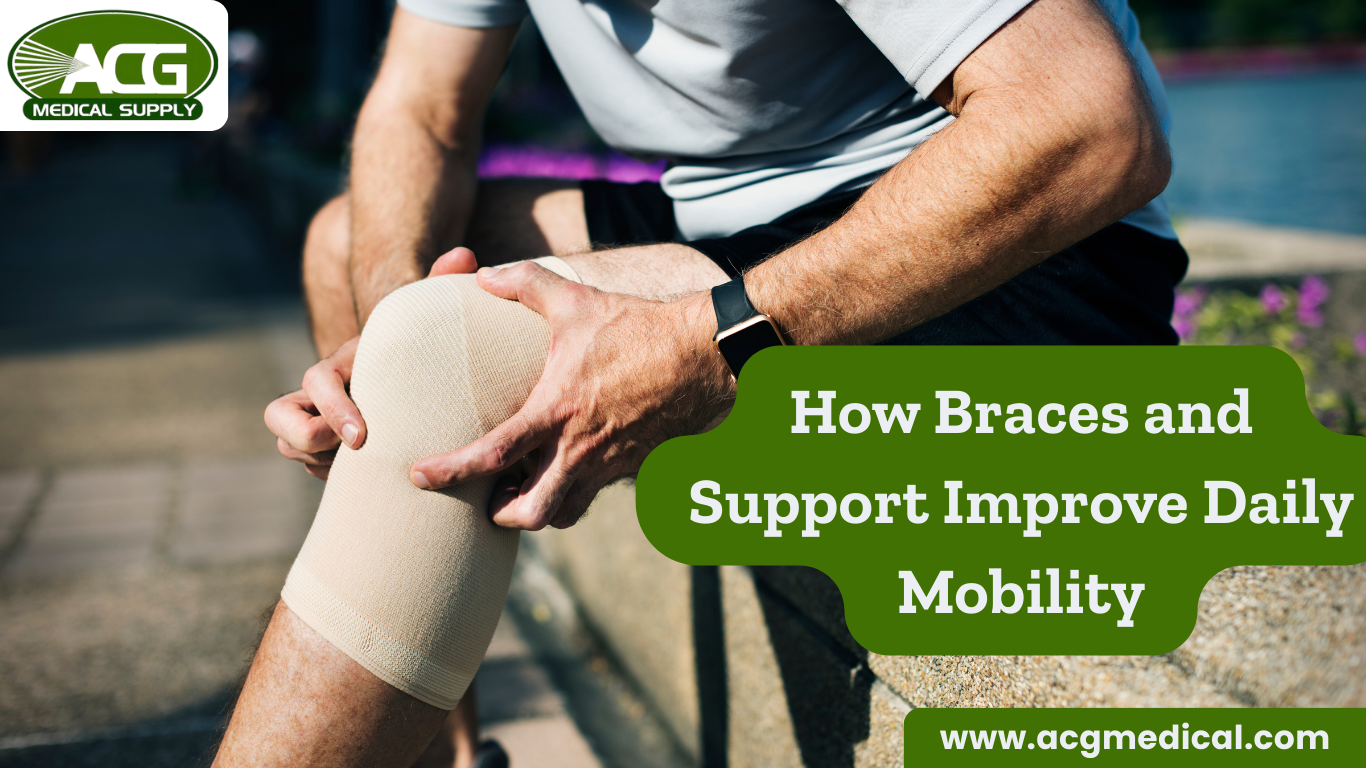
For people living with joint pain, muscle weakness, or injury, it can be difficult to perform simple activities such as walking or standing on one’s feet for an extended period of time. The result is that many individuals end up limiting their physical activities due to these types of challenges. This, in turn, means that they are not able to remain active and healthy for the long term. A brace or support can help stabilize the body during movement, reduce pain and discomfort, and help restore an individual’s ability to move confidently during daily activities.
Why Braces and Support Matter
Braces and supports are intended to help stabilize your joints, minimize tension, and encourage safer movement patterns. The design of a brace or support provides a means of aligning the body in a manner that will allow for more direct use of your muscle and ligament strength. For individuals who experience weakness, orthopedic braces offer a structural element in an area of the body where they feel weak, while medical braces provide compression and stability to alleviate pain.
Types of Braces and Supports
Braces and supports are available in various forms, including knee, shoulder, leg, and general braces, each providing specific benefits based on which body part requires support. The advantages of supports and braces can include increasing stability, decreasing daily overload on the body from gravity, improving proper joint alignment, and providing specific relief from pain or weakness. There can also be disadvantages, such as being bulky, restricting movement, having different levels of comfort based on the fit, and requiring the correct adjustments. Knowing both the strengths and limitations of braces and supports will make finding the appropriate assistive device easier for everyday mobility.
| Type | The Good Stuff | The Annoying Stuff |
| Knee Braces Knee Support & Knee Sleeves | Knee pain, instability, arthritis | To relieve pressure from our knees, give us a better range of motion, and be more stable by attaching straps, and reducing pain through increased warmth and compression. |
| Shoulder Braces | Shoulder instability, tendon/strain injuries | tendon/strain injuries Improve our posture and how much stress we put on our bodies while lifting and reaching (which may benefit most people who work in an office or similar environment. |
| Leg Braces & Supports | Muscle weakness, balance issues, leg injury recovery | Align our legs correctly, provide stability, and reduce the chances of falling while standing/walking. |
| General Supports & Braces | Back, wrist, ankle, and other joint discomfort | other joint discomfort Help to target our pain and have better supportive movements to help keep us more comfortable every day throughout vulnerable body parts. |
How to Choose the Right Braces and Support
The correct product will depend on what you are doing, how much support you require through your day-to-day life, and what limitations you have due to injury or illness. Here are some tips that may help make your choice easier:
Think about the location of your pain or weakness.
Determine if you prefer hard (as in rigid) support or soft compression.
Understand how comfortable, breathable, and fitted to your body the device will be.
Consider the activities that you do most frequently.
A properly-fitting device provides users with the maximum benefit of their brace or support without causing unnecessary discomfort or limits to movement.
Benefits of Using Braces and Support
Orthopedic products like braces and supports assist in decreasing the amount of pain individuals experience due to securing joints and preventing excessive stress on their joints through unnecessary motion. Users of the brace or support can also improve their posture, which allows them to move easily and safely. In particular, for those recovering from an injury, wearing a brace or support will promote recovery by alleviating stress on the injured body area.
Conclusion
Braces and support devices aid individuals in the performance of their daily activities with more comfort and confidence. Braces for the knee, shoulder, leg, and other locations are available at Acg Medical Supply to create a stable platform around the affected joint. The proper brace may help to alleviate pain, improve stability, or keep you active if you have experienced an injury. ACG Medical Supply is a reputable manufacturer of high-quality braces and support devices for daily use to improve movement and stability. Acg medical equipment remains a trusted product that will help you achieve a better range of motion and stability.
FAQs
Who is a Suitable Candidate for Using Braces and Support
Braces and support can be an advantageous solution for those suffering from joint pain or instability due to injuries or muscle weakness. Individuals suffering from the effects of arthritis, sporting injuries, recovery from surgery, and individuals with balance problems frequently use braces and support for greater stability and comfort while performing daily tasks.
Can I Wear a Brace and Support Every Day?
Many people take advantage of the benefits of using braces and support daily to reduce discomfort while improving their ability to move. The recommended duration of usage will be determined by the type of brace and your individual condition, and your physician’s recommendation. There are braces created for constant wear, and others created for specific sports or exercise activities.
How Can I Determine Which Type of Brace is Right for Me?
The type of brace you choose will depend on the location of your pain or weakness. If your knee is sore, you may need a knee brace or knee sleeve; if your shoulder is painful, you may need a shoulder brace. If you are uncertain, consult with your healthcare professional before selecting a brace.
Are braces and other support products comfortable when worn long-term?
Most orthopedic braces and supports are made from breathable materials, adjustable straps, and cushioned padding. When you get a proper fit of your brace or support, it should give you a feeling of support while also being relatively unrestricted in your ability to move normally.
Will using braces and support products help prevent you from sustaining future
injuries?
Yes! The use of braces and support products stabilizes the joint, therefore reducing the likelihood of re-injury by limiting excessive and harmful movement of the joints. Brace support products should only be used in conjunction with a proper exercise program and the advice of a physician.
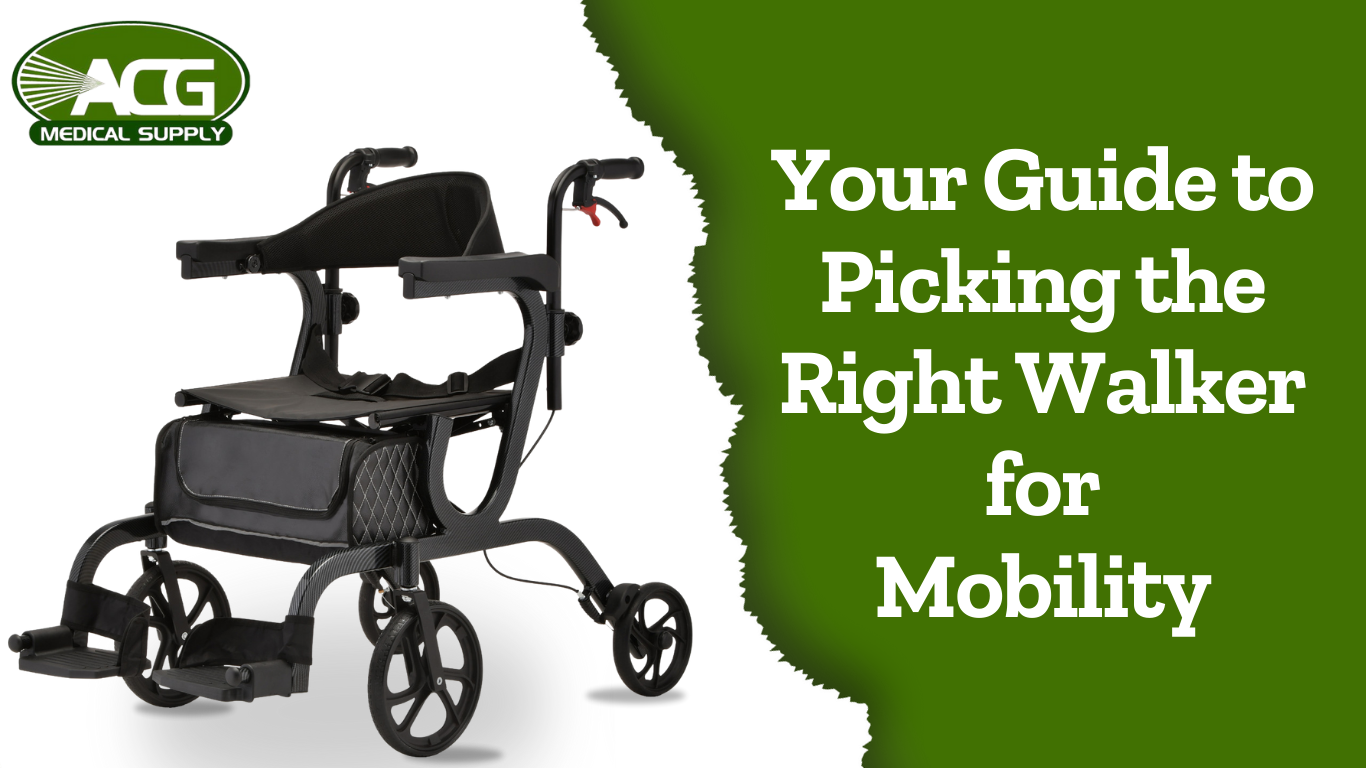
It’s a jungle out there when it comes to picking the right walker. Seriously, go type “walker” into a search bar and watch what happens. It’s a barrage of chrome, wheels, brakes, and weird medical terms that sound like they belong in a hospital basement, not a living room. People usually just grab the first thing they see because, let’s face it, nobody wants to spend their Saturday afternoon researching Medical Walkers. It’s not exactly fun.
But here’s the cold, hard truth. Picking the wrong one is a disaster. It’s the difference between moving around freely and tripping over a rug because the wheels are cheap plastic garbage.
Most people picture the same thing: that gray, clunky cage with tennis balls jammed onto the back legs. The classic walker for old people stereotype. It’s actually called a standard foldable adult walker, and yeah, it’s stable. Like, really stable. You have to pick it up, move it forward, put it down, and step. Pick up, put down, step. It’s slow. It’s tedious. But if putting weight on a foot is impossible, or if balance is nonexistent, it’s the only safe bet.
But then there are wheels
This is where people get confused. There’s the rolling walker. Usually just two wheels on the front. You don’t have to lift the whole thing, just push it. The back legs slide (hopefully smoothly, but because floors vary, it isn’t always smooth). It’s a middle ground.
Then there are the 4-wheel walker rollators. These are the ones that you can use to speed through the grocery store. They have four wheels. Brakes on the handles. And — most importantly — a seat.
The seat is a distinct advantage. If you get tired, you can lock the brakes and sit down. Done. But they roll fast. Sometimes too fast. If control is an issue, a rollator can literally get away from you. It’s like trying to walk a dog that’s seen a squirrel. So keep that in mind while choosing.
The height thing
Most people ignore this. They shouldn’t. Walk into any nursing home and watch. Half the residents are hunched over their adjustable walker like they’re pushing a heavy plow through snow. That’s wrong. It hurts the back. It ruins posture.
The handles need to be at wrist height when the arms are hanging down. Not waist height. Not elbow height. Wrist. If it’s an adjustable height walker, adjust the thing. It takes thirty seconds.
Will it fit in the trunk?
Big question. Often forgotten. A heavy-duty steel walker feels indestructible, but good luck wrestling it into the back of a Honda Civic when it’s raining. Lightweight walkers are worth the extra cash. Aluminum is good. It doesn’t weigh a ton. If the user can’t lift it to get it over a curb or into a car, it’s useless. It’ll just sit in the closet gathering dust.
When looking to buy a medical walker online, check the weight. Not the weight capacity (how much it holds), but the product weight (how heavy it is).
Cheap vs. Actual Quality
It is tempting to grab the cheapest option. Affordable medical walkers are great, but there is “affordable,” and then there is “cheap junk.”
If the brakes feel stiff or the wheels rattle right out of the box, return it. At ACG Medical, we stock the ACG Medical walkers that are built to actually be used, not just sold. Hardware store walkers are hit or miss. Sometimes the folding mechanism sticks. Sometimes the rubber tips wear out in a week. Just be careful.
Here is the breakdown of what usually works for whom, without the sugarcoating:
| The Gear | The Good Stuff | The Annoying Stuff |
| Standard Folding Walker (No wheels) | You won’t fall. It’s solid. | You move at the speed of a snail. Lift, step, repeat. |
| 2-Wheel Walker | Easier to push. Good for shuffling gaits. | No seat. If you get tired, tough luck. |
| 4-Wheel Rollator | Fast. Has a seat. Looks less “medical” | Can roll away from you. Heavier to lift into cars. |
| Heavy Duty / Bariatric | Fits wider frames. Super strong. | It’s huge. Might not fit through the bathroom door. |
Conclusion
Walkers are not glamorous. It’s metal tubing and rubber. But picking the right one means keeping independence. And that’s worth the headache of figuring out the difference between 6-inch and 8-inch wheels.
FAQs
- Walker vs rollator?
Walker = slower, steadier, usually no wheels or just two.
Rollator = three or four wheels, moves quicker, often has a seat. - Are rolling walkers safe for seniors?
Safe for seniors who feel steady on their feet. Some like the slower pace of a basic walker,
Some prefer the smoother roll. - How to check height?
Handles should line up with the user’s wrists when they’re standing normally. Light elbow
bend = right height. - Lightweight walkers… strong enough?
Yes. Aluminium frames keep the weight low but hold up well for everyday use. - Where to buy?
ACG Medical Supply has a good range — basics, foldable models, rollators — all in one
place.
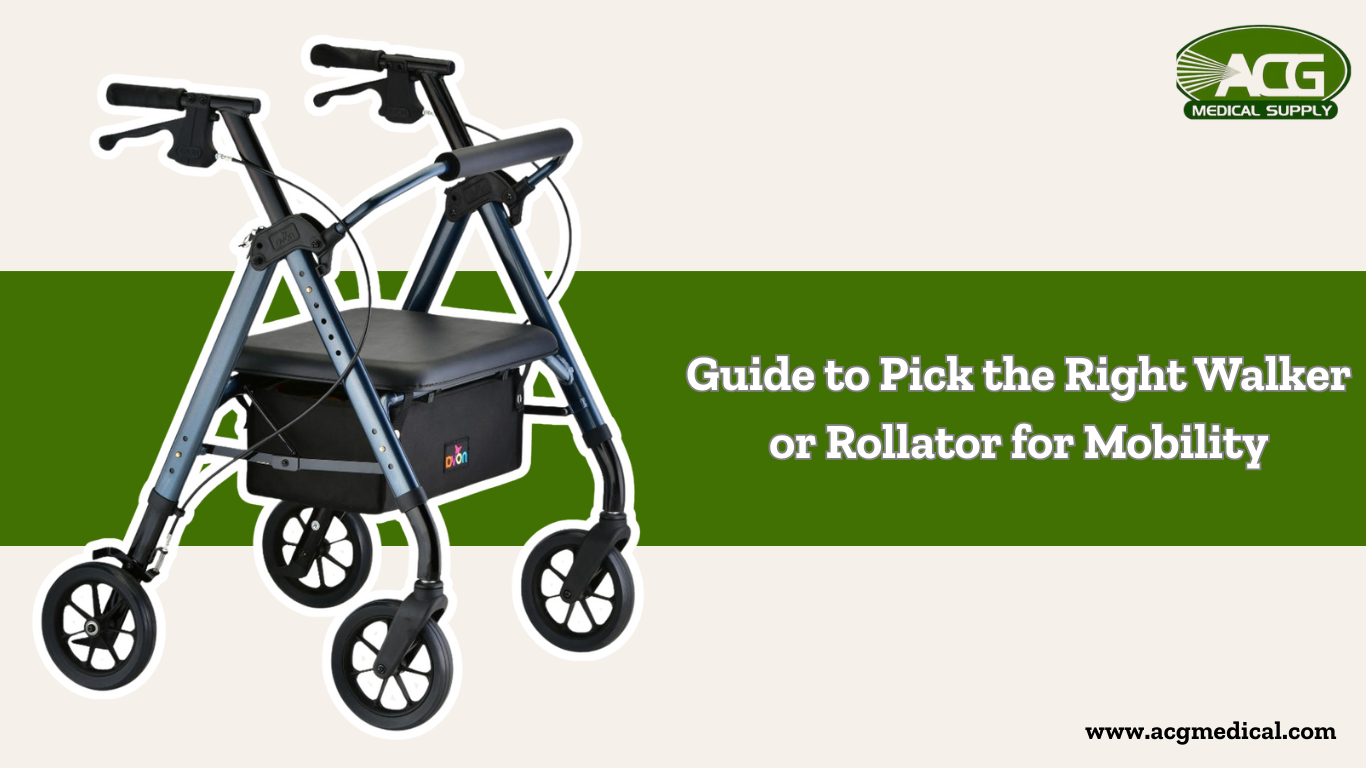
Nobody wakes up on a Tuesday morning excited to buy a walker. It’s usually something you put off until a doctor insists, or worse, after a fall scares you into it.
Because of that hesitation, most people rush the process. They type “walker” into a search bar, buy the first thing that looks decent, and end up with a piece of metal that sits in the garage because it’s too heavy to lift or gets stuck on the living room rug.
If you’re going to spend the money, get the tool that actually fits your life. There is a massive difference between the standard grey frame you see in hospitals and the newer mobility aids that actually handle sidewalks and grocery stores.
Here is how to figure out what you actually need before you browse ACG Medical Supply for a Walker Rollator.
The Walker vs Rollator Distinction
People mix these up constantly. If you want to buy a rollator walker, you need to know the difference, because they serve two opposite functions.
1. The Standard Walker (The Frame) This has no wheels (or maybe two small ones on the front) and four rubber feet. It is a stability anchor. You lift it, move it forward, and step into it.
- Who it’s for: People who cannot bear full weight on a leg (post-surgery) or who have severe balance issues where they might fall backward.
- The reality: It is slow. It is laborious. But it is safe.
2. The Rollator (The Cruiser) This is the Walker Rollator. It has wheels on all legs, hand brakes, and usually a seat. You don’t lift it; you push it.
- Who it’s for: People who can walk but lack endurance. If you get winded walking to the mailbox or feel a bit unsteady on uneven pavement, this is your gear.
- The reality: A walker rollator is faster and easier, but it requires you to have enough control to squeeze the brakes.
Don’t Ignore the Hardware
When you look at a rollator walker for sale, don’t look at the color. Look at the tires and the weight. These are the two things that will annoy you the most if you get them wrong.
The Wheel Situation
Standard 6-inch wheels are fine for smooth linoleum. That’s about it. But the second you step outside? Nope. Sidewalk cracks, parking lots, elevator gaps, thick carpets – small wheels lose their mind at all of these. If you even think about leaving your house, go for 8-inch wheels or bigger. A four-wheel rollator walker with larger tires glides over bumps instead of jabbing your wrists every five seconds. It’s the main difference between “it was a nice walk” and “why does my wrist hurt already?”
The Trunk Test(Portability)
Heavy-duty rollator walkers are rock solid, which is great… until you actually have to pick one up. Ask yourself the real question: Can I lift this thing into the car without regretting all my life choices?
If you drive, this test is non-negotiable. You should be able to fold it, slide it into the trunk, and not feel like you’ve just done a gym session.
Older rollators usually fold front-to-back, and they stay bulky – like trying to store a metal giraffe. Newer “Euro-style” ones fold side-to-side and stay standing when folded. Way easier to handle, and compact enough to slip behind a restaurant table without causing a scene.
And if you have shoulder issues, prioritize a lightweight rollator walker made of aluminum rather than steel.
The Seat is a Tool, Not a Luxury
A rollator walker with a seat isn’t just for comfort; it’s about range as well. If you know you have a portable chair, you’re more likely to go to the museum or the farmers’ market. You don’t have to scan the room for a bench constantly. But check the seat height. If your feet dangle when you sit, it’s dangerous. If your knees are up by your chin, you’ll never be able to stand back up.
The Best Option Depends on the User
There is no single best rollator walker for seniors. There is only one that fits the specific deficit you are trying to fix.
- The Indoor User: Needs a narrow frame. Bathroom doors are notoriously thin. Measure your narrowest door frame before you buy.
- The Outdoor User: Needs larger wheels and a seat.
- The Larger User: Needs width. Standard walkers can pinch the hips. A bariatric or heavy-duty model isn’t just stronger; it’s wider. ACG Medical walker rollator options usually list the seat width clearly, so pay attention to it.
Quick Spec Comparison
| Feature | Standard Walker | Rollator (3 or 4 Wheels) |
| Primary Function | Weight-bearing support | Balance & Stamina |
| Motion | Stop-and-go | Continuous walking |
| Brakes | None | Hand loops (Essential) |
| Seat | No | Yes (usually) |
| Terrain | Indoors / Flat surfaces | Outdoors / Uneven ground |
| Energy Use | High (lots of lifting) | Low (gliding) |
Accessories You Actually Need
Most rollator accessories are junk, but a few are non-negotiable.
- The Tray/Basket: You need to carry things. If you are using both hands to push the walker, how do you carry a coffee or a book? You don’t. Get a basket.
- Cane Holder: Many people use a rollator for long distances but switch to a cane for tight spaces (like a bathroom). A clip-on holder will keep the cane within easy reach.
- Good Brakes: Rollator walker brakes wear out or get loose. Check them. If you have weak hands, look for “push-down” brakes rather than the bicycle-style squeeze handles.
Where to Look
You can find cheap units at big-box pharmacies, but they often rattle and rust quickly. ACG Medical Supply carries serviceable brands – meaning you can actually buy replacement wheels or brake cables later. That’s important. A walker is a vehicle; it needs maintenance.
Conclusion
The right equipment stops being a medical device and starts being a tool. It stops looking like a symbol of aging and starts looking like the thing that lets you walk your dog again. Don’t buy the first thing you see. Measure your doors, check the wheel size, and be realistic about where you’re going to use it.
FAQ
1. Which is better – a walker or a rollator?
Depends on your stability. Walkers are steadier. Rollators are faster and easier outdoors.
2. What should I look for in the best rollator walker for seniors?
Good brakes, comfortable seat, proper height, easy folding, and steady wheels. And comfort – seriously, seniors shouldn’t compromise on that.
3. Are lightweight rollator walkers safe?
Yes, as long as you’re not relying heavily on them for balance. They’re great for active users.
4. Do I need rollator accessories?
Maybe not needed, but they make life easier. Cup holders, storage, backrests — tiny upgrades, big comfort.
5. What if I’m tall?
Don’t hunch. Look for “Tall” variations. Using a standard height walker when you are 6’2″ will wreck your back in a week.
Search Articles
Popular Categories
Categories
Medical Tips in Your Inbox
Get expert recovery advice, equipment guides, and caregiver tips — delivered weekly. No spam, unsubscribe anytime.

Need equipment today?
Same-day or next-day delivery in the DFW area. Call us now for immediate assistance.
Not Sure What You Need?
Call us and we’ll walk you through the best option for your situation. Our experts help hundreds of families find the right fit every week.