
Blog
Very few things in healthcare stay basically the same across decades.
Heat is one of them, and honestly, not because anyone is out here championing it. Heating pads are about as unglamorous as pain relief gets. No sleek app integration, no subscription model, no before-and-after testimonials with dramatic lighting. They just sit there, warm up the stiff joints, and do their job. That’s probably why they’re still in people’s homes, physical therapy clinics, and arthritis care routines after all this time.
An arthritis heating pad won’t cure anything. It won’t reverse joint damage or replace whatever your doctor has you doing. What it can do is make painful or stiff areas feel more manageable for a while. And if you’re someone who wakes up every morning feeling like your hands aged thirty years overnight, “manageable for a while” is genuinely worth something.
What an Arthritis heating pad does
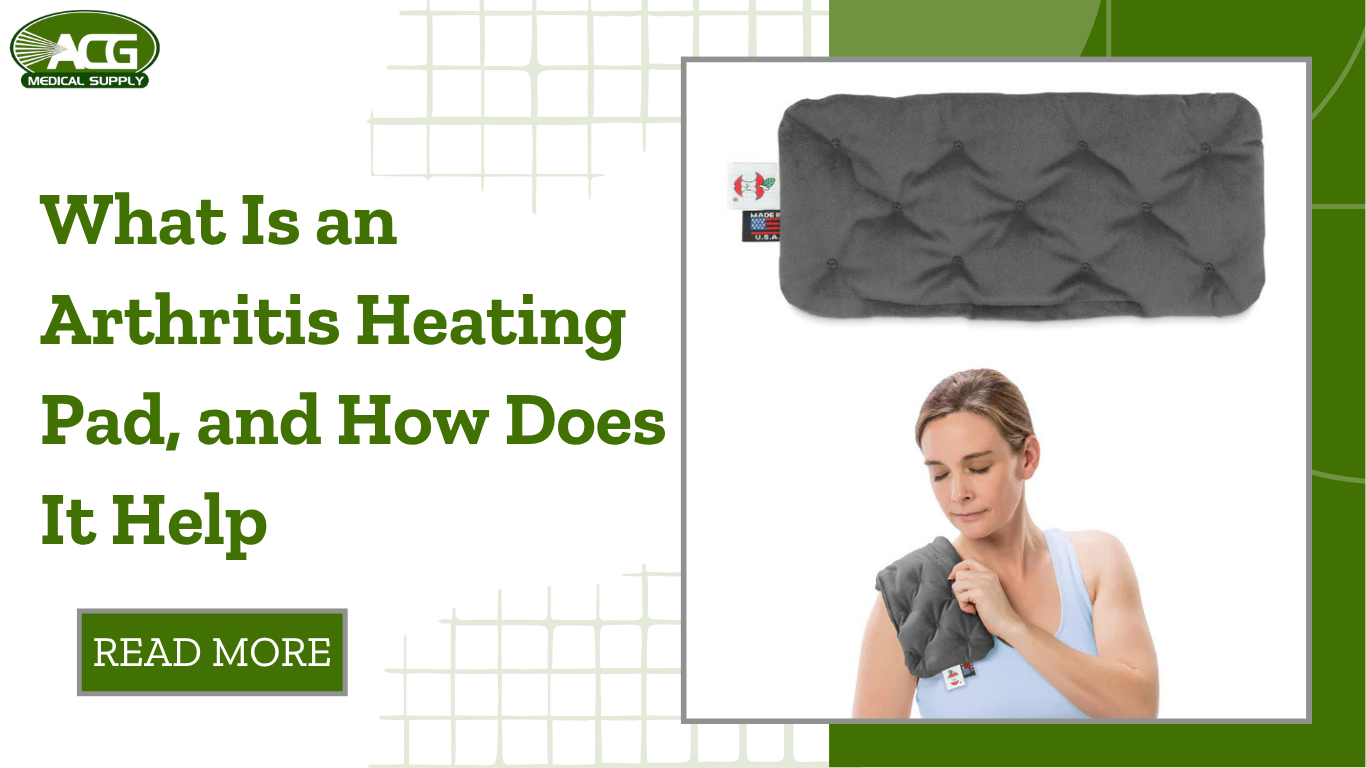
An arthritis heating pad applies warmth to areas where joints are stiff or uncomfortable. The heat source can be an electric coil, microwaveable grain fillings, infrared technology, moist heat systems, or reusable gel packs, but the core idea doesn’t change much between them.
Warmth relaxes the muscles around a joint and helps the joint itself move with less resistance. That’s it. No complicated mechanism or terminology required.
People reach for a heating pad for arthritis pain at specific moments: right before getting out of bed in the morning, after sitting at a desk for hours, before a walk or some gentle stretching, on cold days when everything feels worse, or at the end of a physically draining day.
The point isn’t to eliminate pain. It’s to make movement easier.
Why does heat work on stiffness specifically
Arthritis doesn’t produce the same symptoms for everyone. Some days it’s pain. Some days it’s swelling. Some days, joints just feel slow and reluctant, like they need five minutes to warm up before they’re willing to cooperate.
That last thing, stiffness, is what most people describe as their most consistent complaint, especially in the morning or after long stretches of sitting still.
Here’s why heat helps with that specifically: inside every joint, there’s synovial fluid that keeps bone surfaces lubricated and delivers nutrients to cartilage. When a joint sits cold and still for hours, that fluid thickens up, and motion becomes resistant. When you apply warmth, the fluid loosens back up, and movement becomes easier for you.
That’s a big part of why heat before movement is more useful than heat after you’ve already pushed through the discomfort.
There’s also the muscle piece. The muscles surrounding a painful joint will often tighten up involuntarily, a kind of protective bracing response. It makes sense as a short-term reflex, but over time, that chronic tension makes stiffness worse, not better. Heat interrupts the cycle by getting those muscles to let go a little.
Worth saying clearly: if a joint is actively swollen, red, or already warm to the touch, heat is the wrong call. Cold therapy handles acute inflammation. Heat is for stiffness and tension; the two are different problems.
Benefits of heat therapy for Arthritis
A lot of arthritis content online either oversells heating pads or talks about them so vaguely that the information becomes meaningless.
The actual benefits of heat therapy for arthritis are more practical than dramatic.
Temporary relief from stiffness. Warmth helps synovial fluid thin out and connective tissue loosen. The joint moves more freely for a while. That window matters if you’re trying to get out the door in the morning or get through a workout.
Better movement before activity. Using a heating pad before walking, stretching, or exercising lets the joint work through a wider range of motion with less pain. It’s preparation rather than damage control, which is a different way of thinking about pain management than most people are used to.
Muscle relaxation that actually sticks. People who use heat therapy regularly tend to notice more benefit than those who only use it during a bad flare. Consistent warmth keeps the surrounding muscles from staying locked in that protective tension. It’s not glamorous, but it compounds.
Ordinary-day comfort. This one gets skipped in clinical discussions, but it’s kind of pivotal. Feeling slightly less stiff while chopping vegetables, typing a long email, or walking up a flight of stairs changes how a day feels. That’s nothing.
Common types of arthritis heating pads
| Type | What It Uses | Commonly Chosen For |
| Electric heating pad for arthritis | Plug-in electric heat | Regular home use |
| Moist heat pad for arthritis | Damp heat or humid warmth | Deep-feeling warmth |
| Infrared heating pad for arthritis | Infrared heat technology | Steady radiant heat |
| Portable heating pad for arthritis | Rechargeable or travel-friendly heat | Work, commuting, travel |
| Rheumatoid arthritis heating pad | General heating support | Morning stiffness and joint discomfort |
What makes the best heating pad for Arthritis
There’s no single right answer here because the joint matters, the routine matters, and personal preference matter more than basic product descriptions admit.
An electric heating pad works well for people who want something reliable. Plug it in, pick a temperature, and leave it on for 15 to 20 minutes. Simple. A moist heat pad delivers damp warmth that conducts heat more efficiently into the tissue, which some people find feels more substantial against a stiff knee or shoulder than dry heat does. A few physical therapists prefer recommending moist heat for arthritis, specifically for that reason.
Infrared pads have gotten more attention recently. They emit far-infrared radiation that penetrates a few centimeters below the skin without overheating the surface. There’s some research suggesting benefit for osteoarthritis discomfort, though the evidence is still being built out. They’re not a medical treatment. They’re just a different way of delivering heat that some people find more effective.
Portable pads fill a gap that the others don’t. Arthritis doesn’t schedule itself around when you’re home and near an outlet. A rechargeable wrap for a long drive or a day in the office actually gets used, and that’s the whole game with pain management tools.
For fit: someone dealing with shoulder or back stiffness probably wants a larger wrap-style pad. Someone with hand or wrist problems needs something smaller and easier to position without help. Moist heat tends to suit deeper joints. Lightweight electric options work better for people who want minimal fuss.
Consistency is more important than intensity
One honest thing about heating pads that doesn’t get said enough: a single session does relatively little. It helps in the moment, but the real value shows up for people who build it into a daily habit, heat in the morning before movement, heat in the evening after activity. The body responds differently to consistent input than it does to occasional intervention.
ACG Medical Supply carries electric, moist heat, infrared, and portable arthritis heating pads from established manufacturers, available online and in Texas showrooms. Their staff can help figure out which type suits a specific joint or situation without the sales pressure.
Conclusion
An arthritis heating pad is a comfort tool. Use it consistently, pick the right type for your joint and routine, and it can make stiffness feel more manageable day to day. That’s the whole pitch, and sometimes, that’s enough.
FAQ
No. It provides temporary symptom relief and is not a medical treatment.
Heat works better for stiffness and muscle tension. Cold is the better choice when a joint is
actively swollen or inflamed.
Around 15 to 20 minutes for most joints, long enough for warmth to reach the tissue,
short enough to avoid skin irritation.
They deliver heat differently and penetrate slightly deeper into tissue, but both are forms
of heat therapy, not medical treatments.
Many do, particularly for morning stiffness. During an active flare with visible swelling,
cold therapy is usually the better option.
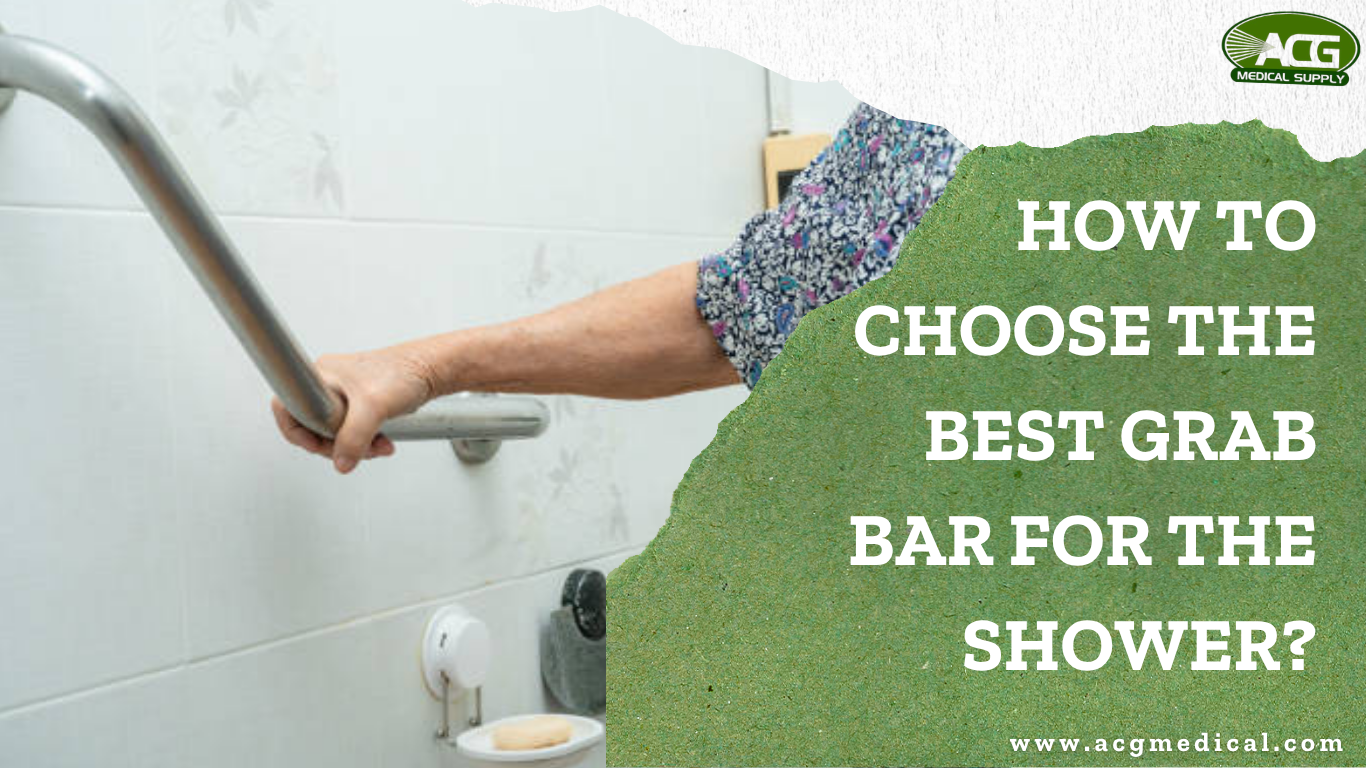
The shower is, objectively, the most treacherous square footage in your home. You’re standing on a wet, slick surface, likely without much to hold onto, while water obscures your vision. It’s a physics problem waiting for a bad solution. Most people don’t think about bathroom grab bars until a “near-miss” happens, that sudden, heart-stopping lurch when a foot slides an inch too far, or when you realize you’re relying on a flimsy plastic soap dish for balance.
Choosing the right hardware isn’t just a quick pick from a catalogue. It comes down to understanding how slips actually happen and how people naturally try to catch themselves. In the end, you’re not just putting up a metal bar; you’re adding something you can trust in that split second when your balance goes out.
Do not fall into the trap of a “quick fix.“
We have to talk about the elephant in the room: suction cup grab bars. They are marketed as the ultimate convenience for renters or anyone who doesn’t want to drill into expensive Carrera marble. But from a safety perspective, they’re really just high-stakes vanity items. Suction cups need a perfect seal against a clean, non-porous surface. Your shower has steam, soap film, and temperature fluctuations that cause the wall to expand and contract. Any one of those things degrades the seal over time. You won’t know it’s failing until you grab the bar and take the wall and yourself with you. That’s not a hypothetical. It’s what happens.
The only grab bar worth trusting is one bolted into wall studs. That’s it. The screws go into the 2×4 framing behind the tile, the bar doesn’t move, and it’ll still be there in twenty years. If drilling genuinely isn’t an option, renting, or the tile is too expensive to risk, go with a floor-to-ceiling tension bar instead. They wedge between the floor and the ceiling without fasteners and hold real weight. Not as ideal as wall-mounted, but infinitely more reliable than a vacuum seal that’s slowly losing the fight against your shampoo.
Floor-to-ceiling bars also solve a different problem: layouts where the wall just isn’t close enough. Big open shower, freestanding tub, bench too far from any surface, the bar goes anywhere you need it, at any grip height, without having to plan around where the studs are.
Materials: not all metal is created equal
When you start looking at the features of grab bars, you’ll notice a massive price gap between the stuff at the local pharmacy and the stuff in a design showroom. There’s a reason for that.
- Plastic grab bars: You see these in the “as seen on TV” sections. They’re also, to be blunt, not the best bet for any situation where someone is depending on the bar for serious support. Temporary? Maybe. Post-surgery at a rental house where you can’t drill walls? Okay. But for a permanent bathroom setup, plastic isn’t what you want.
- Aluminum grab bars: These are the middle ground. They’re lightweight and naturally resistant to corrosion, which is a big deal in a wet stall. However, they don’t always have the same heft or density that gives you confidence. They’re a reasonable pick for lighter daily use, but if you’re installing a bar for someone who relies on it heavily for transfers or balance, step up to steel.
- Brass grab bar: If you’re worried about your bathroom looking like a hospital wing, brass is the move. It’s dense, it’s heavy, and it’s usually finished in beautiful brushed golds or oil-rubbed bronzes. It feels premium because it is. You get the safety of an industrial rail with the look of high-end jewelry for your bathroom. The one caveat: brass requires slightly more maintenance to keep the finish from dulling, especially in a high-humidity shower. A quick wipe-down after use goes a long way.
Ergonomics over “standard” rules
People love quoting that “standard” height, 33 to 36 inches, like it’s some universal truth. It’s not. It’s just a number that works okay for an average person. If you’re taller, shorter, or just move a bit differently, it can feel off straight away.
Honestly, the easiest way to get it right is to just step into your shower and try it out. Stand where you usually stand. Act out getting in, turning, and maybe sitting down if you have a bench. Don’t overthink it. Just notice where your hand goes when you pretend to steady yourself. That spot is usually more accurate than any guideline.
There are a few placements that tend to work for most people:
- Entry/threshold bar: around 33–36 inches, near the opening. That instinct grab when you step in or out.
- Standing support bar: roughly 48–52 inches. This one’s for those everyday movements, shifting, rinsing, turning.
- Seat-assist bar: lower, around 28–32 inches, often angled. Helps when you’re pushing yourself up.
Also, not every bar needs to be straight. Angled grab bars for the shower, especially around that 45-degree tilt, just feel better in use. Your hand can move along them more naturally instead of locking into one position. And length… people really underestimate that. Short bars look tidy, sure, but they don’t give you much room to catch yourself. In a slip, your hand isn’t precise. It just reaches. A longer bar gives you more chances to actually grab onto something. And that one small detail can make all the difference.
Texture: the secret to staying upright
A polished chrome bar looks great until it gets covered in shampoo. Then it becomes a greased pole. When evaluating the features of bathroom grab bars, always look at the finish. “Peened” or “knurled” textures (basically just a slightly roughened surface on the metal) provide the friction your hand needs. If you must go with a smooth finish for aesthetic reasons, make sure the bar has a larger diameter so you can get a full, closed-fist wrap around it.
Once you’ve selected the perfect grab bar based on material, style, and texture, the next step is proper installation. Our detailed guide on How to Install Grab Bars in Your Bathroom the Right Way walks you through the entire installation process step-by-step, ensuring your grab bar is securely mounted and ready to provide the safety and support you need for years to come.
Comparison of grab bar types
| Type | Best For | Pros | Cons |
| Wall-mounted grab bars | Permanent safety | Strongest support; highest weight capacity | Requires drilling; harder install |
| Suction cup grab bars | Travel only | No tools needed; portable | Unreliable; never appropriate for full-weight support |
| Folding grab bars | Small showers/Transfers | Saves space; flips out of way | More expensive; needs solid blocking |
| Floor-to-ceiling grab bars | Open spaces; renters | No wall needed; very stable | Bulky; not suitable for very low ceilings |
One more thing worth saying
Bathroom grab bars aren’t just for seniors. That association probably does more harm than anything else in how people think about this category. Grab bars are for wet surfaces, which describes every shower on earth. They’re useful after a knee surgery at 35. They’re useful when you’re tired and not as steady as usual. They’re useful for kids who are just finding their footing.
People with balance or mobility challenges need them the most, no question, but the idea that installing one says something about your age or ability has kept a lot of people from making a genuinely smart home decision. Think of it the same way you think of a handrail on a staircase. Nobody questions that one.
Conclusion
Honestly, this isn’t the kind of thing anyone plans their weekend around. You’re not excited to shop for it, and you’re definitely not showing it off to anyone. But once it’s in place, you notice it without really thinking about it. That steady, no-movement grip when you reach out. It just holds.
Some people don’t mind the bulky, obvious bars. Others want something that sort of disappears into the space. Doesn’t really matter which way you go. At the end of the day, you’re just making sure one small misstep doesn’t turn into something worse.
FAQs
1. Can I just screw these into the drywall?
No, you’ll rip the wall down; hit a stud or use specialized heavy-duty anchors.
2. Do I really need a 36-inch bar?
Longer is better because it gives you a much bigger “catch zone” if you slip.
3. Are suction cups okay for permanent use?
Absolutely not; steam and soap eventually kill the vacuum seal.
4. What is the best material for grip?
Stainless steel with a “knurled” or textured finish is the gold standard for wet hands.
5. What does ADA-compliant shower grab bar actually mean?
It means it passed stress tests for 250 lbs of force and has the right wall clearance.
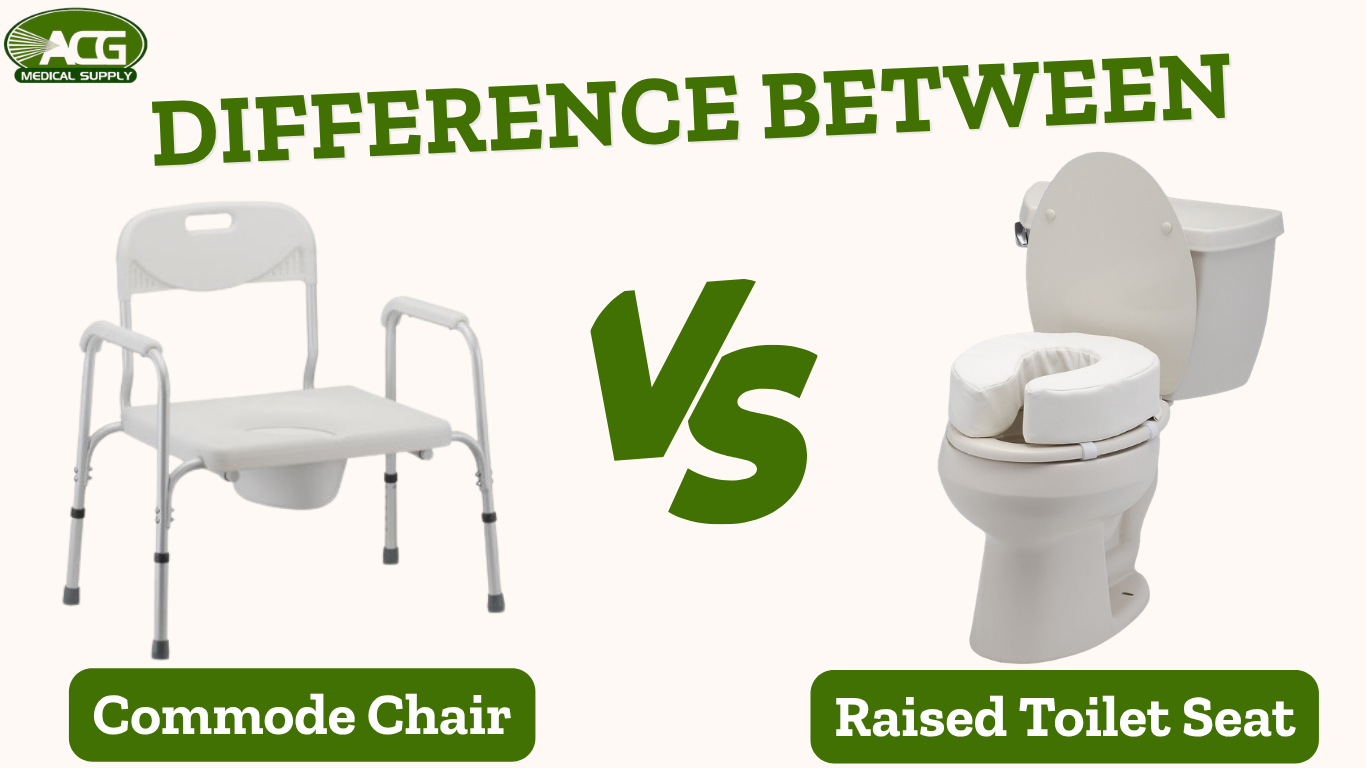
Bathroom aids don’t make for great dinner conversation. But when someone needs one, the difference between the right product and the wrong one matters a lot. A bedside commode chair and a raised toilet seat both help with toileting; they solve different problems. A commode moves the bathroom closer to the person. A raised seat makes the existing toilet easier to get on and off. ACG Medical Supply carries both, including portable and adjustable options, which is worth knowing because the right choice almost always comes down to what’s actually hard for the person using it.
What is a bedside commode actually?
A bedside commode chair is exactly what it sounds like. A chair that works like a toilet. No plumbing. No fixed spot. It can sit right next to the bed. Or in a living room corner if needed. Some people even move it around during the day. That flexibility is the whole point.
It’s often described as a portable toilet for the elderly, but that doesn’t really cover it. It’s more about reducing effort. Cutting down those long, tiring walks. Especially at night. And nights are usually when things feel the hardest.
The benefits of bedside commode use tend to show up quickly:
- Less distance to walk
- Less urgency and panic
- Less risk of slipping or losing balance
- More control over timing
Some versions are simple. Others are more thought-out. A portable commode chair might fold away. A 3-in-1 commode chair can sit over a toilet or be used in the shower. An adjustable height commode chair makes sure feet stay grounded. These are all small details, but they add up to something big.
What is a raised toilet seat?
A toilet seat riser doesn’t replace the toilet. It just changes how it feels to use one. It adds height. That’s it. But that small change is important. Sitting down on a low toilet can be uncomfortable. Standing back up can feel worse. Knees, hips, lower back, everything gets involved. That’s where taised toilet seats come in handy.
The benefits of raised toilet seats are quieter. Less dramatic than a commode. But still important:
- Less bending
- Less pressure on joints
- More stable standing
- Less hesitation before sitting
Some models are basic. Some come with grip support, like a raised toilet seat with handles. Others are designed as a full medical toilet seat riser for added stability. It does not require replacing anything. Just making the existing setup easier to use.
The simple way to compare them
The easiest way to think about it is this: a commode is a separate chair that acts like a toilet. A raised seat stays on the toilet you already have and just gives it more height. That is why one is usually better for limited mobility, and the other is better for easier sitting and standing.
| Feature | Bedside Commode Chair | Raised Toilet Seats |
| Main use | A toilet near the bed or chair | A higher toilet seat on an existing toilet |
| Best for | People who cannot safely walk far | People who can walk to the bathroom but need less bending |
| Setup | Usually free-standing, no plumbing | Attaches to the toilet bowl or seat |
| Extra support | Often comes with armrests, drop arms, or wheels | May come with handles or a frame |
| Portability | Usually more portable | Usually stays on one toilet |
| Typical use case | Recovery, weakness, fall risk | Arthritis, joint pain, post-surgery support |
The main types of people you see in real life
Not every commode or raised seat looks the same. That is where product choice gets a little more practical than fancy. For commodes, common bedside commode types include standard chairs, drop-arm models, folding versions, wheeled models, bariatric versions, and the 3-in-1 commode chair style that can work bedside or over a toilet.
For raised seats, the common toilet seat riser types include basic raised rings, hinged models, padded styles, locking versions, and seats with handles. A raised toilet seat with handles is often the sensible pick when balance is shaky. A more basic medical toilet seat riser can be enough when the main issue is just the height of the toilet. ACG’s raised-seat range also includes portable and bariatric options, which give buyers more room to match the product to the person, not the other way around.
Which one makes more sense?
This is where the buyer’s mindset matters. A commode is usually the better call when getting to the bathroom itself is the problem. If you realize this is the solution your loved one needs, understanding how to choose the right bedside commode chair becomes the next practical step to ensure comfort and safety. Maybe the person is recovering, gets short of breath, or feels unsafe walking at night. A raised seat makes more sense when the toilet is reachable, but sitting down and standing up are the hard parts. That is the real split, and it is a practical one, not a fancy one.
A lot of people end up looking at the over-the-toilet commode options, too. That style sits over a standard toilet and works like a bridge between both categories. It can act like a commode, a raised seat, or even a shower chair in some cases. That flexibility is exactly why portable commode chairs and 3-in-1 models are so popular. They are not trying to do one tiny job. They are trying to make life easier in a messy, ordinary home.
A quick note on Medicare
Coverage is crucial. Under Medicare Part B, commode chairs are generally covered when they are medically necessary and prescribed. Toilet seat risers may be covered in some cases if deemed medically necessary, though coverage can vary by situation and plan. So Medicare coverage for commode chairs is a real possibility, but it is not something to assume without checking the details first.
That is one reason buyers often start with need, not price. A product that is prescribed and covered can save a lot of stress. A product that is not covered can still be worth it if it genuinely makes daily life safer and easier. That is especially true for people who need help every day, not just once in a while.
Why ACG Medical Supply is part of the conversation
ACG Medical Supply offers a range of bedside commode chairs and raised toilet seats designed for different levels of mobility and support. That includes lightweight versions, adjustable models, and heavier-duty options. For someone shopping with a real-world problem in mind, that variety matters more than fancy marketing ever will. It means the search is not just “buy a commode” or “buy a riser.” It is “find the one that fits the person and the bathroom.”
Conclusion
A bedside commode chair is best when walking to the bathroom is too hard or too risky. Raised toilet seats are better when the toilet is already reachable, but the seat is too low. One brings the bathroom closer. The other makes the bathroom easier to use. Both are useful solutions. No drama. Just practical help where it counts.
FAQ
1. Can a bedside commode go over a regular toilet?
Yes, most 3-in-1 models are built for exactly that. Remove the bucket, position it over the bowl.
2. How much height does a raised toilet seat add?
Typically 2 to 6 inches, depending on the model.
3. Are commodes only for elderly people?
No post-surgical recovery patients of any age use them regularly.
4. Can two people share a raised toilet seat?
Generally, the height does not need to fit one person’s specific measurements.
5. How do you clean a commode bucket?
Warm water and a mild disinfectant, or grab disposable bucket liners. ACG carries those.
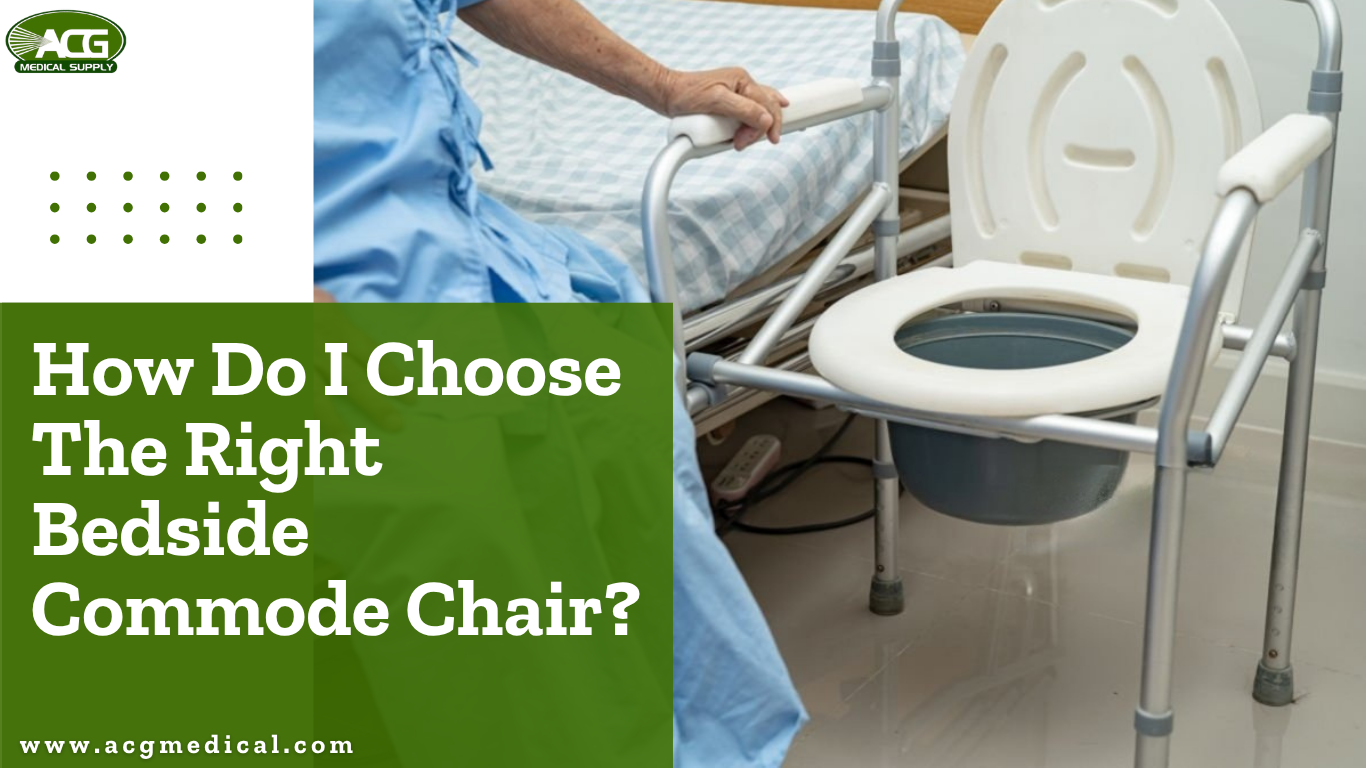
You’re Not Buying a Bedside Commode Chair. You’re Buying Back Some Normal.
That’s what this really is. Not a medical purchase. Not a product decision. It’s an attempt, sometimes a desperate one, to get life back to something that doesn’t feel like a constant reminder of what’s changed.
Maybe your dad just got home after a knee replacement, and the bathroom is down a long hall. Picture your mom getting up three times a night, and you’ve stopped sleeping properly because you’re listening for her. Or perhaps it’s you, and that’s its own kind of hard to sit with.
Whatever brought you here, the goal is the same: find something that actually works for the specific human being who needs it. Not the average senior in some manufacturer’s brochure. Not a generic recovery patient. The real person, with a real bedroom and a real situation.
That’s what this is about.
First, Forget the Word “Commode” for a Second
People get weird about this purchase because the object itself carries social, emotional, and psychological weight. It signals something. That’s real, and it doesn’t help to ignore it.
But the thing is, a bedside commode chair is just a seat with support that happens to have a bucket underneath it. That’s the whole thing. And when you find the right one, it stops being a symbol of decline and starts being just a chair someone uses. Without drama. Without a fall.
That shift happens only when the chair fits the person, not when you just grab the first option on a search results page.
Start With How the Person Moves, Not What Looks Good Online
This part gets skipped the most. They see a price and some photos and order something. Then it arrives and doesn’t work for the actual human being who has to use it.
The user’s mobility level is probably the single most important thing to sort out before anything else. Can the person stand up on their own? Do they need to swing their legs off a bed first, grab something, and stabilize themselves? Are they being transferred from a wheelchair? That last scenario is a whole different situation from someone who just gets dizzy at night and needs something close by.
If the person transfers from a wheelchair, meaning someone helps them slide from one seat to another, a drop arm bedside commode is almost non-negotiable. The arm drops down so they can slide across without a bar blocking the way. That’s the whole point of the design. Some drop-arm models, like the Nova Padded Drop Arm Commode or the Lumex Imperial Collection, have arms that lower independently on each side, and that’s important. If someone always transfers from the left, you want just that arm to drop, not both.
For someone who walks on their own but unsteadily, a standard commode with fixed arms might actually be better. More rigid. Something to actually grip and push up from.
Weight Capacity Is the One Number You Cannot Fudge
No wiggle room here. A frame rated for 300 lbs will flex under 320, wobble after that, and eventually fail. When it does, that’s not an inconvenience; that’s a fall, and everything that comes with one.
A bariatric bedside commode or heavy-duty bedside commode exists precisely for this. Nova’s heavy-duty models support 450–500 lbs. The MJM Bariatric Bedside Commode is healthcare-grade, built for real daily use, not just occasional light loads. Weight Capacity is a hard ceiling, not a ballpark estimate. When there’s any doubt, size up. The price gap between a standard and a heavy-duty model is real, but it’s nothing compared to what a structural failure costs.
Seat Height, Nobody Talks About This Until It’s Wrong
Here’s what catches people off guard constantly: they buy a commode, set it up, and then realize the person using it can’t get back up without a struggle. Getting down is easy. Standing back up, when knees are bent past 90 degrees, takes significantly more leg and core strength. For anyone post-surgery or managing joint pain, that math matters a lot.
Seat height should roughly match the back of the knee when standing. The adjustable bedside commode chair options from Nova and Lumex let you dial this in by the inch, use that feature, and actually measure before locking it in. Seat height & comfort determine whether someone uses the chair without thinking about it or dreads every single trip.
Factor in padding too, especially for longer sitting sessions or anyone with skin sensitivity. The Lumex Platinum Collection has a cushioned seat and backrest that don’t read as medical equipment. That matters more than most people expect, visually and physically.
The 3-in-1 Design Is Smarter Than It Sounds
A 3-in-1 commode chair works three ways: as a standalone bedside unit with a bucket underneath, placed directly over a toilet as a raised seat with handles, or used as a safety frame around an existing toilet, no bucket, just support. For families navigating a recovery, that actually tracks with how things unfold. Week one: full bedside setup. A month later, they can reach the bathroom but need something to hold. Six weeks after that: just the height. One chair, three phases, no second purchase.
A folding bedside commode adds portability on top of that. The Nova Folding Commode Chair folds flat in seconds, useful for travel, small rooms, or just not wanting a medical chair sitting out when company’s over. Space & portability are worth thinking through early. A rigid full-frame commode does not fit in most car trunks and doesn’t tuck away anywhere gracefully.
Wheels Help Some People. For Others, They’re the Problem.
A commode chair with wheels lets a caregiver transport someone without them needing to walk at all. Drive Medical’s Aluminum Rehab Shower and Commode Chair does this with rear-locking casters that hold once the chair is positioned. Right setup, right situation, genuinely useful.
But wheels introduce a trust issue that rigid frames don’t have. The lock has to hold under actual load, every time, without the person thinking about it. For anyone already anxious about falling, an uncertain chair creates real damage before anything physically goes wrong. The anxiety itself changes how they move.
Stability features like locking casters, wide-set frames, and rubber-tipped legs aren’t spec-sheet checkboxes. They’re what determine whether someone feels secure or nervous every time they sit down. For home setups where no caregiver is doing transfers and rolling isn’t needed, four solid legs with rubber feet are the better answer. Nothing to lock, nothing to accidentally forget.
Quick Reference: Matching the Chair to the Situation
| Commode Type | Best For | Weight Range |
| Standard 3-in-1 | Post-surgery recovery, general mobility limits | Up to 350 lbs |
| Drop Arm | Wheelchair users, lateral caregiver transfers | 300–500 lbs |
| Folding / Portable | Travel, small spaces, part-time use | Up to 350 lbs |
| Bariatric / Heavy Duty | Users over 300 lbs, wider seat needed | 450–600 lbs |
| Wheeled / Transport | Caregiver-assisted movement, shower access | Varies by model |
Conclusion
There’s a version of this where you get the right chair, set it up, and within a week, it just disappears into the room. Not a symbol. Not a reminder. Just a thing that works, quietly, every time.
Get the height right, verify the weight capacity, and think through how transfers actually happen. And if none of this feels clear yet, ACG Medical has showrooms in Plano, Rowlett, and Bedford where you can see these in person. For this purchase, that’s worth the trip.
FAQ
1. Can a bedside commode work over a regular toilet?
Yes. Remove the bucket and place it over the toilet.
2. Drop arm or fixed arm how do I decide?
Drop arm for sideways transfers. Fixed arms for stand-and-pivot use.
3. What’s the difference between a bariatric and a heavy-duty bedside Commode Chair?
Mainly, weight capacity and seat width. Heavy-duty supports up to 500 lbs, bariatric up to 600 lbs, with a wider seat. Skip standard models near 300 lbs.
4. How often should the bucket be cleaned?
After every use. Add water before use to prevent sticking. Liners help.
5. What if they refuse to use it?
It’s often about dignity. Position it as safer than nighttime walks and choose a less clinical-looking design.
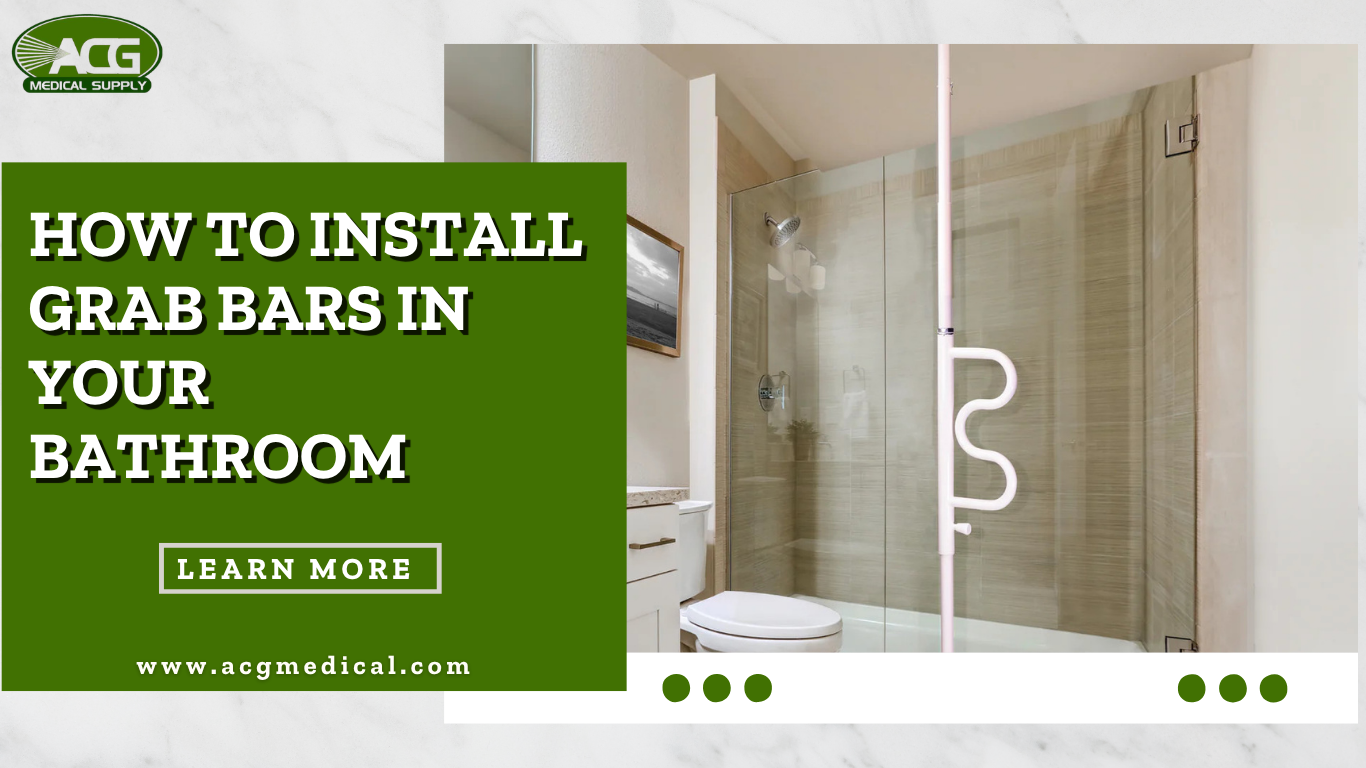
The bathroom is a private territory. People don’t like asking for help in there. Don’t like admitting the floor feels slippery some mornings, that the steam makes them dizzy, or that getting in and out of the tub has become something they dread. So they don’t say anything. They manage. They hold onto the edge of the sink or the shower curtain rod and hope for the best.
Hope isn’t a great plan when the floor is wet.
For a lot of families, the conversation about grab bars starts after something has already gone wrong. A fall. A close call. A parent who insists everything is fine, but you’ve noticed they’ve stopped showering as often. That’s the moment. Not a brochure, not a home safety checklist, just a moment where it becomes obvious that the bathroom needs to be taken seriously.
And the fix, honestly, isn’t complicated. A few bars in the right spots, mounted the right way, change everything about how safe that room feels.
Why Getting the Placement Wrong Is Worse Than Not Installing at All
A poorly placed bar can do more harm than good.
It gives a sense of safety, but when someone reaches for it, the angle feels off, or it’s just out of reach. That split second matters. This is especially true with grab bars for seniors, where there’s less room to adjust mid-movement.
Placement is all about how the body moves.
Near the toilet, it’s not just sitting or standing. It’s the push, the weight shift. A grab bar for the toilet should sit around 33–36 inches, but more importantly, it should feel natural to reach. Too far or too high, and it doesn’t help.
In the shower, things get less predictable. Wet floors. Constant movement. A shower grab bar usually works best in two spots, one vertical near the entry for stepping in, and one horizontal inside for balance.
It doesn’t have to look perfect; it just has to be where your hand expects it.
What You’ll Need Before You Start
This isn’t one of those projects you can improvise through. You need a few specific things, and skipping any one of them is how people end up with bars that pull clean out of the wall.
You’ll need a stud finder; the magnetic kind can work, but an electronic one is more reliable in bathrooms where tile makes things tricky. You’ll need the right drill bits for your wall type (ceramic tile needs a diamond-tipped or carbide bit; don’t use a standard wood bit on tile unless you enjoy cracking $40 tiles). Silicone caulk. Stainless steel screws, ideally #10 or #12 gauge at 2.5 inches or longer if you’re going into studs. And a level, because a bar that tilts even slightly feels wrong to use.
If you can’t get into a stud (say the studs aren’t where you need the bar to be), toggle bolts rated for the load can work, but this takes experience. For bathroom safety bars bearing real weight, stud mounting is always the preference.
The Step-by-Step: How to Install a Grab Bar
Once you’ve got your placement figured out and your materials together, here’s how the actual process of installing a grab bar goes –
Mark your location: Hold the bar at the position you’ve chosen and mark the screw holes with a pencil or tape. Use a level across the marks before committing. Double-check the height against the person who’ll be using it; this matters more than any guideline.
Locate the studs: Run your stud finder across the wall behind those marks. If studs align — great. If they don’t, you’ll need to reposition the bar slightly or plan for toggle anchors. Never just screw into drywall. Especially in a wet area.
Drill the pilot holes: For tile, score a small X with a utility knife first to prevent slipping. Start slow, let the drill do the work. Don’t push hard. Cracked tile is usually the result of someone rushing this part.
Mount the flanges first: Most wall-mounted grab bar designs use flanges (the round end pieces) that screw into the wall separately before the bar snaps or screws onto them. Get those secure and flush before the bar goes on.
Seal it: Apply silicone caulk around each flange before final mounting. Water getting behind the flange over time is how you end up with mold and weakened walls. Don’t skip this even if it feels excessive.
Test it: Really test it. Don’t just wiggle it. Put your actual body weight on it in multiple directions. A properly installed bar should feel like it’s part of the wall.
| Mounting Method | Security Level | Best Use Case |
| Wood Stud Screws | Maximum | Heavy leaning and full body weight support |
| Secure Mount Anchors | High | Hollow walls where studs are poorly spaced |
| Suction Cup Bars | Zero | Do not use for safety, only for light balance |
| Toggle Bolts | Low | Not recommended for bearing heavy loads |
What This Usually Costs (Roughly Speaking)
This is the part people hesitate on, but it’s not as heavy as it sounds. A basic setup with one or two grab bars can cost anywhere between $80 to $150 per bar if you’re hiring someone. That usually covers simple installs where the studs line up, and the wall cooperates. If things get a little more involved, tile walls, awkward spacing, or needing reinforcement, the bathroom grab bar installation cost can move closer to $150 to $300 per bar. Doing it yourself brings the cost down a lot. You’re mostly paying for the bar and tools if you don’t already have them. A good quality wall-mounted grab bar itself can range from $25 to $100, depending on build and finish.
Full bathroom setups with multiple bathroom safety bars or bathroom hand rails can add up, but even then, it’s still one of those upgrades that costs less than you expect once you look at it properly. And honestly, once it’s done, the cost stops being the thing you think about.
The Emotional Shift
Once the tools are put away and the dust is cleaned up, something changes in the house. The tension in the shoulders drops. There is no more hovering outside the door, listening for a slip. The bathroom becomes a place of utility again. A few pieces of well-placed metal can be the most important furniture in the whole house.
Conclusion
Most people don’t think about this until something almost happens. A slip that didn’t turn into a fall. A moment where balance felt uncertain. And then the bathroom feels different. Not unsafe. Just less forgiving than it used to be. That’s where this whole thing lands.
Installing grab bars doesn’t mean you are preparing for the worst. It just means that you are making everyday movement feel steady and reliable again. Like your space is working with you, not against you. Once they’re in the right place, you stop paying attention to them. You just move.
FAQs
1. Can I install grab bars without drilling into studs?
You can, but it’s not ideal. Studs provide real support. Anchors alone aren’t always reliable for long-term use.
2. What is the best height for grab bars?
There’s no perfect number. Around 33–36 inches is common, but it should match the user’s reach and comfort.
3. Are suction grab bars safe?
They work for temporary support, not full weight. They’re not a replacement for properly installed bars.
4. How long does installation take?
Usually under an hour per bar. More reinforcement is needed.
5. Do grab bars damage bathroom walls?
Not if installed correctly. In fact, proper installation protects the wall from stress over time.
6. Are ADA-compliant grab bars necessary for homes?
Not required, but they’re a reliable guideline for safe placement and sizing.
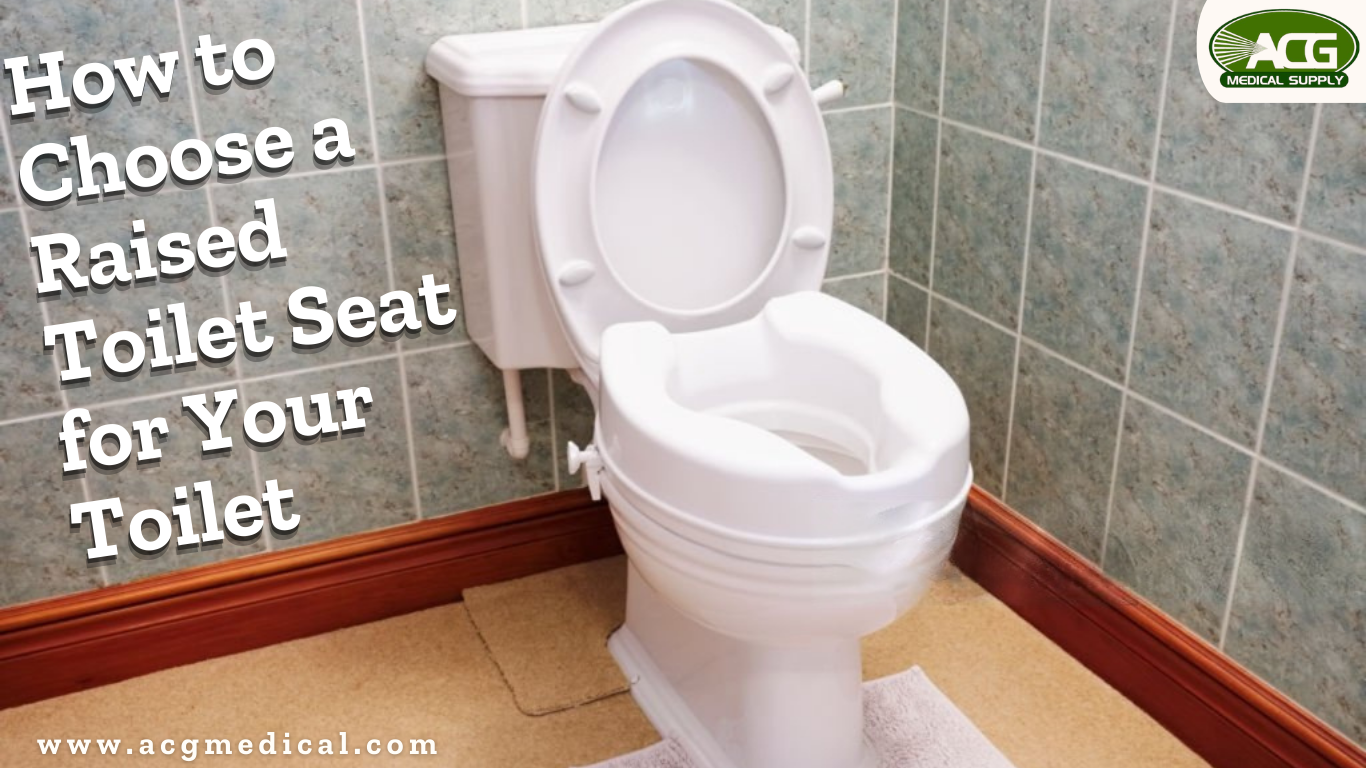
Somewhere between a hospital discharge and a frantic late-night Amazon search, a lot of people find themselves staring at a product category they never expected to care about. A raised toilet seat. No one talks about buying one at dinner. Nobody posts about it. But millions of families go through this exact moment every year, usually in a rush, usually stressed, usually without a clue what separates one option from another.
The whole process feels weirdly loaded. A parent just had a hip replacement, or a spouse tore their ACL, or grandma slipped last Tuesday, and now everything about the bathroom feels dangerous. That urgency clouds judgment. People grab whatever has the most reviews or the lowest price, and half the time it doesn’t fit, doesn’t lock, or doesn’t solve the actual problem.
This blog exists because that outcome is avoidable. Not with a buying guide. Not with a comparison spreadsheet. Just with some deep thinking about what these products do, who they’re for, and which details separate a good purchase from a regrettable one.
The kinds that exist (and what problem each one solves)
A toilet seat riser sounds like a single product, but the category splinters into several directions depending on the problem.
Standard Raised Toilet Seats sit on top of the existing bowl and add a couple of inches. That’s the entire pitch. For someone who only needs a modest height increase and has decent balance, standard gets the job done without overcomplicating anything.
Portable Raised Toilet Seats are lighter and designed to travel. Think: visiting the grandkids for a week, staying at a hotel, splitting time between two households. Sturdiness takes a backseat to packability. Fair trade for people who’d otherwise avoid trips because they can’t deal with an unfamiliar bathroom.
Locking Raised Toilet Seats clamp onto the porcelain so the seat stays dead still. This matters more than it sounds like it should. Half an inch of lateral movement during a sit-down is enough to spike adrenaline in someone with balance issues. Locks eliminate that variable.
A Raised Toilet Seat with handles and armrests bolted to either side turns the toilet into something a person can push off of. Post-surgical patients, people with weakened legs, and anyone who’s ever been stuck on a low seat and had to call for help. The handles rewrite that scenario.
Hinged Raised Toilet Seats swing up when not in use. Perfect for a shared bathroom. One person needs the riser; the rest of the household doesn’t. Nobody wants to remove and reinstall equipment twice a day. Hinged models skip that hassle.
Padded Raised Toilet Seats add cushioning to the sitting surface. For people managing pressure sores, thinning skin, or conditions that mean longer time spent seated, the foam layer prevents secondary discomfort from compounding the original issue.
Bariatric toilet seats carry higher weight ratings, wider frames, and reinforced construction throughout. Standard models cap around 250–300 pounds. A lot of adults exceed that. Bariatric designs exist because standard engineering has limits, and pretending those limits don’t apply to real bodies helps nobody.
Then there’s the raised toilet chair, which is a freestanding frame, almost like a separate piece of furniture, that positions over or around the toilet. When the toilet itself can’t support a clamp-on attachment or the bathroom layout creates awkward geometry, the chair sidesteps the issue.
What to actually look at before spending money
Seat Height & Compatibility catches more people off guard than any other factor. Toilets are either round or elongated, two different shapes, and a raised seat designed for one won’t clamp right onto the other. Round bowls measure about 16.5 inches front to back. Elongated, closer to 18.5.
Beyond shape, measure the current seat height from floor to rim. Standard toilets stand around 15 inches; comfort-height models sit near 17–19. Most risers add between 2 and 6 inches. The sweet spot? A total height that lets the person sit with feet flat and knees bent at roughly 90 degrees. Too low is the obvious problem. But too high throws off balance in a different way, and people forget that.
Weight Capacity shouldn’t be estimated or assumed. Every model lists a maximum. Exceed it, and the failure mode isn’t “minor inconvenience.” It’s a collapse. Standard seats handle 250–300 pounds; bariatric goes up to 500 or 600. Leave a margin. Always.
Features and Benefits: handles, padding, locks, hinges. These aren’t upgrades in the way a heated steering wheel is an upgrade. Each one answers a specific physical limitation. Someone who struggles to stand needs handles. Skin sensitivity needs padding. Someone who shares a bathroom needs a hinge. Match the feature to the human situation, not to a price tier.
Material and Durability are important over the long haul. Molded plastic is the standard construction, but thickness and quality vary wildly from brand to brand. Thin plastic cracks under daily use within months. Heavier-gauge plastic lasts for years. Antimicrobial coatings, sometimes dismissed as marketing fluff, are actually useful on a product that lives in a bathroom permanently.
Hygiene and maintenance get underestimated until about week two of ownership. This thing needs constant cleaning. Smooth, non-porous surfaces with minimal seams wipe down in seconds. Textured plastic or foam with fabric covers? Those trap moisture, harbor bacteria, and develop odor. A product that’s hard to sanitize creates a new problem where there wasn’t one before.
Seat Installation spans a wide range. Some models drop on and tighten by hand no tools, no fuss, done in two minutes. Others bolt into the existing toilet hardware. A few require the original seat to be removed entirely. For someone living alone, or for an elderly person who can’t get on the floor with a wrench, tool-free installation should be a dealbreaker. The best product in the world is useless if it never gets out of the box.
Quick-reference comparison
A side-by-side snapshot of how the main types stack up across the factors worth weighing.
| Type | Height Added | Weight Limit | Handles | Portable | Best For |
| Standard | 2–4 in | 250–300 lbs | No | No | Basic height boost |
| Portable | 2–4 in | 200–250 lbs | Rarely | Yes | Travel & visits |
| Locking | 3–5 in | 250–350 lbs | Sometimes | No | Balance concerns |
| With Handles | 3–6 in | 250–350 lbs | Yes | No | Sit-to-stand aid |
| Hinged | 3–4 in | 250–300 lbs | No | No | Shared bathrooms |
| Padded | 2–4 in | 250–300 lbs | Sometimes | No | Pressure relief |
| Bariatric | 3–6 in | 400–600 lbs | Often | No | Higher weight needs |
The stuff people don’t think about until it’s too late
Wobbly toilets. Check the base before adding anything on top. A raised seat amplifies whatever instability already exists, and on tile or vinyl flooring, that’s a recipe for disaster.
Dark bathrooms at 3 a.m. White plastic on white porcelain is nearly invisible without light. A five-dollar LED nightlight near the base of the toilet fixes this. It’s a tiny investment, but it brings enormous peace of mind for nighttime trips.
And something that doesn’t show up on any spec sheet: the emotional weight of the purchase itself. People who’ve been dreading every bathroom visit, afraid of getting stuck, afraid of falling, afraid of needing to yell for help, often experience a shift within the first couple of days of having the right seat installed. They start drinking water again because the bathroom trip doesn’t feel like a risk. They sleep better because the 2 a.m. wake-up isn’t loaded with anxiety. Those ripple effects are the actual payoff of getting this decision right.
Conclusion
The best raised toilet seat is whichever one removes the fear. Measure the toilet. Know the weight needs. Think seriously about handles, locks, or padding based on the specific struggle at hand. Read the reviews written by people who’ve owned the product for months, not hours. The long-term reviews surface things that first impressions never do.
And if the whole thing still feels like too much, call an occupational therapist. Most people don’t think to do that, but OTs recommend these products daily and understand which features matter for which recovery scenarios better than any product listing ever could.
FAQs
1. How much height do I actually need?
Usually, 2 to 4 inches works for most people. But it depends on your comfort when standing up.
2. Are handles necessary?
Not always. But if balance is a concern, they make a big difference.
3. Can I install it myself?
Yes. Most options are designed for quick, tool-free setup.
4. Will it fit any toilet?
Not all. Check if your toilet is round or elongated before buying.
5. Are padded seats better?
They’re more comfortable, especially for longer use. But they may need more cleaning care.
6. What’s the difference between a riser and a raised toilet chair?
A toilet seat riser sits on your toilet. A raised toilet chair stands independently.
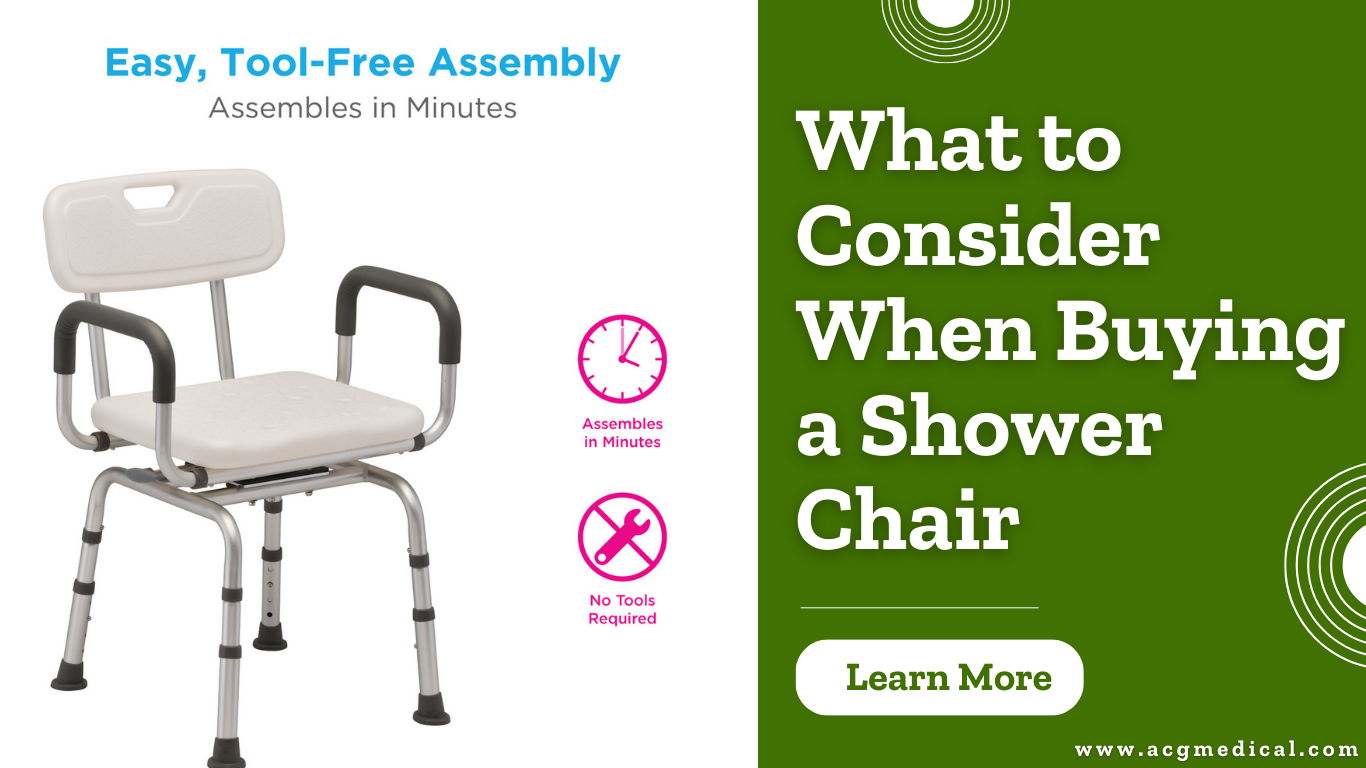
It usually starts pretty quietly. Someone slips. Or almost slips. Or they start taking shorter showers because standing the whole time wears them out. Maybe it’s a parent. Maybe it’s you. Either way, now you’re Googling things you never thought you’d Google, and stumbling across a whole world of products you didn’t know existed.
That’s how most people end up looking at shower chairs. Not because they were planning for it. Because something happened, or almost happened, and now you’re trying to make the bathroom a little safer before things get worse.
Fair enough. Let’s walk through what’s actually important.
Start Here: What’s Actually Going On?
Not to get too deep about it, but you need to be honest about the reason before you start shopping. Because “I need a shower chair” covers a pretty huge range of situations, and the right chair for one person is completely wrong for another.
Are we talking about post-surgery recovery, where standing for five minutes feels like running a mile? Balance issues where a wet floor is genuinely scary? Pure exhaustion, maybe from an illness, chronic fatigue, or just being in your seventies and not bouncing back the way you used to? Or is it caregiver-related, with someone else helping with bathing and equipment to make that easier?
Different answers. Different chairs. Worth figuring out before spending money.
Okay — So What Are All the Different Types?
There are more types of shower chairs than most people realize. Here’s the honest version of each one:
The Shower Bench
A shower bench is wider than a regular chair; sometimes it spans a corner, sometimes it’s a simple, long seat that sits flat in the shower. No frills. Really good for people who want a place to sit without feeling like they’re in a medical facility. A lot of people recovering from hip or knee surgery go straight for this one. Some benches have backs; a lot don’t. That distinction is more important than people think. Let’s look at that in a second.
Shower Chair With Back vs. Without
A shower chair with a back sounds like a small upgrade, but if you’re dealing with any real fatigue or balance wobble, that backrest changes everything. Washing your hair when you’re exhausted and dizzy is harder than it sounds. Having something to lean against is not a luxury. It’s practical.
Meanwhile, a shower chair without a back works perfectly well for someone who mainly wants to sit down and doesn’t need that extra support. Lighter. Easier to store. Fine for what it is.
The Folding Shower Chair
A folding shower chair folds up flat so you can tuck it away when other people use the shower. That’s basically the whole value proposition. If you share a bathroom, or the person who needs it uses it only sometimes, it’s worth a shot. The one trade-off is that folding designs are a little less rigid than fixed ones. Totally fine for most situations, just worth knowing if stability is a top concern.
Shower Stool
Honestly, a shower stool is kind of the stripped-down version of all of this. No back. No arms. Just a seat on four legs. Usually cheap, sometimes under twenty bucks. It’s fine for someone who wants a perch for a few minutes but doesn’t have major mobility concerns. If any real shakiness or weakness is happening, a stool is probably not the right answer.
Rolling Shower Chair / Shower Chair with Wheels
This is where it gets more serious. A rolling shower chair, also called a shower chair with wheels, is less of a chair and more of equipment. You roll it into the shower. Some models roll over the toilet too. They’re designed for people who have significant mobility limitations and often need a caregiver’s help transferring in and out. Big, heavier, more involved. But if that’s what the situation calls for, nothing else really works as well.
Commode Chair
A commode chair is dual-purpose; it works in the shower and over the toilet. Has an opening in the seat. Not exactly a conversation piece, but genuinely useful when getting on and off the toilet is its own challenge. Home health aides and nurses often recommend them in post-hospital situations. Not glamorous. But extremely practical.
Specialty Shower Chairs
Then there’s everything else. Specialty shower chairs are a catch-all category for larger body frames, pediatric versions for kids with disabilities, reclining shower chairs, and full shower gurneys for people who can’t sit upright. If none of the standard options seem to fit, this is the category to dig into. They cost more. They’re also built for things regular chairs can’t handle.
A Quick Look at Common Shower Chair Styles
| Type of Chair | What It’s Usually Best For | Things Buyers Notice |
| Shower Stool | Small showers or tight spaces | Compact and easy to move |
| Shower Bench | Larger showers need a side support | More sitting space |
| Shower Chair With Back | Larger showers needing a side support | Feels stable and secure |
| Shower Chair Without Back | Users needing freedom of movement | Easier turning and reaching |
| Folding Shower Chair | Shared bathrooms | Saves space |
| Rolling Shower Chair | Limited mobility transfers | Reduces standing movement |
| Commode Chair | Multi-use bathroom support | Works beyond the shower |
Weight Capacity — Seriously, Don’t Ignore This
Every chair has a weight capacity stamped somewhere on it. Usually, somewhere between 250 and 500 pounds for standard models. You need to buy one that’s rated for more than the person actually weighs, not just barely enough. Ten percent over the limit isn’t a safety margin. It’s a liability.
Bariatric chairs go higher, up to 600 or 700 pounds. They also tend to have wider seats, which matters for comfort even before weight becomes a factor. If this is relevant to your situation, skip the standard section entirely and start in the bariatric aisle. There’s no reason to try to make a regular chair work when the right option exists.
The Features That Are Actually Important
“Shower chair features” sounds like marketing talk. But a few things actually make a difference in daily use:
- Non-slip feet. This shouldn’t even need to be said, but yes, check for rubber tips on the legs. Wet tile is unforgiving. Some cheap chairs skip proper rubber grips. Don’t buy one that does.
- Height adjustability. Most chairs have it, but verify. Too low and it’s hard to stand back up. Too high and your feet dangle awkwardly. You want the person’s feet flat on the floor with knees at a comfortable angle.
- Armrests. Optional for some people. Non-negotiable for others. If standing up from a seated position is already a challenge, armrests make it possible without help.
- Drainage holes. A solid-bottom seat traps water and becomes a breeding ground for mildew. Look for a seat with cutouts or holes so water runs through.
- Frame material. Aluminum outlasts steel in a wet environment. Cheap steel rusts. If you’re planning to use this for more than six months, you must pay attention to this as well.
Beyond that, think about your specific bathroom. Walk-in shower or tub? How wide is the floor space? Is there a lip to step over? These details trip people up after purchase. Better to measure before buying than to return it after.
The Part of This That Nobody Brings Up
Here’s the thing. Buying a shower chair (especially for yourself) can feel like more than just a purchase. It can feel like giving something up. Like admitting that the bathroom used to be simple and now it isn’t. That’s a weird grief, and it’s real.
And if you’re buying it for a parent? That hits different, too. There’s something about seeing your mom or dad needing a seat in the shower that isn’t in a place regular shopping doesn’t.
But here’s what’s also true: bathroom falls are one of the most common causes of serious injury in older adults. Broken hips. Head injuries. Long recoveries. And the thing that could have prevented much of it was a $40 piece of equipment. Learn more about the growing importance of shower chairs for senior care and bathroom safety.
Before You Buy — Run Through This
- Who is using it, and what’s the main issue? Fatigue, balance, and transfer help it change what type makes sense.
- What’s their actual weight, and does the chair’s capacity clear it comfortably? Not just barely.
- What kind of shower? Walk-in, tub, tub-shower combo, they all have differentspace constraints.
- Do other people share the bathroom? A folding shower chair might be worth it just for the storage.
- Is a caregiver involved? Rolling models and commode chairs are designed for assisted bathing in ways regular chairs aren’t.
- What’s the budget, and have you checked insurance? Don’t leave money on the table.
Answer those honestly, and you’ll have a pretty short list left.
Conclusion
Don’t let the number of options freeze you. It happens. People spend two weeks comparing chairs and end up buying nothing because they’re afraid of making the wrong choice. But there’s no perfect chair. There’s just the one that fits the situation.
Read the weight rating. Check the return policy. Look at the floor space in your bathroom one more time. Then buy the thing. If it wobbles or feels wrong when it arrives, send it back. That’s what return windows are for. You’ve got this.
FAQs
- How do I choose the right weight capacity?
Pick a chair rated above the user’s body weight so it stays stable and durable. - Are commode chairs safe for showers?
Yes. Many commode chairs are made with water-resistant materials and drainage seats. - What are Specialty Shower Chairs?
They are chairs designed for specific needs, such as extra support, reclining seats, or caregiver assistance. - What affects Shower Chair Cost and types?
Price usually depends on materials, strength, adjustability, and mobility features. - Will Medicare pay for a shower chair?
Usually not. Standard shower chairs are rarely fully covered, though some plans may offer partial help.
Some furniture you buy because it looks good in the room.
Some you buy because you need it.
That’s usually where this conversation starts.
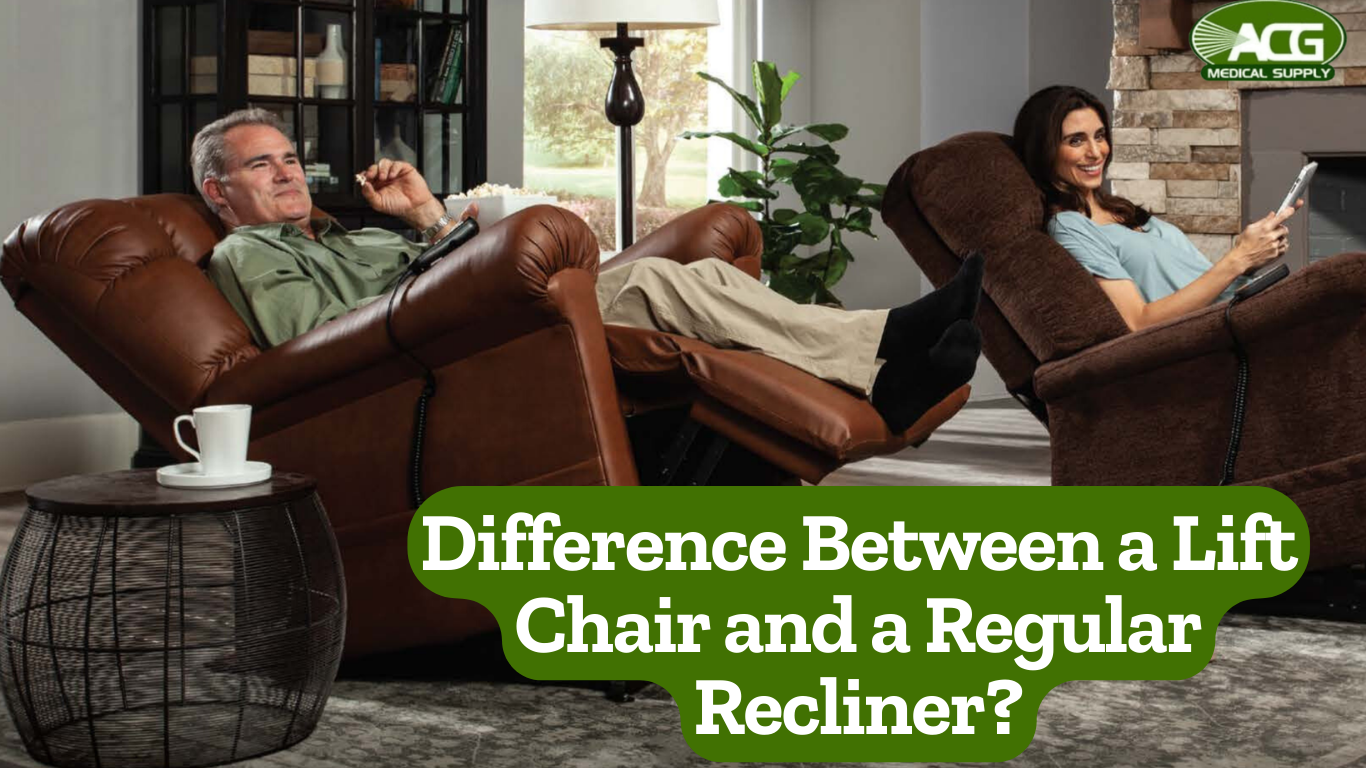
A regular recliner is something most of us grew up with. It’s the chair Dad fell asleep in. The one that snapped shut too fast when you were a kid. It lives in dens, basements, and TV rooms. It leans back. You put your feet up. Done.
A medical lift chair enters the room differently. It doesn’t just lean back. It rises, helps you stand. And that changes the mood around it.
But if you’re shopping right now, you’re probably not thinking about mood. You’re thinking about daily life. Getting in and out of a chair without bracing your knees. Not asking for help every time you stand up. Keeping the house calm. That’s the real fork in the road.
The regular recliner
A regular recliner is familiar. You’ve seen it your whole life. Maybe your dad had one. Maybe you do. You sit. You pull a lever or press a button. The back tilts. The footrest pops up. That’s it. Some are manual. Some are electric recliners. and even some are big and plush. There’s even the wall hugger recliner, built for small rooms where space is tight and you don’t want furniture sticking out like a sore thumb. It’s all about relaxation. TV. Naps. Game night. That heavy sigh when you finally sit down. Just like Joey and Chandler from your favorite sitcom… Friends. You’re in control of the movement. You lean back because you want to. You come forward because you’re ready. And getting up? That’s on you. For most people, that’s fine. It’s just part of sitting.
When standing up stops being simple
Here’s where the conversation shifts.
Sometimes knees get cranky. Sometimes, hips don’t cooperate, and balance isn’t what it used to be. Standing up becomes a little negotiation between you and gravity. That’s when people start looking at something different. Something built with help in mind.
The lift chair: it doesn’t just recline
A lift chair recliner looks almost like a regular recliner at first glance. But inside, it’s wired differently. Instead of only leaning back, it can tilt forward and gently raise the entire seat. Almost like the chair is helping you stand. You press a button on the remote. The chair moves. Slow. Steady. It lifts you to your feet. That’s the moment it feels different. Not fancy. Not flashy. Just supportive.
Some people call them Power Lift Chairs. Others search for Medical Lift Chairs. If you’re shopping for a parent or grandparent, you’ve probably typed in lift chair for the elderly more than once. This isn’t some indulgent upgrade. It’s just a way to get through the day without your space looking like a care facility.
What’s under the hood?
Most people think the difference is just a motor. It’s not. If you get one of those standard electric recliners, the motor is there to raise and lower the footrest. Maybe it tilts the head. It’s a luxury. But the frame? It’s usually just wood and some staples. If you tried to put a lift mechanism on a standard recliner, the whole thing would probably snap like a twig.
Power Lift Chairs are built on a steel lifting frame. They have to be. They are carrying your entire weight as they move through the air. You’re looking for safety and stability because, frankly, being suspended four inches off the ground while the chair tilts forward is a vulnerable spot to be in. You want to know that the thing isn’t going to shimmy or shake.
Then you’ve got the specific “positions.” You’ll hear people talk about a 3-position lift chair. That sounds like marketing fluff, but it’s actually about how the back and the feet move together.
- Position 1: Closed. Just a chair.
- Position 2: The “TV recline.” Feet up, back slightly tilted.
- Position 3: Full nap mode.
The real high-end stuff, like Golden Technology Lift Chairs, often goes even further. They have “Infinite Position” setups where the feet and back move totally independently. You can keep your back straight, but put your feet above your heart. Try doing that in a basement recliner, you’ll just end up with a sore neck.
Quick side-by-side view
| Feature | Regular Recliner | Lift Chair |
| Primary Purpose | Relaxation | Relaxation + Assisted Standing |
| Standing Assistance | None | Motorized lift support |
| Power Use | Optional | Required for lift function |
| Frame Strength | Standard support | Required for the lift function |
| Ideal Buyer | General household use | Limited mobility or joint strain |
| Movement Control | Manual or electric recline | Controlled lift and recline |
The safety factor
Falling is scary. It’s the thing nobody wants to talk about at Thanksgiving, but everyone is thinking about it. Safety and stability aren’t just buzzwords when you’re seventy. They’re the difference between staying at home and moving into a facility.
Regular recliners can be tippy. If you lean too far over the armrest to grab a remote, the whole thing might shift. Power Chair Recliners have a much wider, heavier footprint. They’re built to stay put. If the power goes out, most high-quality models have a battery backup. You won’t get stuck in a reclined position in the middle of a blackout. That peace of mind is worth more than any fancy fabric choice.
It’s not just for the “old”
While we often call it a medical lift chair for elderly folks, that’s a bit of a stereotype. People recovering from knee replacements or back surgery use these all the time. If you can’t use your core muscles to sit up, you need a machine to do it for you.
These chairs come with health and comfort features that go beyond just soft foam. Some have heat and massage. Others have “Zero Gravity” settings that take the pressure off your lower back. It’s about medical recognition—the idea that a chair is actually a piece of health equipment, not just a place to watch the game.
The buying mindset
When you’re looking at lift chair features, don’t get distracted by the bells and whistles. Think about the daily “sticky” moments.
- Can the person reach the remote easily?
- Is the fabric easy to clean if a coffee spills?
- Does it feel sturdy when it’s at its highest point?
Buying one of these is an investment in staying put. Staying in the home you love. It’s a bit of an ego hit at first, maybe. Nobody likes admitting they need a “medical” chair. But once you see how much easier life is when you aren’t dreading the walk to the kitchen, that ego stuff fades away pretty fast.
Conclusion
At first glance, a recliner and a lift chair may look similar. They both offer softness. They both recline. But function changes everything.
A regular recliner leans back for comfort.
A lift chair recliner leans forward to support independence.
That added movement may seem small. In real life, it isn’t.
For those navigating mobility challenges, choosing the right chair can quietly reshape daily routines. And when safety, confidence, and comfort come together in one place, it stops being just furniture. It becomes support.
ACG Medical Supply continues to provide carefully selected power lift chairs, trusted brands like Pride Lift Chairs and Golden Technology Lift Chairs, and models designed with thoughtful health and comfort features. Because comfort is good. But comfort with stability, dignity, and dependable design? That’s better.
FAQs
- Is a lift chair the same as a power recliner?
No. While both may be motorised, only a lift chair includes the forward-tilt lifting mechanism to assist with standing. - Can medical lift chairs fully recline for naps?
Yes. Many 3-position lift chair models allow comfortable reclining, suitable for resting. - Are lift chairs safe for daily use?
Yes. When properly used, Power Lift Chairs are designed for daily operation with built-in stability features. - Do lift chairs require special installation?
No. They plug into a standard electrical outlet. - Are they only for elderly users?
Not exclusively. While commonly marketed as a lift chair for the elderly, they benefit anyone with limited mobility or recovery needs.
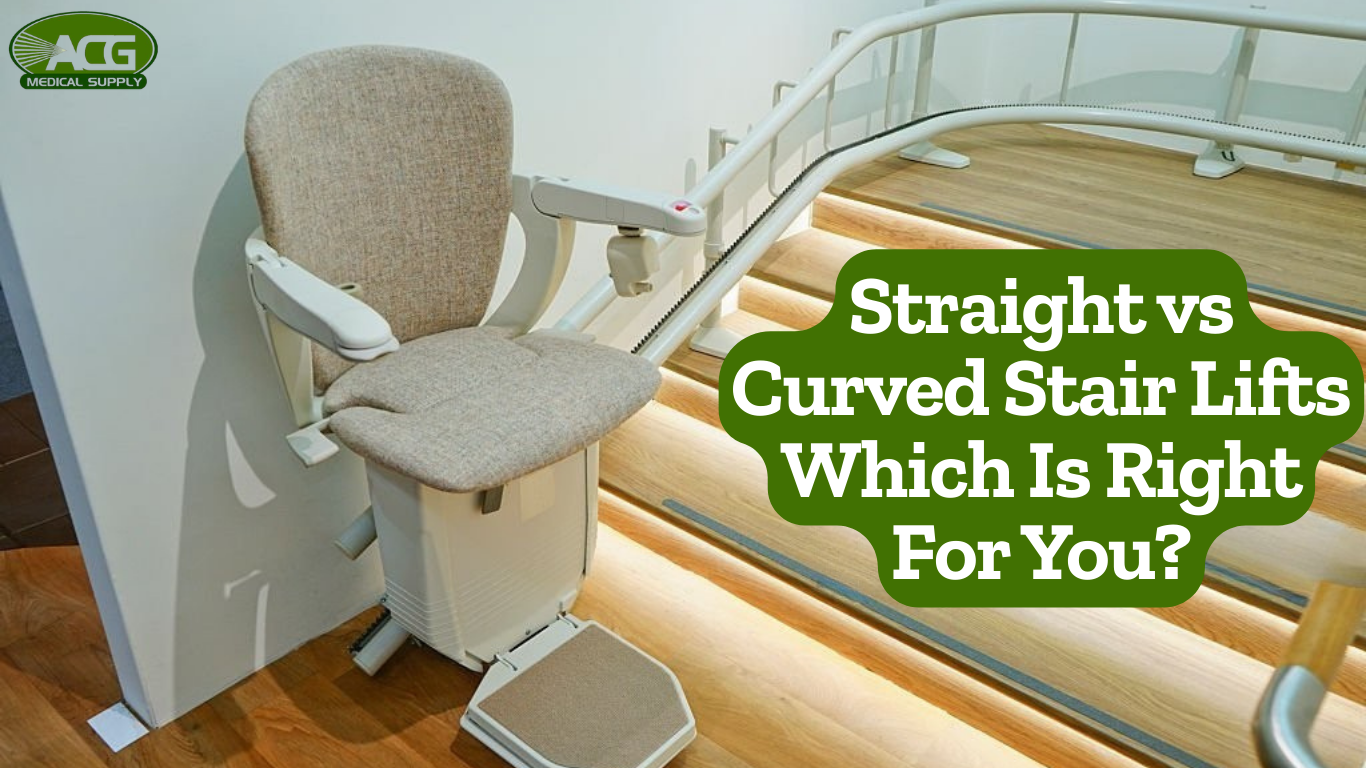
A house is really just a collection of spaces where life happens. The kitchen for morning coffee. The upstairs bedroom is for a quiet night’s sleep. But eventually, the wooden steps connecting those spaces can start to feel like an obstacle course. That sounds obvious. But it really isn’t until you watch someone you care about hesitate at the bottom step.
When mobility shifts, the home shouldn’t suddenly become a restricted zone. The stairs should not dictate where anyone can go in their own house. Adding a reliable stair lift for elderly family members, or anyone dealing with a physical change, completely removes that daily anxiety. They get the whole house back.
Choosing the right stair chair lift means taking a hard look at the actual layout of the home. Figuring out whether a straight track or a curved track is needed makes all the difference in comfort.
Straight stair lifts: simple, clean, and practical
If a staircase goes straight up without any turns, corners, or flat landings halfway up, a straight unit does the job beautifully. It is a very simple concept. The chair runs along a single, continuous metal track.
This option is incredibly popular simply because it works with minimal fuss. When looking at standard straight stair lifts features, expect comfortably padded seats, secure seatbelts, and simple joystick controls that require barely any hand strength to operate. Most models even fold up tight against the wall when nobody is riding them. This means family members and guests can still walk up and down the steps easily without bumping into machinery.
Then there is the financial side of things. Money matters, even more so now. The straight stair lift cost is generally much lower than other, more complex options. This happens because the track does not need to be custom-bent or welded in a factory. Manufacturers build these tracks to standard lengths. An installer simply cuts the rail down to match the exact length of the home’s staircase. At the end of the day, it is a very straightforward, budget-friendly fix.
Curved stair lifts: built for character-filled homes
On the flip side, some homes feature staircases with tight twists, sharp corners, or flat landings in the middle. That is exactly where curved models swoop in. You cannot force a straight piece of metal around a corner.
Because every single house is built a little differently, a curved lift requires highly exact measurements. A technician has to measure the stairs down to the millimeter. The rail shape is then completely customized to match the unique angles of the specific walls and steps. This deep level of customization directly impacts the price tag. The curved stair lift’s cost is noticeably higher, simply because the track is essentially built from scratch for that one exact space. Some people might disagree with the price jump, but custom metalwork just takes time and precision.
However, the curved stair lift’s features are truly fantastic. They glide effortlessly around sharp corners without jarring the rider. Plus, they offer something really special: a custom top landing finish. This feature means the chair can travel slightly past the very top step and safely turn onto the actual floor of the hallway. The rider can get off the chair on flat, safe ground instead of hovering near the edge of the stairs. That little extra turn at the top is completely worth the investment for the added stability.
Straight vs curved stairlifts: a side-by-side view
| Feature | Straight Stair Lifts | Curved Stair Lifts |
| Staircase type | Single straight run | Bends, curves, landings |
| Rail design | Standard straight rail | Fully custom rail shape |
| Installation time | Short | Longer |
| Price range | Lower | Higher |
| Customisation | Higher | Extensive |
| Best for | Modern or simple layouts | Older or complex homes |
Upgrading the home without changing it
People rarely think of this equipment as a normal home upgrade. But it really is a brilliant addition. It adds a thick layer of comfort to the daily routine. Modern home stair lifts are not cold, hospital-like machines. They blend nicely into the hallway.
Here is exactly why adding one changes everything:
- Keeps spaces livable: Nobody has to turn the downstairs dining room into a makeshift bedroom.
- Helps with heavy chores: Sending a heavy basket of laundry up on the seat is infinitely easier than carrying it up step by step.
- Restores peace of mind: Families sleep better knowing a loved one will not risk a fall in the middle of the night.
These stair chair lifts bring back that simple sense of independence. They are a ticket to everyday freedom, allowing individuals to navigate their space safely without constantly asking for a hand.
Getting the right equipment
When it is time to choose, getting the hardware from a dependable place is absolutely crucial. ACG Medical Supply offers a really solid, trustworthy lineup for anyone looking to upgrade their home mobility. We do not just sell generic boxes. We focus heavily on top- tier models like Harmar stair lifts, which are known in the industry for being tough, quiet, and reliable.
Our inventory includes the highly respected Pinnacle Stair Lifts. These models are specifically designed for maximum comfort and feature a surprisingly narrow profile, so they do not eat up all the staircase space.
Also, setting this up is not a weekend project for amateurs. Proper stair lift installation is vital. If the track is slightly off, the ride gets bumpy. ACG Medical Supply ensures people get the exact right fit, whether they need basic straight stair lifts or heavily customized mobility stair lifts designed for complex architecture.
Conclusion
A staircase shouldn’t decide how much of a home someone gets to use. It shouldn’t redraw daily boundaries or turn familiar rooms into “too much effort.” But that’s what happens, slowly, when movement becomes uncertain.
Straight and curved stair lifts solve the same problem in different ways. One works because the stairs are simple. The other works because the home isn’t. Neither is it about convenience alone. They’re about keeping habits intact. Sleeping where you always slept.
Moving when you want to move. Not planning every step. When a stair chair lift fits the house properly, it stops feeling like equipment. It becomes part of the background. And that’s usually the point.
FAQs
- Are stair lifts hard to use?
No. Most stair chair lifts use very simple controls that feel natural within a day or two. - Do stair lifts work during power cuts?
Yes. Battery-powered systems continue running even when electricity is out. - Are curved stair lifts slower?
They move at a steady pace, prioritising balance and smooth turns. - Will a stair lift damage the stairs?
Most systems attach to the steps, not the wall, and can be removed later. - Can stair lifts fit narrow staircases?
Yes. Many mobility stair lifts are designed for tight spaces.

For a lot of people dealing with mobility issues, picking a travel mobility scooter happens right around the moment they realise they don’t want to keep missing out. It goes something like this: the family is planning a trip to a massive theme park, or maybe a dream cruise through the Mediterranean is finally on the books, but then that little voice in your head starts whispering: “Can I actually walk that far?”
At ACG Medical Supply, we believe that voice shouldn’t get the final say. A mobility scooter for travel is essentially a passport to those experiences you thought were slipping away. But picking the right one? Well, that requires a bit more thought than just clicking “buy” on the first shiny red model you see. It’s about matching a machine to your specific kind of wanderlust.
Why Travel Scooters Are Built Differently
You might see a heavy-duty electric mobility scooter and think, “That looks comfy, I’ll take that!” But wait. If you try to take a standard-sized power scooter on a plane, you’re going to have a very stressful afternoon at the check-in counter.
Mobility scooters designed specifically for travel are a different breed. They prioritize “portability” over raw power. While a home-based scooter might have huge, plush tires and a battery the size of a toaster, a lightweight mobility scooter focuses on slim frames and clever folding tricks. They are the difference between having a device that lives in your garage and one that lives in your car trunk.
Portability: The Great “Fold vs. Snap” Debate
When you look for the best travel scooter, you’ll run into two main philosophies: the foldable mobility scooter and the disassembly mobility scooters. Both are fantastic, but they solve different problems.
The Magic of the Foldable Mobility Scooter
A foldable mobility scooter is for the person who wants zero fuss. You pull a lever, or perhaps push a button on a remote, and the whole thing collapses like a lawn chair.
- The Pros: These are amazing for air travel. When you get to the gate, you fold it in five seconds and walk away.
- The Reality Check: Because it’s one solid piece, you have to be able to lift the entire weight (usually 45 to 60 lbs) into your trunk. If you’re traveling solo and don’t have a lot of upper-body strength, this might be a bit of a workout.
The Logic of Disassembly Mobility Scooters
Often called “boot scooters,” these models are designed to fit neatly into a car boot. The seat lifts off, the battery comes out, and the base usually splits into two sections. It’s a simple setup that makes transport manageable.
What makes them practical is the weight split. Instead of lifting one solid, awkward machine, you’re dealing with a few lighter sections. The heaviest piece often sits somewhere around 25 to 30 pounds. For many people, that feels manageable. Not effortless, but manageable.
There is a rhythm to it, though. Arrive somewhere, open the boot, put the pieces backtogether. It doesn’t take long. A minute or two once you’re used to it. Still, it’s part of the routine. Some don’t mind that at all. Others prefer something ready in seconds.
Choosing Your Base: 3 Wheels or 4?
This is where the terrain of your destination comes into play. It’s not just about aesthetics; it’s about how the scooter interacts with the ground.
A 3-wheel mobility scooter is the king of the indoors. If your travel involves cruise ship hallways (which are notoriously narrow), museum exhibits, or crowded shopping malls, three wheels are your best friend. They have a tiny turning radius; you can basically spin in a circle on a dime. Plus, they usually offer a bit more legroom for taller travelers because you can stretch your feet out past the single front wheel.
However, a 4-wheel mobility scooter is what you want if you’re heading to a park or a city with “character” (read: bumpy sidewalks). The four-point base makes it much harder to tip. If you’re navigating grass, gravel, or those slightly sloped curb cuts, the four-wheel design feels more like driving a sturdy little car. It’s all about that feeling of being “planted” in the earth.
“Whether you need the tight turn of a 3-wheel model for a cruise or the stability of a 4-wheel for a park, it helps to see a side-by-side breakdown. Check out our analysis of 3-wheel vs 4-wheel mobility scooters to finalize your decision.”
Weight, Range, and the “Battery Trap”
Weight is a tricky thing. People always want the lightest power scooters, but remember: weight usually equals stability. At ACG Medical Supply, we often tell people to look at the heaviest individual part rather than the total weight.
Battery range is where things get interesting.
A Travel Scooter claiming 20 miles per charge looks impressive on paper. Big number.Feels reassuring. But large batteries add bulk. And bulk adds weight. If the plan is to use the scooter for short daily outings, maybe five or six miles around a resort or city centre, that oversized battery becomes something you’re carrying around for no real reason.
Most best travel scooter models sit comfortably in the 8 to 12 mile range. For a typical sightseeing day, that’s usually plenty. Charge overnight. Start fresh in the morning. Simple. Bigger numbers aren’t automatically better. Sometimes they just mean heavier equipment.
Flying High: The Airline-Approved Label
Taking an electric mobility scooter on a plane feels like it should be a nightmare, but it’s actually quite standard. The secret is the airline-approved mobility scooter battery. As of 2026, most airlines are very strict about Lithium-ion batteries. Generally, a single battery needs to be under 300 Watt-hours (Wh) to be allowed on board.
- Pro Tip: Don’t just take the salesperson’s word for it. Look for the sticker on the battery itself. If it says “TSA Approved” or has the Watt-hour rating clearly printed, you’re golden.
- Another Pro Tip: When you get to the airport, tell the gate agent you have a “Personal Mobility Aid.” They are trained to handle these every day. They’ll give you a tag, and you can usually ride it right to the door of the plane.
Comfort: Because You’re Sitting There for Hours
It’s easy to get obsessed with how a scooter folds, but don’t forget you have to sit on it! Mobility scooters for seniors often have different seating options. If you’re spending all day at a zoo, you want a seat with some actual padding.
Look for “stadium-style” seats. Also, check the armrests. Can they flip up? If you want to pull up to a table at a cafe for a croissant without getting out of your scooter, flip-up armrests are non-negotiable.
A Quick Cheat Sheet for Buyers
| Feature | 3 Wheel Mobility Scooter | 4 Wheel Mobility Scooter |
| Best Terrain | Indoors, smooth floors | Grass, gravel, uneven paths |
| Turning Radius | Very tight (great for elevators) | Wider (needs more room) |
| Legroom | Excellent for tall users | Standard |
| Stability | Moderate | Superior |
| Best For | Cruises, shopping, museums | Theme parks, city tours |
Why Trust ACG Medical Supply?
We aren’t just a website with a checkout button. ACG Medical Supply is a team of people who understand that a mobility scooter for travel is a life-changing purchase. We’ve seen the joy on a customer’s face when they realize they can finally go to their granddaughter’s graduation without worrying about the walk from the parking lot.
We curate the best mobility scooters from brands that actually stand behind their warranties. Whether you need a foldable mobility scooter for your flight to London or a rugged 4-wheel mobility scooter for a road trip to the mountains, we’ve probably tested it ourselves.
Small Details That Save the Day
Some of the most important features aren’t the ones printed in bold on the spec sheet. Ground clearance, for instance. If a scooter rides too low, even those small raised bits at the end of a driveway can stop it dead. It’s not dramatic. It’s just… annoying. The kind of thing that makes an otherwise good day feel complicated.
Then there’s the freewheel lever. Most people don’t even notice it when they first get a scooter. It’s just there. But if the battery runs flat and the scooter needs to be pushed, that little lever suddenly becomes very important. Knowing where it is ahead of time saves a lot of awkward moments.
And charging. This one sounds minor, but it isn’t. Some scooters place the charging port low, near the base. That means bending down every single night to plug it in. For some users, that’s not ideal. A model with the charging port higher up on the tiller makes things easier. It’s a small convenience, but small conveniences add up.
None of these features is flashy. They don’t sell scooters. But they do make everyday use smoother.
Conclusion
The right mobility scooter for travel unlocks doors. Literally. From disassembly mobility scooters to full power scooters, options abound at spots like ACG Medical Supply. Weigh features against your trips, test a few, and hit the road happier.
FAQs
- Can I take it on an Uber?
Usually, yes. Disassembly mobility scooters are great for this. Just tell the driver you have a “portable aid” that fits in the trunk. Most are happy to help. - What about the battery on a plane?
Don’t check it! Lithium batteries usually have to come into the cabin with you. Pull it out, put it in your carry-on, and you’re good to go. - Is it hard to drive?
If you can use a TV remote, you can drive a scooter. Most have a simple lever pull to go, let go to stop, no complicated pedals or gears. - Does it work on grass?
A 4-wheel mobility scooter does okay on flat, dry grass. But stay away from mud or thick sand. These aren’t off-road jeeps! - Can I charge it in Europe?
Yes, but you’ll need a plug adapter. Check your charger; if it says “100-240V,” it will work anywhere with the right adapter.
Search Articles
Popular Categories
Categories
Medical Tips in Your Inbox
Get expert recovery advice, equipment guides, and caregiver tips — delivered weekly. No spam, unsubscribe anytime.

Need equipment today?
Same-day or next-day delivery in the DFW area. Call us now for immediate assistance.
Not Sure What You Need?
Call us and we’ll walk you through the best option for your situation. Our experts help hundreds of families find the right fit every week.